Marcus’s "Silent Goldmine": The Energy Revolution in a Palm Oil Mill
2025-08-21
Choosing a home energy storage battery involves more than comparing capacity and price. The battery must work with the inverter, support the required household loads, fit the available installation space, and provide enough usable energy for the intended backup time.
Before requesting a quotation, buyers and installers should collect basic information about the solar system and household electricity needs. This makes product selection more accurate and reduces the risk of compatibility or performance problems later.
The first question is not simply “How large should the battery be?” It is “Which appliances need to keep running?”
Lighting, fans, refrigerators, computers, water pumps, air conditioners, and other appliances have different power requirements. Some equipment also draws a higher starting current than its normal operating power.
Buyers should prepare a list containing:
the appliances that need backup power;
the rated power of each appliance;
approximate daily operating hours;
whether the appliances will operate at the same time;
the required backup duration.
This information helps determine both the required energy capacity and the battery’s power output.
Battery capacity is commonly expressed in ampere-hours or kilowatt-hours. However, rated capacity does not always equal the amount of energy available for daily use.
Usable energy can be affected by the permitted depth of discharge, system efficiency, operating temperature, and battery management settings.
For example, a battery that stores enough energy for light household loads may not provide the same backup time when high-power appliances are added. Buyers should therefore evaluate the complete load profile rather than choosing a battery based only on its Ah rating.
Compatibility between the battery and inverter is one of the most important parts of system design.
Before selecting a battery, confirm:
inverter brand and model;
battery voltage range;
maximum charging current;
maximum discharging current;
CAN or RS485 communication requirements;
supported battery protocols;
inverter charging settings.
Even when two products use the same nominal voltage, their communication and control requirements may be different. Providing the exact inverter model allows the battery supplier to confirm compatibility more reliably.
The installation environment will influence which battery design is most suitable.
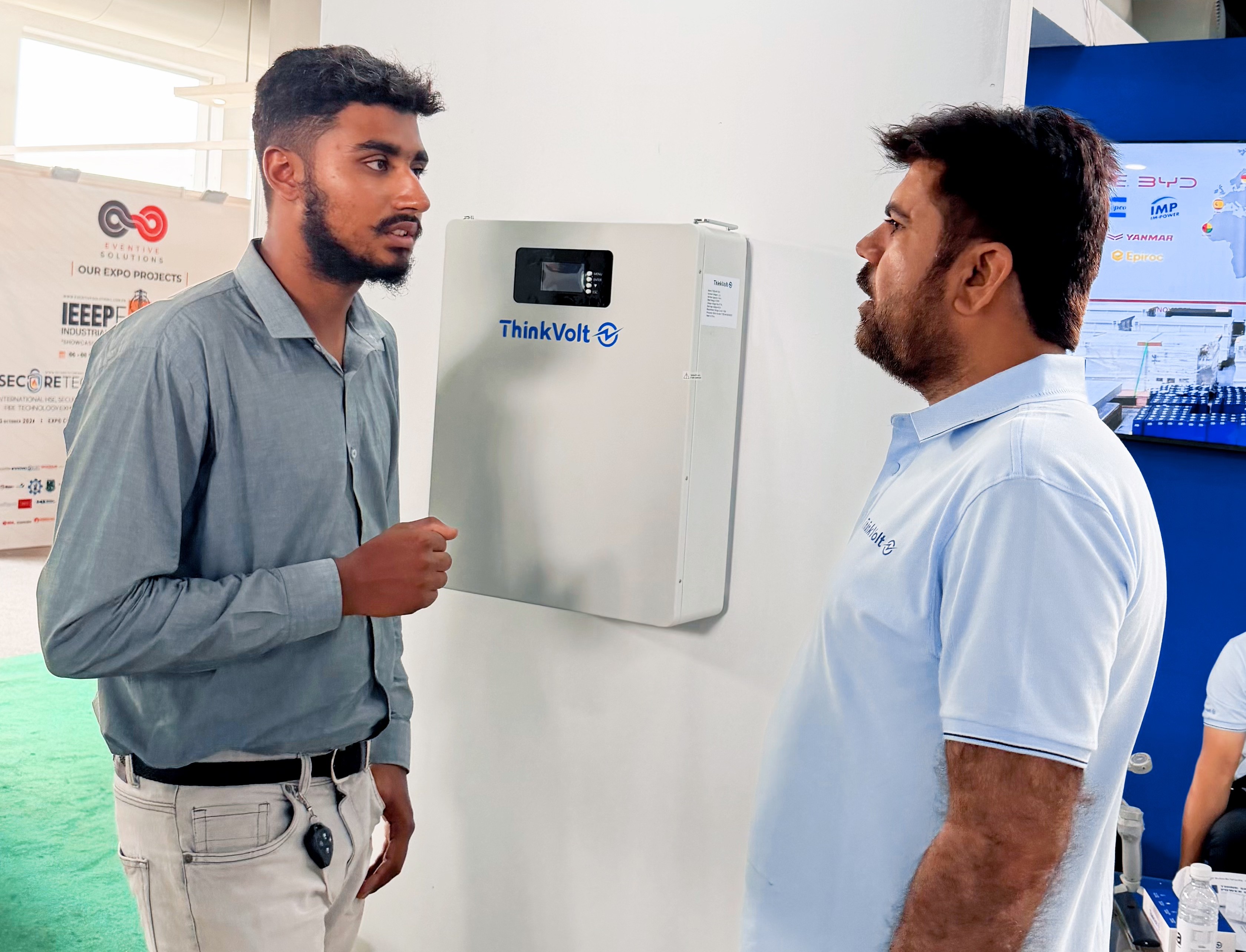
Wall-mounted batteries save floor space and can create a clean residential installation. Rack-mounted batteries are suitable for modular systems and can make future capacity expansion easier. Floor-standing batteries offer another practical option when wall mounting is not suitable.
The selected location should also provide appropriate ventilation, protection from water and direct sunlight, and enough space for cables, maintenance, and future expansion.
Two batteries with similar energy capacity may have different continuous discharge currents and power capabilities.
If the system needs to operate high-power appliances, the battery must be able to deliver the required current without exceeding its operating limits. The inverter power rating and battery output capability should therefore be evaluated together.
Buyers who may need more capacity later should also confirm:
whether the battery supports parallel connection;
the maximum number of parallel units;
whether additional communication equipment is required;
whether batteries of different ages can be combined;
how much physical space should be reserved.
Planning for expansion at the beginning is usually easier than modifying the system after installation.
The battery management system monitors battery operation and protects against conditions such as overcharge, over-discharge, overcurrent, short circuits, and abnormal temperature.
Buyers should ask what protection functions are included, how battery status can be monitored, and whether operating data can be viewed through the inverter, a display, or a mobile application.
Cell consistency and manufacturing quality are also important because they influence the battery pack’s stability and long-term performance.
A suitable battery supplier should be able to provide more than a specification sheet.
Installers and customers may need wiring diagrams, communication guidance, inverter settings, installation instructions, troubleshooting support, and a clear warranty process.
Before placing an order, confirm what technical documents are available and how support will be provided if a problem occurs.
To receive a more accurate battery recommendation, provide the supplier with:
inverter brand and model;
solar system size;
household load list;
required backup time;
preferred battery format;
installation location;
expected future expansion;
required quantity.
The more complete the information, the easier it is to select a battery that fits the actual system.
If you are looking for a home energy storage solution for the Pakistani market, contact ThinkVolt with your system details. Our team will help you evaluate the battery capacity, installation format, and compatibility requirements.