Marcus’s "Silent Goldmine": The Energy Revolution in a Palm Oil Mill
2025-08-21

The right home battery size depends on two things: how much usable energy (kWh) you need for your target backup time and how much power (kW) your loads need at the same time. Start with the appliances and circuits you want to back up and how long they need to run, then adjust for usable battery capacity, system losses, solar recharging, inverter compatibility, and future expansion.
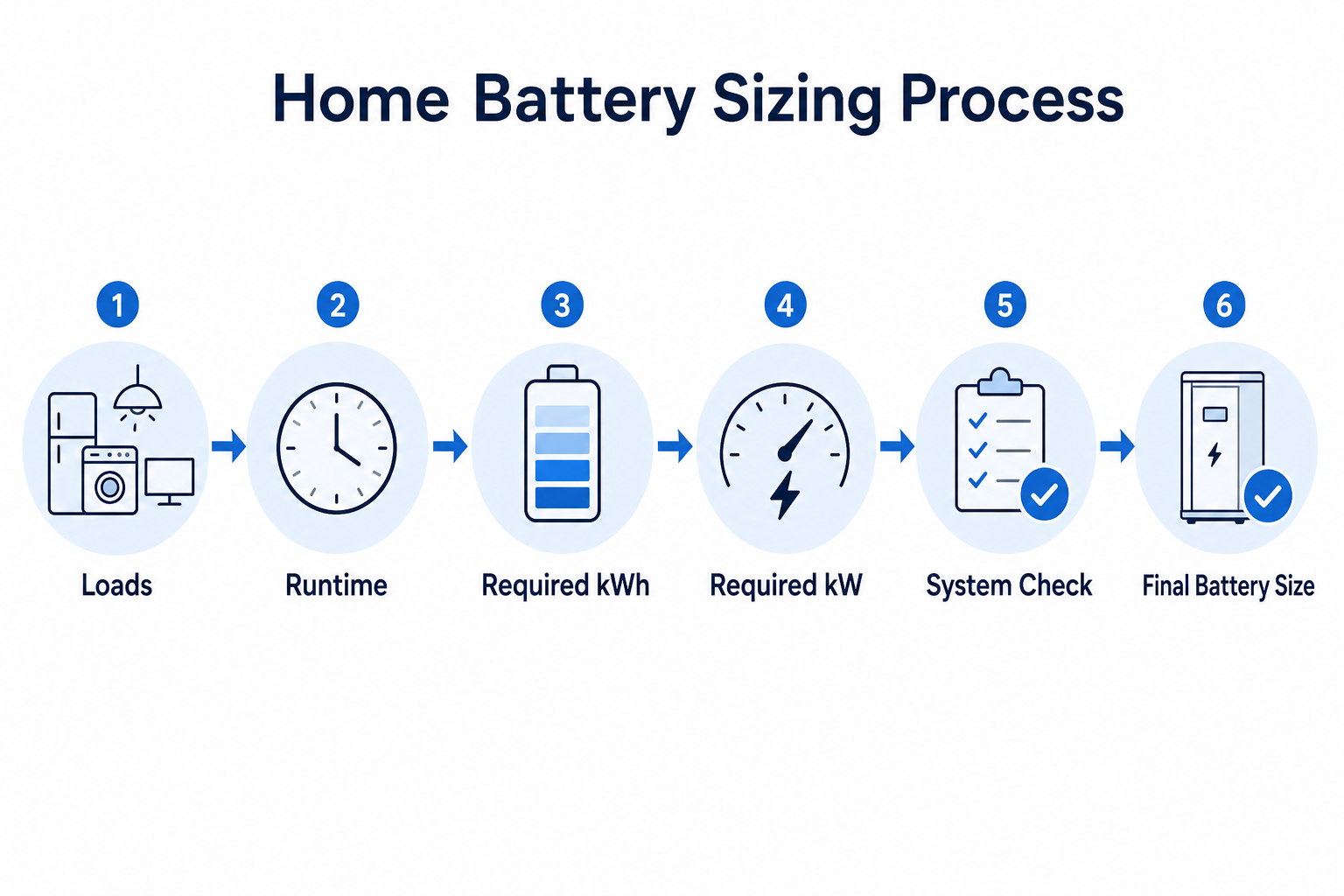
There is no single kWh figure that fits every home. A practical sizing process follows this path: Loads → Runtime → Required kWh → Required kW → System Check → Final Battery Size. This guide walks you through each step for essential loads, whole-home backup, or a solar-plus-storage system.
Start with your backup goal rather than a generic household battery size. The final system must meet three requirements:
1. Energy check: How many kWh will your selected loads consume during the required backup period?
2. Power check: How many kW must the battery and inverter deliver when those loads operate at the same time?
3. System check: Does the proposed configuration meet usable-capacity, charging, inverter, installation, and expansion requirements?
Daily electricity consumption is a useful baseline, but it is not enough on its own. Two homes with similar monthly consumption may need very different battery systems if one only backs up critical circuits while the other expects air conditioning and other large loads to operate during an outage.
Decide what you actually need to keep running before calculating battery capacity. Backing up a few essential circuits can require far less energy and power than supporting most of the home during an outage.
For essential-load backup, start with equipment you cannot reasonably do without, such as refrigeration, lighting, internet equipment, and other critical circuits. The key question is how much energy these selected loads will consume over your target backup period.
A broader backup plan may include additional comfort loads. Whole-home backup goes further, but it does not mean every appliance must run continuously or simultaneously. Your actual load profile still matters.
Backup goal | Load scope | Main sizing concern |
Essential backup | Selected critical circuits | Required runtime |
Extended or comfort backup | Critical circuits plus selected additional loads | Energy and power |
Whole-home backup | Broad household loads | Energy, simultaneous load, and peak power |
Avoid sizing from house size alone. Similar homes can have very different requirements because of their appliances, heating and cooling systems, occupancy patterns, and backup expectations.
kWh tells you how much energy a battery can provide over time, while kW tells you how much power it can deliver at a given moment. Both matter when sizing a home battery.
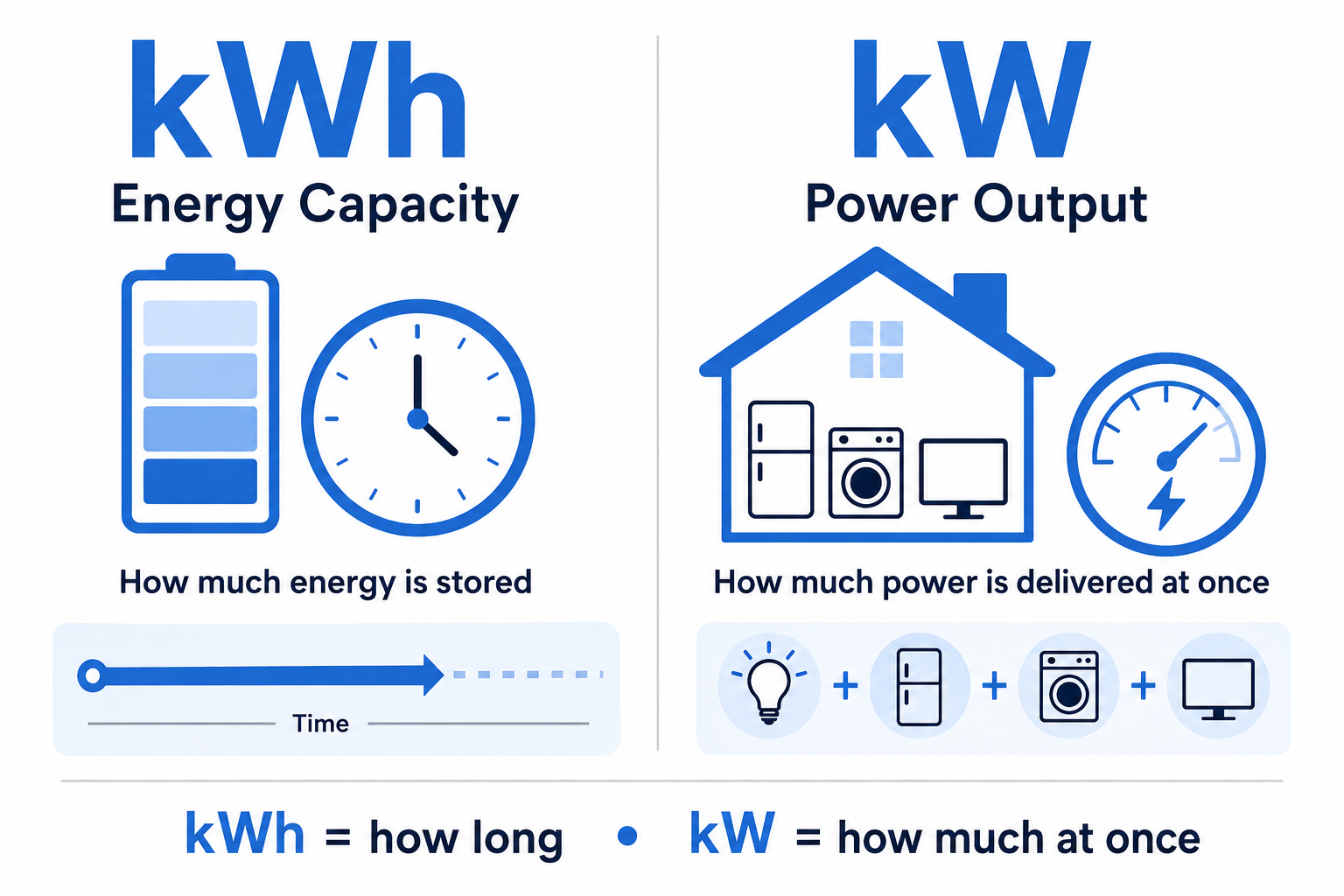
Think of kWh as your energy budget. More loads or longer backup time requires more usable energy.
kW describes how quickly that energy must be delivered. If several appliances operate together, their combined power demand must remain within the capabilities of the battery and inverter.
A battery described as having 10 kWh of capacity may provide enough energy for your desired runtime, but that figure alone does not tell you whether the system can operate an air conditioner, pump, or several high-power appliances together.
You also need to check continuous power and any applicable peak or startup power requirements.
A simple rule is: use kWh to answer “how long?” and kW to answer “how much can run at once?”
Calculate your basic energy requirement by multiplying each backup load by the number of hours it needs to run, then adding the results together.
The basic formula is:
Energy required (kWh) = Load (kW) × Runtime (hours)
For multiple loads:
Total energy required = Σ (Load × Runtime)
Start with the appliances and circuits in your backup plan. Use actual rated power or reliable equipment data where possible rather than assuming every appliance of the same type consumes the same amount.
Set a target backup period and estimate how long each load will operate within it. Some equipment may run continuously, while other loads cycle or are only needed for part of the outage.
Calculate each load separately and add the results:
Load | Rated Power | Expected Runtime | Required Energy |
Load A | 0.15 kW | 8 h | 1.20 kWh |
Load B | 0.10 kW | 6 h | 0.60 kWh |
Load C | 0.50 kW | 3 h | 1.50 kWh |
Total | — | — | 3.30 kWh |
These values are illustrative, not standard appliance ratings. Replace them with the actual loads and operating times for your home.
In this example, 3.30 kWh is the basic energy requirement, not a recommendation to buy a 3.30 kWh battery. You still need to check power demand and adjust the result for usable capacity and real system conditions.
Your battery system needs enough continuous power in kW for the loads likely to operate together, plus the ability to handle applicable startup or peak demand.
Start by identifying realistic combinations of simultaneous loads rather than adding every appliance in the house.
Continuous power is what the system can supply during normal operation. If your expected simultaneous load exceeds the continuous output capability of the battery or inverter, you need to reduce the backup load or choose a system with greater output.
Peak or surge power covers short-duration demand above normal operating power.
Air conditioners, pumps, compressors, and other motor-driven equipment can have startup requirements that differ from normal running power.
Do not assume a universal surge multiplier. Use the actual equipment specifications and battery/inverter documentation when assessing these loads. The complete system must support both the expected continuous demand and applicable startup demand.
A 10 kWh home battery may be enough for some backup scenarios, but runtime depends on the battery’s usable energy and the average load it supplies.
A simple estimate is:
Approximate runtime (hours) = Usable battery energy (kWh) ÷ Average load (kW)
Assume, for illustration, that 10 kWh of usable energy is available:
Illustrative Average Load | Usable Energy | Approximate Runtime |
0.5 kW | 10 kWh | 20 hours |
1.0 kW | 10 kWh | 10 hours |
2.0 kW | 10 kWh | 5 hours |
These are simplified mathematical examples, not guaranteed runtimes. Actual results can change with system efficiency, operating limits, changing loads, temperature, and other equipment-specific conditions.
A 10 kWh system may therefore provide substantial runtime for selected essential loads but be depleted much faster by larger loads. Also, if a product is advertised as a 10 kWh battery, do not automatically assume all 10 kWh is usable; check the applicable product documentation.
Your calculated energy requirement still needs to be checked against the battery’s actual usable capacity and relevant system losses. If you have solar, also consider how much energy the PV system can realistically provide to household loads and battery charging.
Nominal capacity is the headline energy figure associated with a battery. Usable capacity is the amount available within its permitted operating range.
When selecting a battery, use the applicable usable-energy figure and operating limits from the product documentation. Do not apply a generic depth-of-discharge or efficiency percentage to every system.
During daylight hours, available PV generation may power household loads and recharge the battery, reducing the energy that must come from storage alone.
However, recharge potential depends on actual solar production and household demand, not simply the PV array’s nameplate rating. Weather, season, shading, daytime consumption, and system limits can all affect the result.
Your operating goal also matters. A battery primarily used for solar self-consumption may be sized and operated differently from one intended to maintain backup through an extended outage.
Consider future loads if you expect to add an EV, heat pump, additional HVAC equipment, or other major electrical loads. Future electrification can increase both energy consumption and peak power demand.
If those requirements are still uncertain, prioritize a practical expansion path rather than automatically buying substantial unused capacity today.
A modular battery system can provide flexibility, but do not assume another battery can always be added later. Expansion may depend on the battery model, BMS configuration, inverter compatibility, supported parallel quantity, cabling, protection, and commissioning requirements.
Separate confirmed future loads from possibilities. Include reasonably defined additions in your sizing assessment and check system expandability for less certain changes.
Determine battery quantity only after you know your required usable kWh and required kW.
The basic relationship is:
Number of battery modules = Required usable energy ÷ Usable energy per module
If the result falls between supported configurations, choose a supported configuration that meets the requirement rather than rounding down below the required usable energy.
Compare your energy requirement with the usable energy per module, not just nominal capacity.
This is why statements such as “a typical home needs two batteries” are unreliable. Modules come in different capacities, and households with similar energy requirements can still have different power requirements.
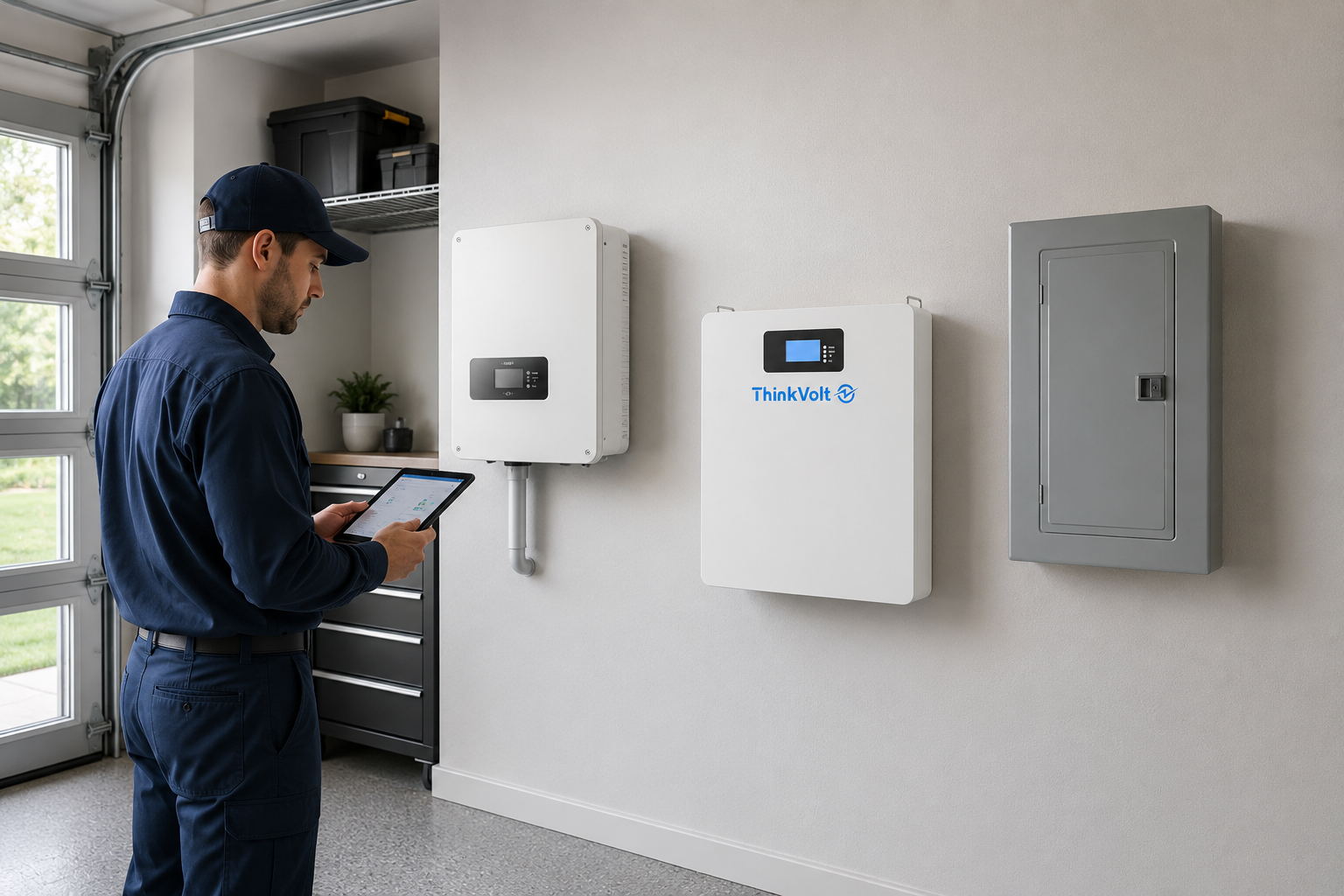
Before choosing the final configuration, verify two groups of requirements:
Sizing Requirements
· Required usable kWh
· Required continuous and applicable peak kW
System Requirements
· Battery voltage and inverter operating requirements
· Exact battery and inverter compatibility
· Communication protocol and firmware requirements
· Supported parallel or expansion configuration
· Solar and charging requirements
· Installation environment and available space
Do not assume compatibility because a battery or inverter brand appears on a general compatibility list. Exact models, voltage requirements, firmware, communication, wiring, and supported configurations need to be confirmed.
Parallel or expanded systems may also have model-specific BMS, cabling, protection, and commissioning requirements.
Most sizing mistakes come from using one convenient number instead of checking the complete system. Watch for these common errors:
· Sizing from total household consumption alone: Start with the loads you actually want to back up and their required runtime.
· Sizing by kWh alone: Also verify simultaneous and startup power in kW.
· Using nominal capacity as usable capacity: Check the applicable usable-energy specification.
· Ignoring high-starting loads: Verify equipment startup requirements where relevant.
· Assuming solar will always recharge the battery: Evaluate realistic generation and household demand.
· Oversizing for uncertain future needs: Consider expandability when future loads are not yet defined.
· Assuming inverter compatibility: Confirm the exact battery, inverter, voltage, firmware, and communication requirements.
· Choosing module quantity from capacity alone: Check power capability, supported configurations, BMS, and protection requirements.
The objective is not to install the largest battery possible. Choose the smallest practical configuration that meets your usable-energy requirement, power demand, recharge strategy, compatibility requirements, and realistic expansion plan.
No. Your electricity bill provides a useful energy baseline but does not show which loads you want to back up, how long they must run, or their simultaneous power demand. Combine bill data with a backup-load assessment before selecting a battery.
Only if you plan to run it from the battery and its energy or power demand increases your calculated requirements. Check its expected runtime, normal operating power, and applicable startup demand using the actual equipment specifications.
Possibly. Expansion depends on the battery model, BMS, inverter, supported configuration, cabling, protection, and commissioning requirements. If expansion matters, confirm the available path before installing the initial system.
No. Battery capacity should reflect your energy-use pattern and storage goal. More PV may increase available charging energy, but it does not automatically justify more battery capacity.
No. Confirm the exact battery voltage, inverter model, firmware, communication protocol, wiring, and supported configuration before installation.
Only when the longer backup requirement is realistic. Include the additional runtime in your energy calculation and consider how the battery will be recharged rather than adding capacity without a defined need.
Provide your daily energy use, loads to be backed up, peak demand, desired backup time, inverter model, PV system details, installation conditions, location/grid requirements, and future expansion plans. These inputs allow the installer to evaluate both kWh and kW before checking system compatibility.
The right home battery is not simply the one with the most kWh. It should provide enough usable energy for your required runtime, enough power for your loads, and a suitable charging, compatibility, and expansion path.
If you are planning a residential energy storage system, share your load requirements, backup time, inverter and PV details, and expansion plans with ThinkVolt to evaluate a suitable configuration, subject to model-specific technical and compatibility confirmation.