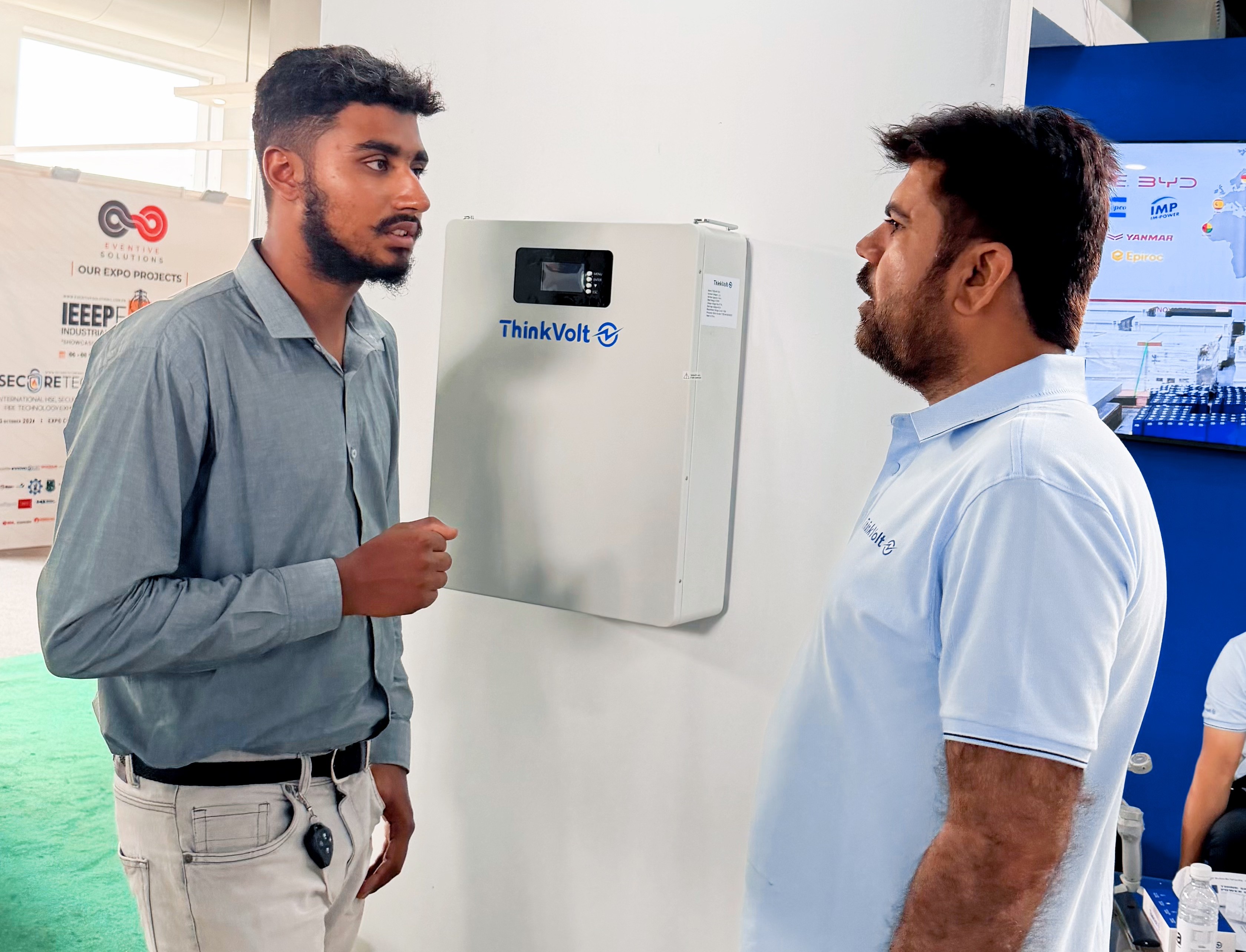
ThinkVolt at Solar & Storage Expo Pakistan 2026: Connecting with Pakistan’s Energy Storage Market
2026-07-23
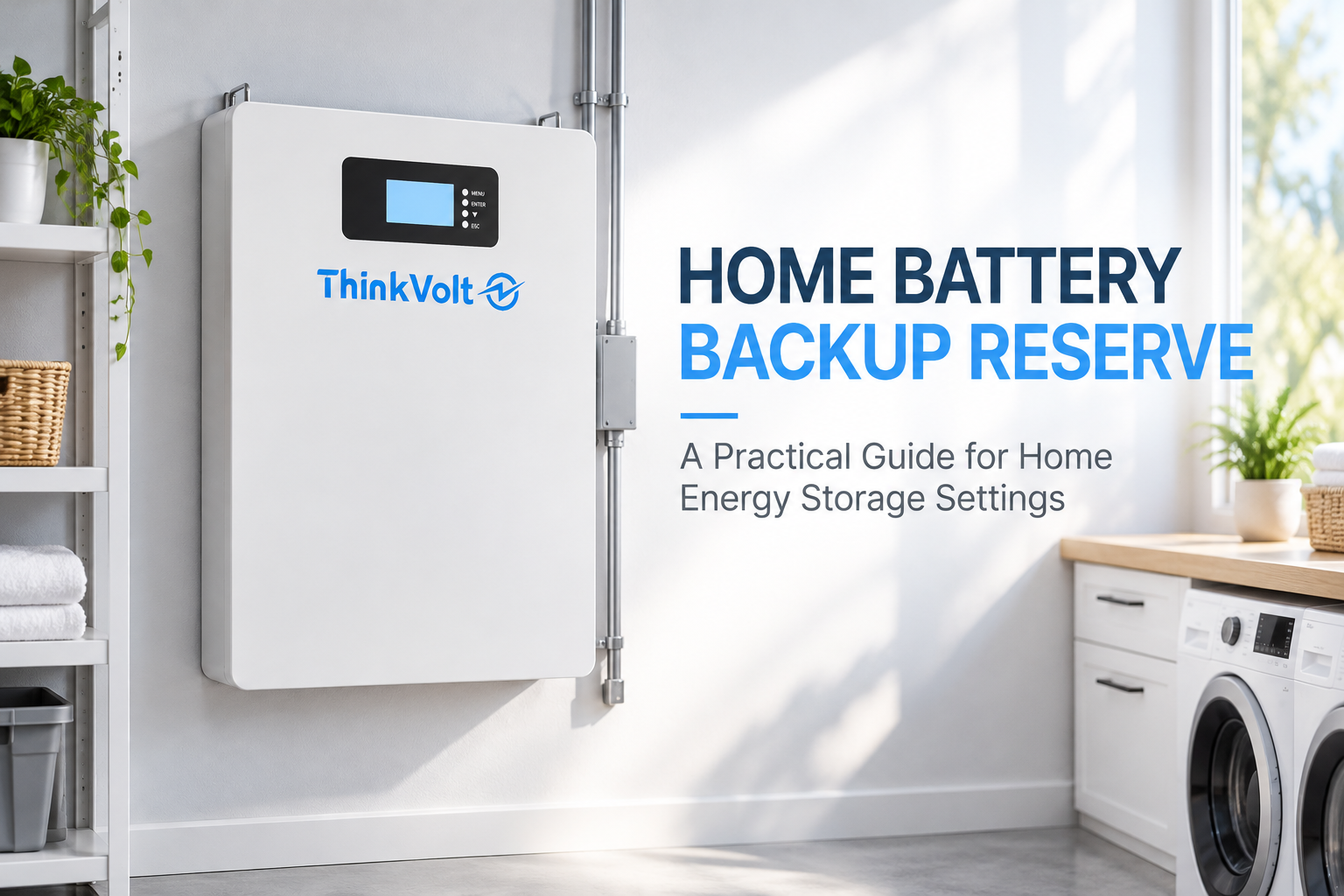
The right home battery backup reserve setting depends on your risk of power outages, essential household loads, and how long you need backup power. A reserve of 20%–30% may be a useful starting point for some homes, but the ideal percentage should be based on your actual energy needs.
Setting the reserve too low may leave insufficient power during an outage, while setting it too high can reduce the energy available for daily use. This guide explains how to choose a suitable reserve percentage, calculate your backup requirements, adjust the settings, and verify that your home battery operates as expected.
Backup reserve is the percentage of stored energy that a home battery system keeps available for power outages. Instead of using all its energy for everyday household consumption, the system preserves a portion for emergency backup.
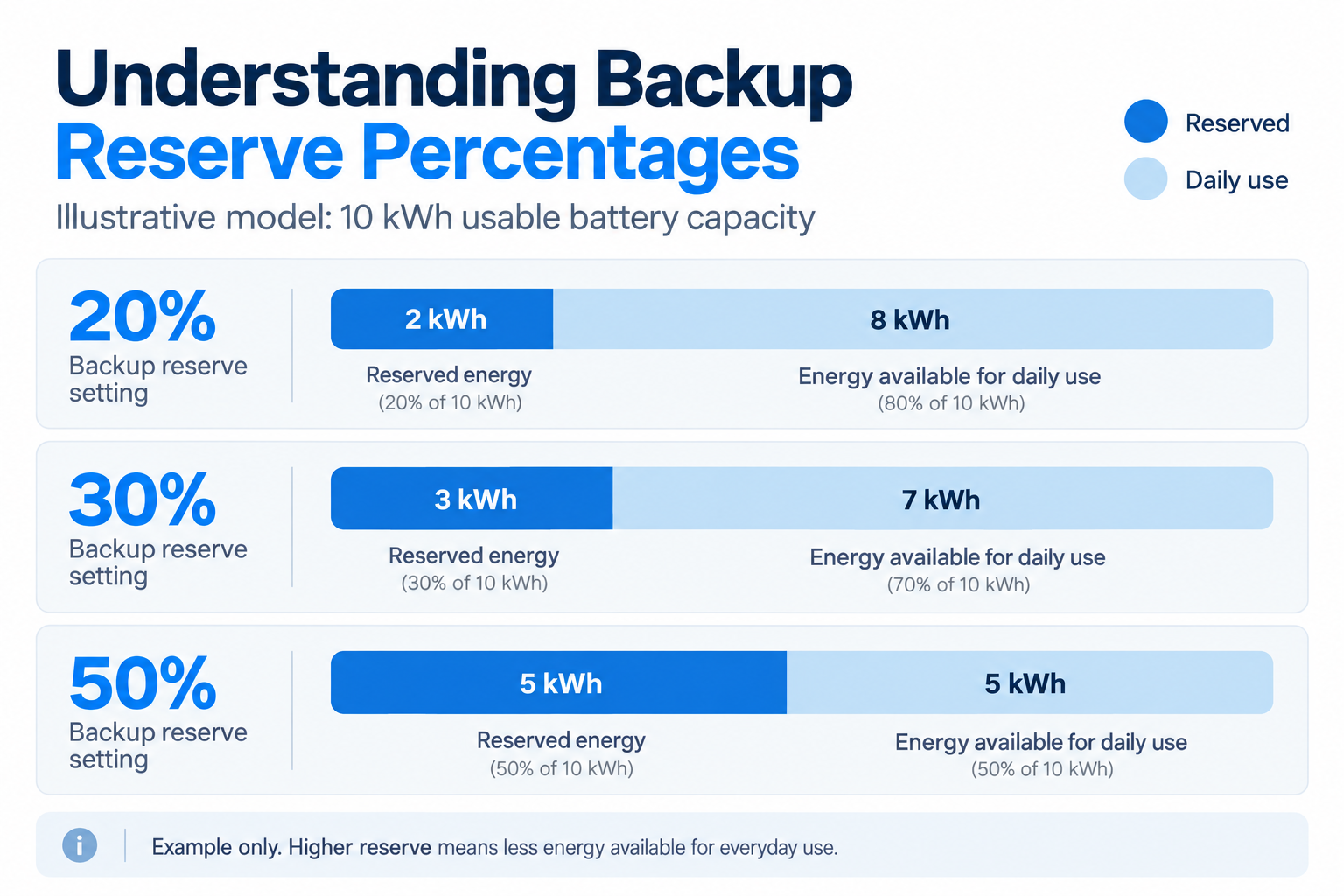
For example, if your battery has 10 kWh of usable capacity and you select a 30% reserve, approximately 3 kWh is allocated for backup use. The remaining 7 kWh may be available for normal operation, assuming the setting uses that usable capacity as its reference.
However, backup reserve is different from minimum State of Charge (SOC).
Backup reserve is generally a configurable threshold used to manage energy availability during outages. Minimum SOC refers to a lower operating limit established by the battery or inverter control system to prevent excessive discharge.
The distinction matters because a battery may discharge below its backup reserve during an outage without exceeding its permitted discharge limits.
Not every home battery provides an independent backup reserve setting. Depending on the system, the function may be managed through a hybrid inverter, energy management system (EMS), or compatible mobile application.
There is no single backup reserve percentage suitable for every home. The right setting depends on your local grid reliability, battery capacity, essential electrical loads, and expected outage duration.
The following ranges are illustrative starting points rather than universal recommendations.
If outages are rare and typically last only a short time, a relatively low reserve may be sufficient.
A setting around 10%–20% may be worth considering when your essential backup requirements are limited and the system supports this range.
Keeping the reserve lower allows more stored energy to support daily consumption, particularly when your system uses solar electricity during the evening or electricity from the battery during expensive tariff periods.
However, even a short outage may require a higher reserve if your household depends on important electrical equipment.
For households experiencing occasional outages, a reserve around 20%–40% may offer a practical starting range.
The required percentage depends heavily on what you intend to power.
A refrigerator, router, and several LED lights generally consume less electricity than an air conditioner, electric water heater, or other high-power appliances.
If power outages are frequent or prolonged, consider a higher reserve, potentially 50% or more.
A larger reserve prioritizes energy availability during emergencies, although it reduces the capacity available for daily battery use.
Grid Conditions | Illustrative Reserve Range | Main Priority |
Reliable grid | 10%–20% | Daily energy utilization |
Occasional outages | 20%–40% | Balance backup and self-consumption |
Frequent or extended outages | 50% or higher | Emergency energy availability |
These percentages should always be checked against the system's usable capacity and actual load requirements.
A higher reserve percentage does not automatically guarantee a longer backup period. Battery capacity, electrical loads, and inverter output limitations must also be considered.
To estimate your required backup reserve, calculate how much energy your essential appliances will consume during an outage, account for conversion losses, and compare the result with your battery's usable capacity.
This three-step method provides a practical starting point.
List the appliances you need to operate during a power outage.
Focus on essential equipment rather than assuming that every household appliance must remain powered.
For example:
Appliance | Average Power | Operating Time | Energy Required |
Refrigerator | 100 W | 4 hours | 0.40 kWh |
Wi-Fi router | 15 W | 4 hours | 0.06 kWh |
LED lighting | 40 W | 4 hours | 0.16 kWh |
Other essential loads | 345 W | 4 hours | 1.38 kWh |
Total | 500 W | 4 hours | 2.00 kWh |
These values are illustrative. Actual electricity consumption varies with appliance operation, particularly for equipment that cycles on and off.
Once you know your average electrical load, calculate the battery energy needed for your target backup duration.
Required Battery Energy (kWh) = Average Load (kW) × Backup Hours ÷ Inverter Efficiency
Assume:
Average essential load: 0.5 kW
Required backup duration: 4 hours
Inverter efficiency: 90%
The calculation becomes:
0.5 × 4 ÷ 0.90 = 2.22 kWh
Under these assumptions, approximately 2.22 kWh of battery energy is required.
This simplified calculation assumes a constant average load and a representative inverter efficiency. Real operating conditions may introduce additional losses or variations.
Next, compare the required energy with your battery's usable capacity.
Estimated Reserve (%) = Required Battery Energy ÷ Usable Battery Capacity × 100
For a battery with 10 kWh of usable capacity:
2.22 ÷ 10 × 100 = 22.2%
In this example, the theoretical reserve requirement is approximately 22.2%.
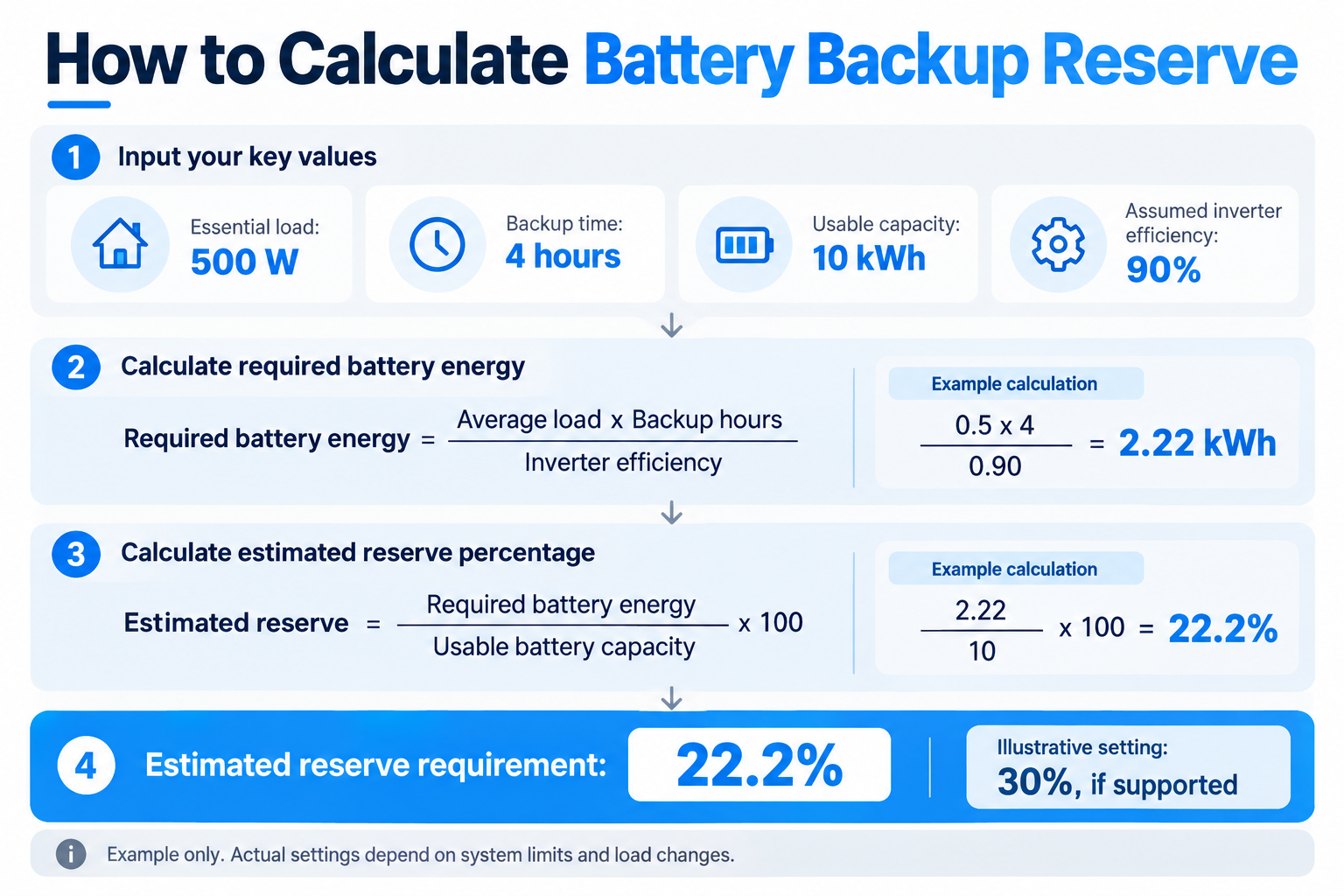
Selecting 30% may provide some additional margin for variations in electricity consumption and conversion efficiency.
However, this calculation assumes that the reserve percentage corresponds directly to the stated usable capacity and that the reserved energy can be discharged during an outage.
Actual battery systems may use different SOC references, protection thresholds, and control strategies.
Before applying the result, verify the usable capacity definition, supported SOC range, and backup operating conditions in your system documentation.
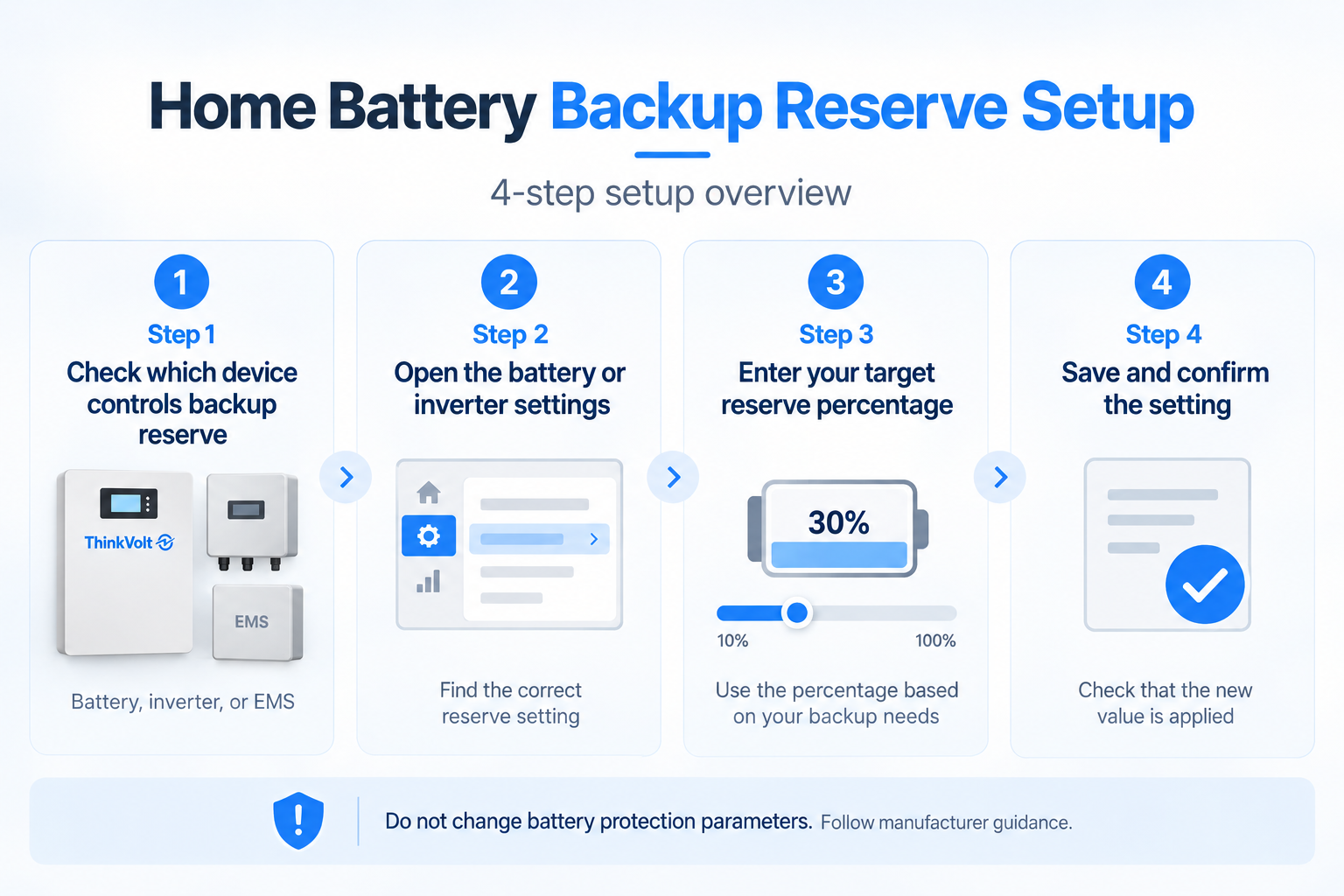
To change your home battery backup reserve setting, identify the device responsible for reserve control, locate the appropriate parameter, enter your target percentage, and save the configuration.
The exact procedure varies between battery manufacturers, inverter brands, and energy management platforms.
First, determine whether backup reserve is managed by your battery, hybrid inverter, or energy management system.
In many residential energy storage installations, the inverter or EMS controls how the battery charges and discharges.
The battery management system (BMS), meanwhile, manages essential battery protection functions.
Review the manufacturer's manual or installation documents to identify which component provides the adjustable reserve function.
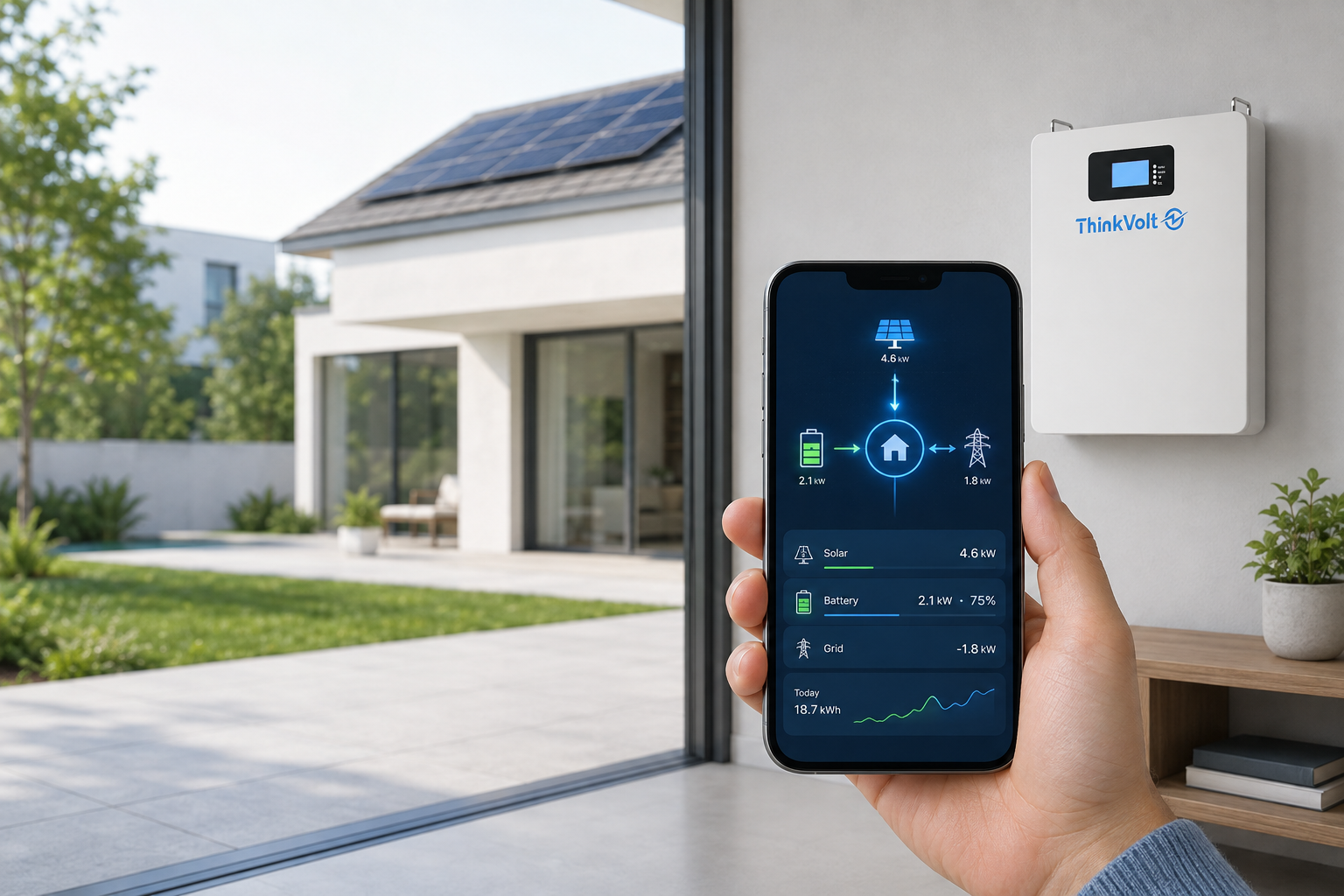
Access the manufacturer's mobile application, online monitoring platform, or inverter control panel.
Depending on the system, the relevant setting may appear under:
Battery Settings
Backup Reserve
Energy Management
Self-Consumption Mode
Operating Mode
These are examples of possible menu labels, not universal navigation instructions.
Some systems allow homeowners to modify the percentage directly. Others restrict certain settings to authorized installers.
If you cannot find the option, check the equipment documentation before making changes to advanced parameters.
Once you locate the correct setting, enter the percentage determined from your backup energy requirements.
For example, if your calculation indicates that approximately 22% of usable battery capacity is required, you might select 30% if the system supports it.
Before confirming, verify that the parameter controls backup energy rather than a battery protection threshold.
Some inverters use terms such as Reserve SOC, Backup SOC, or Minimum SOC. Their meanings can differ depending on the manufacturer and operating mode.
Never modify BMS protection limits simply to increase the amount of energy available for backup.
Save or apply the new configuration according to the manufacturer's instructions.
Then confirm that the selected percentage appears correctly in the monitoring interface.
Check whether the system displays configuration warnings or communication errors.
Remember that increasing backup reserve does not necessarily cause the battery to charge immediately.
Charging behavior depends on available solar generation, grid charging permissions, operating schedules, and system control settings.
After saving the configuration, verify its operation before relying on the battery for emergency power.
After changing the reserve percentage, confirm that the setting has been saved and that the system's operating behavior matches its documented control logic.
The monitoring interface is usually the safest starting point.
Check Item | What to Verify |
Reserve percentage | The saved value matches your intended setting |
Battery SOC | The current charge level is displayed correctly |
Operating mode | The selected mode supports reserve control |
Energy monitoring | Charging and discharging behavior appears consistent |
System alerts | No relevant configuration or communication errors are present |
During normal grid-connected operation, many systems limit routine battery discharge when the configured reserve threshold is reached.
However, an immediate increase in SOC should not be expected simply because a higher reserve has been selected.
The battery may need time to recharge through solar generation or an available grid charging function.
Installers may perform additional checks involving inverter configuration, communication status, and backup output operation.
Any controlled outage test should follow the manufacturer's procedures and be conducted by a qualified installer.
Do not disconnect electrical equipment or intentionally interrupt the grid supply to test the system yourself.
Backup reserve affects how much stored energy remains available for normal household use.
A higher reserve preserves more energy for potential outages but generally reduces the capacity available for solar self-consumption and electricity cost optimization.
The actual impact depends on the operating mode and whether the grid is available.
During normal operation, a home battery may store excess solar generation and discharge when household demand exceeds solar production.
If a backup reserve is configured, the system generally limits routine discharge once the battery reaches the selected threshold.
For example, consider a 10 kWh usable battery:
Reserve Setting | Energy Reserved | Energy Available for Daily Use |
20% | 2 kWh | 8 kWh |
30% | 3 kWh | 7 kWh |
50% | 5 kWh | 5 kWh |
These figures assume the reserve percentage is calculated from the stated usable capacity and exclude additional operating restrictions.
Increasing the reserve may cause the household to purchase more electricity from the grid rather than using stored solar energy.
The financial impact depends on electricity tariffs, solar production, and daily consumption patterns.
When grid power becomes unavailable, a properly configured backup system may use its reserved energy to supply connected loads.
Unlike normal grid-connected operation, the battery may continue discharging below its backup reserve until it approaches the permitted operating limit.
However, the system must have compatible backup hardware, appropriate electrical connections, and sufficient inverter output power.
Not every home battery installation supports automatic backup operation.
Backup reserve is an energy management setting, not a substitute for a properly designed backup power system.
Your reserve percentage should reflect changing outage risks and household electricity needs.
A setting suitable during normal conditions may not provide enough protection during periods of unreliable electricity supply.
Consider increasing your reserve when:
Severe weather is expected. Storms, heavy snow, or other extreme weather may increase outage risks.
Power outages become more frequent. Unreliable grid conditions may require additional emergency energy.
Essential loads increase. New refrigeration equipment, medical devices, or other important loads may raise backup demand.
Solar production decreases. Extended cloudy weather can reduce battery recharging opportunities.
Some storage systems offer automatic weather-related backup functions. These features depend on the manufacturer, supported services, and system configuration.
You may consider a lower reserve when electricity supply is reliable, outage risks are limited, and your essential backup needs are relatively small.
Reducing the reserve can make more stored energy available for daily solar consumption or electricity tariff optimization.
However, energy savings should not come at the expense of necessary emergency power.
Review your settings whenever your household loads, seasonal conditions, or local grid reliability change.
An unsuitable reserve setting can affect both emergency power availability and normal battery utilization.
A reserve that is too low may leave insufficient energy during an outage. A reserve that is unnecessarily high may limit daily energy savings without providing a meaningful additional benefit.
Setting Issue | Potential Risk | Recommended Action |
Reserve too low | Essential appliances may lose power sooner than expected | Recalculate backup energy requirements |
Reserve too high | Less battery energy is available for daily consumption | Review actual outage risks and essential loads |
Incorrect SOC parameter | Unexpected charging or discharging behavior | Confirm parameter definitions in the equipment manual |
Unverified setting | Backup operation may differ from expectations | Check saved configuration and monitoring data |
Another important consideration is inverter output power.
Even when the battery contains sufficient stored energy, it may be unable to operate appliances whose combined demand exceeds the inverter's output rating.
Some appliances also require additional power when starting.
Therefore, reserve percentage, available energy, inverter capacity, and backup circuit configuration should be evaluated together.
Choosing a higher percentage cannot compensate for an undersized inverter or insufficient total battery capacity.
If your battery reserve setting is unavailable, does not save correctly, or produces unexpected results, begin by checking the active operating mode and system monitoring information.
Different manufacturers use different control strategies, so the equipment documentation should remain the primary reference.
The reserve adjustment option may be missing because the selected operating mode does not support it.
Other possible causes include restricted user permissions, unsupported inverter functions, or software limitations.
First, verify that your system supports an adjustable backup reserve.
Then check whether the correct operating mode is active and whether the setting requires installer authorization.
If the option remains unavailable, contact your equipment supplier or installer.
Discharging below the backup reserve does not necessarily indicate a malfunction.
During a genuine power outage, the system may intentionally use reserved energy to keep essential appliances running.
However, if this happens repeatedly during normal grid-connected operation, further investigation may be necessary.
Check the current grid status, operating mode, discharge schedule, and system event logs.
Conflicting control settings or manufacturer-specific functions may explain the behavior.
If your battery continues using the previous reserve percentage, check whether the updated value was saved successfully.
Also confirm that the monitoring connection is functioning and that another charging or discharging schedule does not override the selected strategy.
Problem | Possible Cause | Recommended Check |
Reserve option unavailable | Unsupported function or restricted access | Verify compatibility and permissions |
Percentage cannot be saved | Communication or configuration issue | Check connection status and system alerts |
Battery discharges below reserve | Outage operation or conflicting settings | Review grid status and operating mode |
Updated value appears ineffective | Schedule or control priority | Confirm saved settings and active strategy |
If the issue persists, contact a qualified installer or the system manufacturer.
Avoid changing undocumented parameters, bypassing BMS limits, or disconnecting electrical equipment while troubleshooting.
The following questions address additional considerations related to reserve settings, charging options, and system compatibility.
Some home battery systems support a 100% backup reserve setting. This prioritizes stored energy for outages rather than normal daily discharge.
However, it does not necessarily prevent every form of energy consumption. The actual behavior depends on system maintenance requirements, control logic, and operating conditions.
No. Backup reserve generally determines how much energy is preserved for emergency use, while minimum SOC establishes a lower battery operating limit.
The terminology can vary between inverter manufacturers. Always confirm the intended function before adjusting a parameter labeled SOC or reserve.
Some systems allow grid charging to restore the battery's reserve level.
Availability depends on inverter functionality, system settings, local regulations, and charging permissions.
Other systems may rely primarily on solar generation. Confirm whether grid charging is available before depending on it for emergency preparation.
Yes, if the battery system supports grid charging and includes the necessary backup functionality.
However, without solar generation or another supported power source, the battery generally cannot recharge during an extended grid outage.
Backup duration remains limited by the available stored energy and connected loads.
Some systems allow users to change backup reserve through a mobile app or online monitoring platform.
This typically requires compatible communication equipment, an internet connection, and appropriate account permissions.
Other systems require local inverter access or configuration by an authorized installer.
Not necessarily.
Batteries with similar capacities may operate under different inverter control strategies or SOC references.
For systems containing multiple battery modules, verify whether the reserve applies to the complete battery bank or individual units.
Compatibility should be confirmed before combining or expanding battery systems.
No. Stored energy alone does not guarantee that every appliance can operate.
Backup performance also depends on inverter output power, surge capability, connected circuits, and the installed backup equipment.
High-power appliances may exceed the system's limits even when sufficient battery energy remains.
The best home battery backup reserve setting is one that matches your essential electricity needs, expected outage duration, and actual system capabilities. Calculate the required energy, select a suitable reserve percentage, and verify the configuration instead of relying on a fixed value.
Planning a Home Energy Storage Project?
ThinkVolt provides LiFePO4 home energy storage battery solutions for residential applications. If you are planning a new installation or evaluating an existing system, share your battery capacity, inverter model, essential loads, and backup duration requirements with our team to discuss a suitable energy storage configuration.