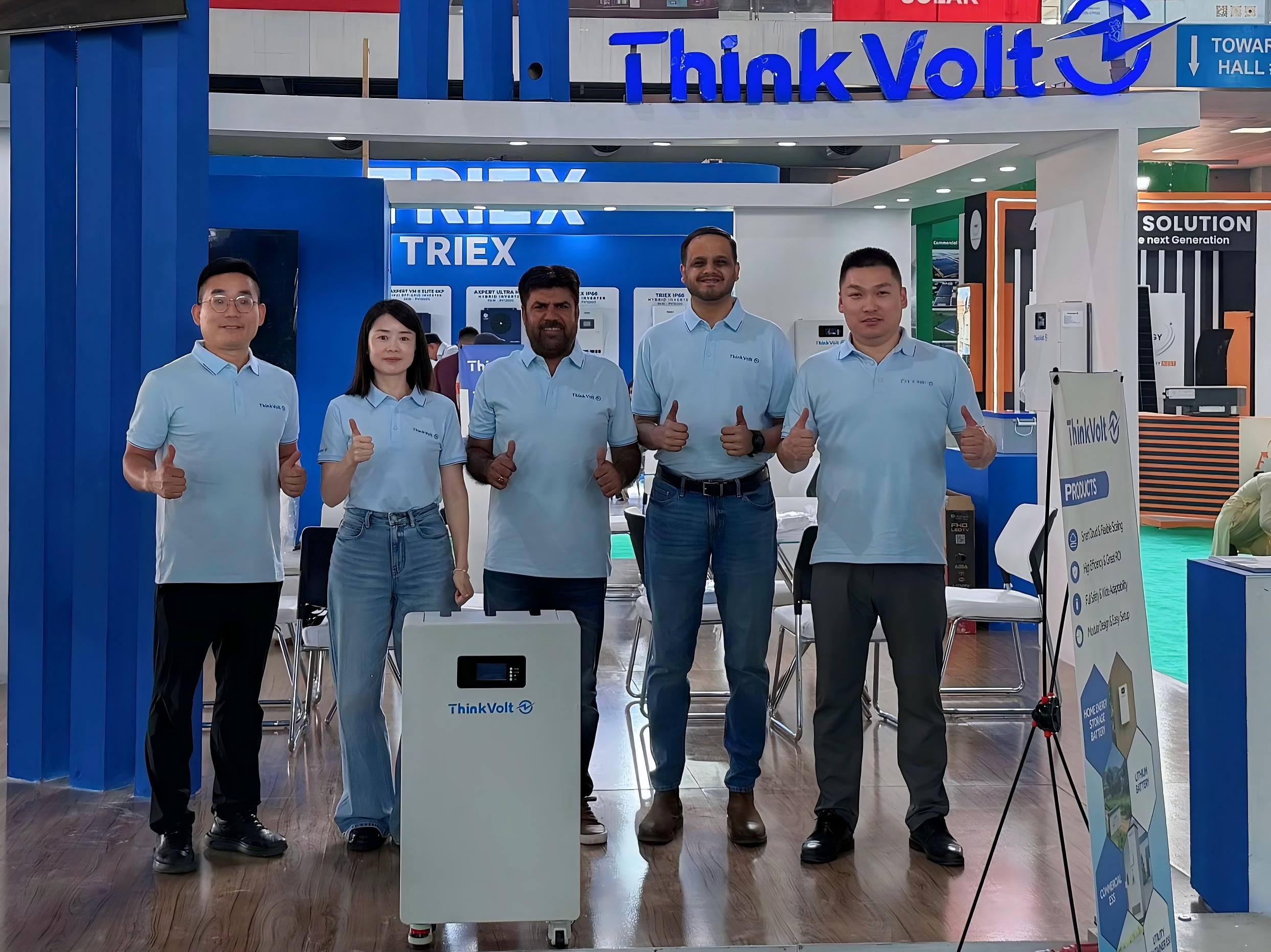
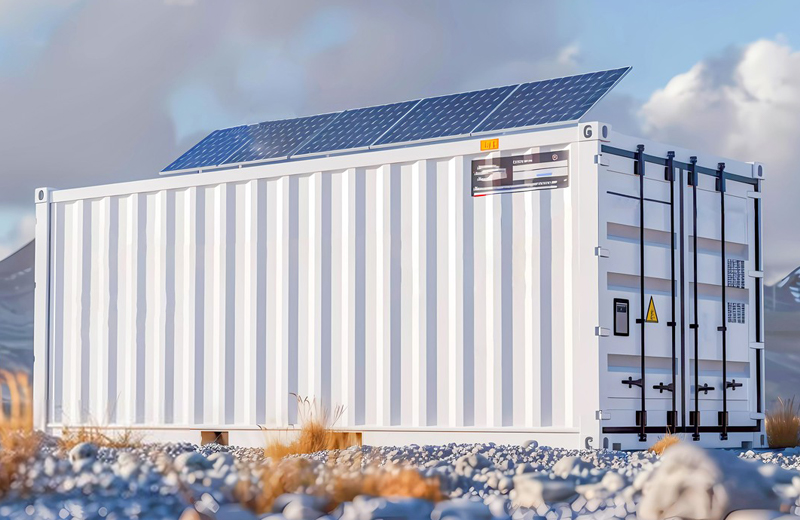
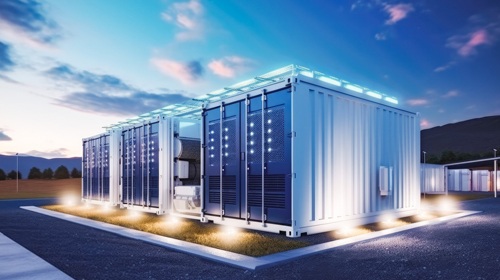
ThinkVolt at Solar & Storage Expo Pakistan 2026: Connecting with Pakistan’s Energy Storage Market
2026-07-23
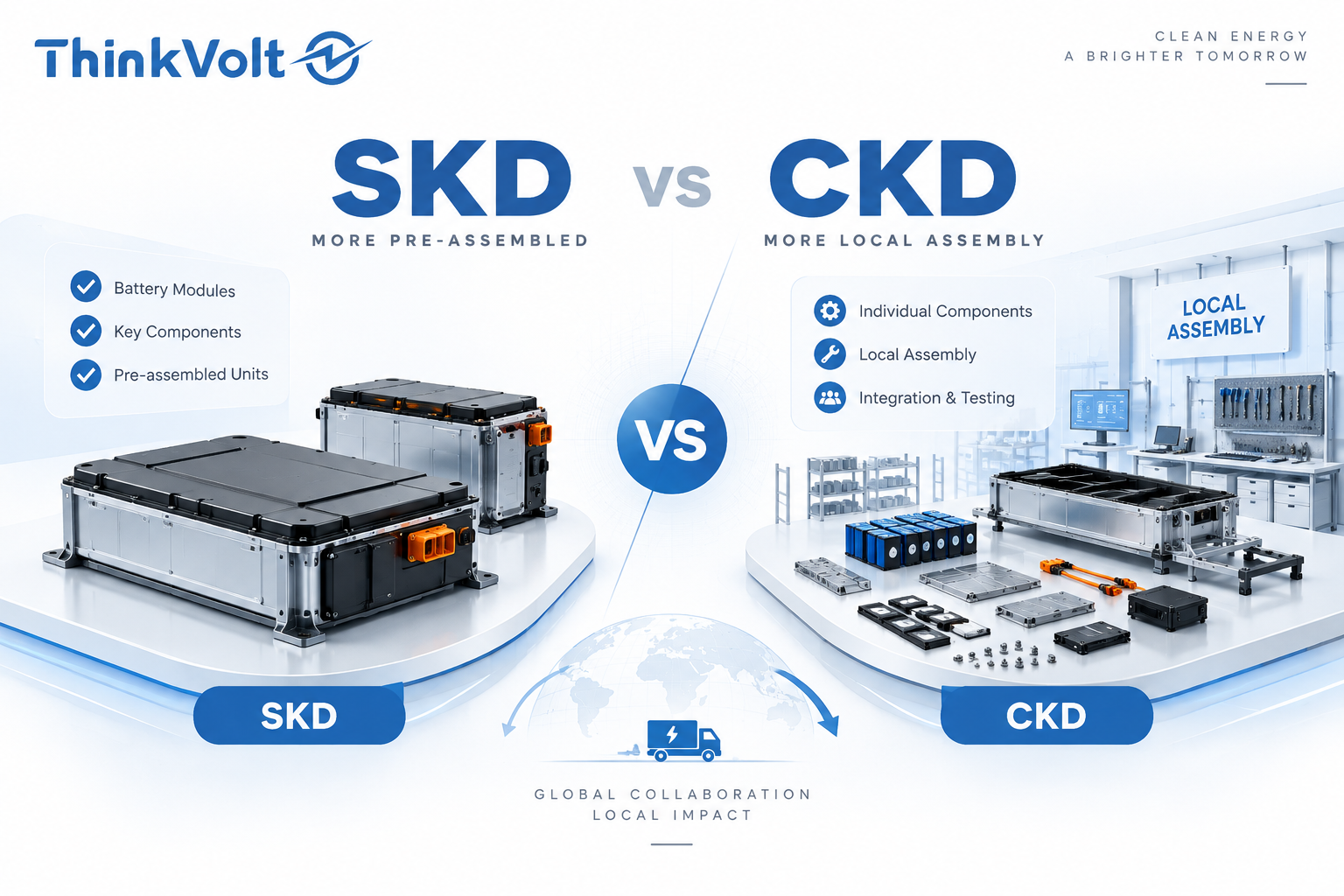
SKD batteries use more pre-assembled components, so they generally require less local manufacturing, while CKD batteries shift more component-level assembly and production responsibility to the local factory. The better option depends on your manufacturing capability, quality system, investment readiness, localization goals, and the exact assembly scope agreed with your supplier.
For importers, distributors, and local battery brands, the decision should therefore consider more than component price. Assembly scope, equipment, workforce, testing, logistics, local costs, and supplier support all affect which model fits your project.
SKD stands for Semi Knocked Down, while CKD stands for Completely Knocked Down. In battery manufacturing, SKD generally means that the product is supplied with a higher level of pre-assembly, whereas CKD transfers more component-level assembly and manufacturing work to the local operation.
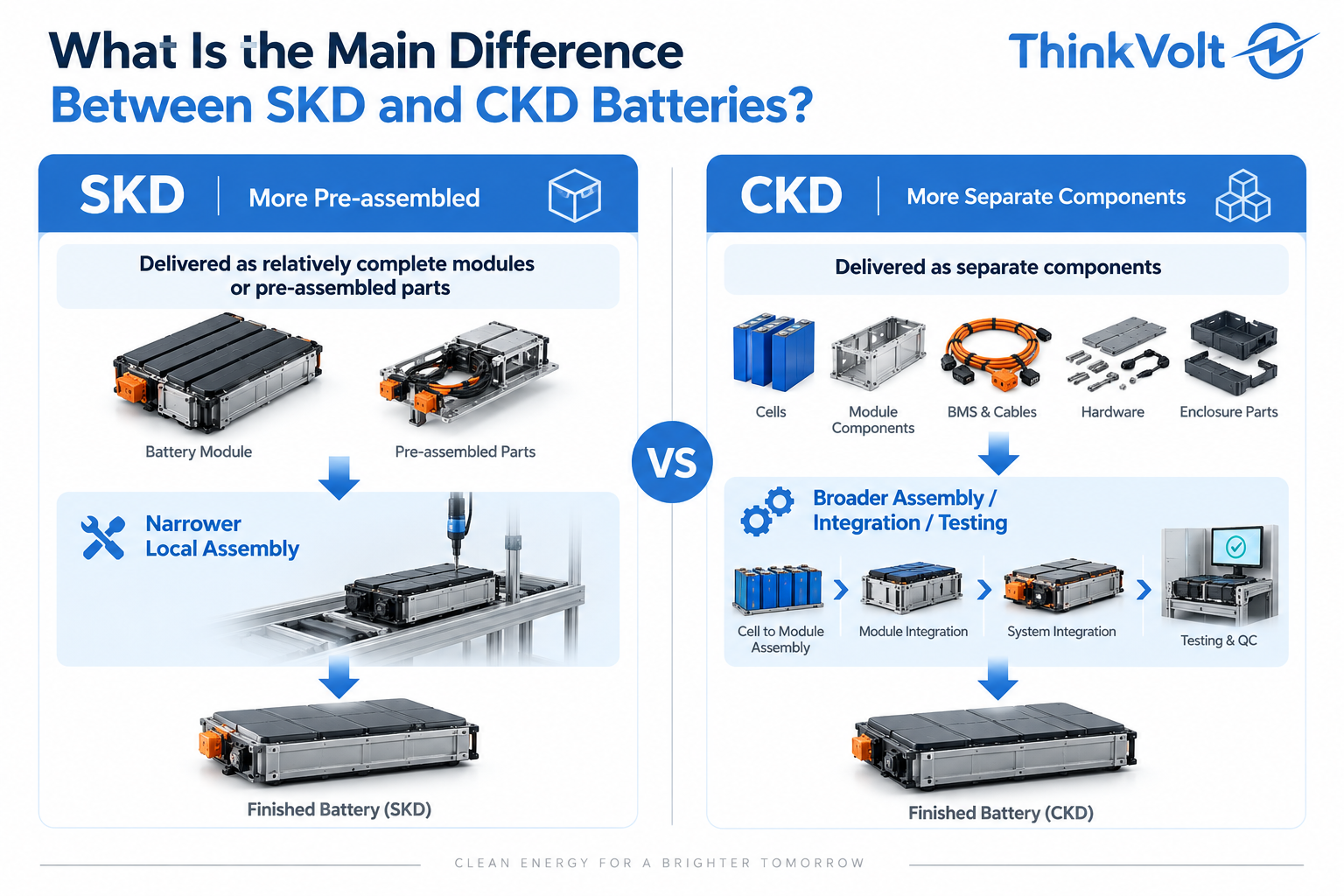
These terms describe a localization model, not a fixed battery specification. An SKD project may use pre-assembled modules or other prepared assemblies so the local factory handles a narrower production scope. CKD typically requires the local operation to manage more manufacturing processes and therefore demands stronger technical and quality-control capabilities.
There is no universal component list that defines every SKD or CKD battery project. The actual division of cells or modules, BMS, structural parts, wiring, assembly work, and testing responsibilities should be defined in the project documents.
For B2B buyers, the practical rule is simple: confirm the BOM and assembly scope instead of relying on the SKD or CKD label alone.
The main difference is the level of pre-assembly and the amount of manufacturing responsibility transferred to the local factory. SKD generally keeps more assembly work with the original supplier, while CKD requires the local operation to handle a broader manufacturing scope.
Decision Factor | SKD Battery | CKD Battery |
Pre-assembly level | Generally higher | Generally lower |
Local assembly depth | Lower | Higher |
Manufacturing capability required | Lower entry requirement | More developed capability |
Equipment requirements | Generally simpler | Generally broader |
Local QC responsibility | More limited | Greater |
Setup complexity | Generally lower | Generally higher |
Localization potential | Moderate | Higher |
Typical strategic use | Earlier-stage localization | Deeper localization |
These are general decision characteristics rather than fixed technical definitions. The exact boundary depends on what the supplier delivers and which processes the local factory must complete.
This is why procurement teams should compare actual manufacturing scope and responsibilities, not assume that two SKD or CKD quotations represent the same package.
SKD is generally a better fit when you want to start local battery assembly with lower manufacturing complexity. CKD becomes more relevant when you have—or are prepared to build—the production, technical, and quality capabilities required for deeper localization.
SKD can be a practical starting point for an importer, distributor, or local brand moving from finished-product imports toward local assembly. A narrower local manufacturing scope can make the initial operation easier to establish and control.
It may be suitable when you want to validate demand before investing in deeper production or when your local technical team is still developing battery manufacturing experience.
The main advantage is therefore not simply lower cost. It is lower operational complexity at the entry stage, depending on the agreed SKD scope.
CKD is worth evaluating when deeper localization is a strategic objective and your operation can manage more production processes. This usually requires stronger technical skills, process control, testing, quality management, and appropriate manufacturing equipment.
A practical choice should consider five factors together: manufacturing capability, stable demand, localization objectives, investment readiness, and supplier support. If several are not yet established, moving directly to CKD can create additional complexity without necessarily improving project economics.
The exact components in an SKD or CKD battery package are project-specific rather than universally fixed. Buyers should define the supplied components, pre-assembled parts, local processes, and testing responsibilities in the BOM and technical agreement.
Depending on the project, the supply scope may involve battery cells or pre-assembled modules, a BMS, structural components, wiring, connectors, and other battery-pack parts. What matters is how much work the supplier has already completed and what must still be assembled, integrated, and verified locally.
Two suppliers may both describe their offers as “SKD” while supplying different levels of pre-assembly. That difference can change your equipment, labor, testing, and production requirements.
For example, ThinkVolt’s SKD cooperation can include pre-assembled modules, BMS, and structural components. This is ThinkVolt’s cooperation framework rather than a universal definition of SKD.
Source note: ThinkVolt Brochure (All) — SKD/CKD localization cooperation framework.
Before comparing quotations, ask for a clear BOM, supplied assembly condition, local process scope, and responsibility matrix. The useful question is not only “Is this SKD or CKD?” but “What will you supply, what will our factory assemble, and who will verify the finished result?”
As local assembly becomes deeper, the operation generally needs stronger equipment, technical skills, process control, testing, and quality-management capabilities. Moving toward CKD should therefore be treated as a manufacturing-capability decision, not simply a different way to purchase components.
The exact equipment depends on the agreed process. A project using pre-assembled modules may require a different setup from one where the local factory handles more component-level assembly and integration. Define the manufacturing scope first, then determine the equipment required to support it.
A deeper local scope can transfer responsibility across more stages:
Incoming inspection → Assembly → Integration → Testing → Traceability → Final quality control
The local team may need to inspect incoming components, control assembly processes, perform the agreed integration and testing, maintain production records, and verify that finished batteries meet acceptance criteria.
Deeper localization can provide greater control over local manufacturing, but it also increases responsibility for process consistency and finished-product quality.
Before expanding the manufacturing scope, assess whether your facility, workforce, quality system, testing capability, and supplier support can reliably handle those processes. The deeper the localization, the more important the local manufacturing and quality system becomes.
CKD is not automatically cheaper than SKD. A meaningful comparison should consider the total project economics, rather than only the supplier’s component quotation.
SKD may simplify the initial factory setup because more of the product arrives pre-assembled. CKD can support deeper local value addition because more manufacturing activity takes place locally and may change how components are packed, transported, sourced, and managed.
However, deeper assembly also introduces local costs and responsibilities. Procurement teams should compare:
Imported components + freight + duties/taxes + local labor + equipment + factory overhead + QC/testing + training/support + inventory + rework/yield impact = project-level manufacturing economics
This framework helps prevent a common purchasing mistake: assuming that a lower imported component price automatically creates a lower finished-battery cost.
The business case should use your production volume, local operating costs, factory capability, supply scope, and destination-market conditions. SKD may provide better economics at one stage, while CKD may become more attractive as demand and manufacturing capability develop. There is no reliable universal cost advantage without project-specific data.
SKD and CKD batteries may receive different import treatment in some markets, but CKD should not automatically be assumed to have a lower tariff. Duties can depend on the destination country, customs classification, component configuration, country of origin, and applicable local regulations.
“SKD” and “CKD” are commercial descriptions of an assembly model; the labels alone do not determine customs classification. Local-content policies may also affect the business case where domestic manufacturing is encouraged.
Before including tariff savings in your financial comparison, confirm the proposed BOM and shipment configuration with a qualified customs broker or trade adviser in the destination market. Supplier estimates should remain planning inputs until the relevant classification and local requirements are verified.
Yes. An SKD-to-CKD transition can be evaluated as a phased localization strategy rather than a permanent either-or decision. The transition should happen when the local operation is ready for deeper manufacturing responsibility.
Starting with SKD can allow a business to build local assembly experience with a narrower production scope. As demand stabilizes and the team develops stronger manufacturing and quality capabilities, more processes may be transferred locally.
Use several readiness gates:
Stable demand → Trained team → Proven processes and QC → Suitable equipment → Reliable component supply → Technical documentation → Local compliance readiness
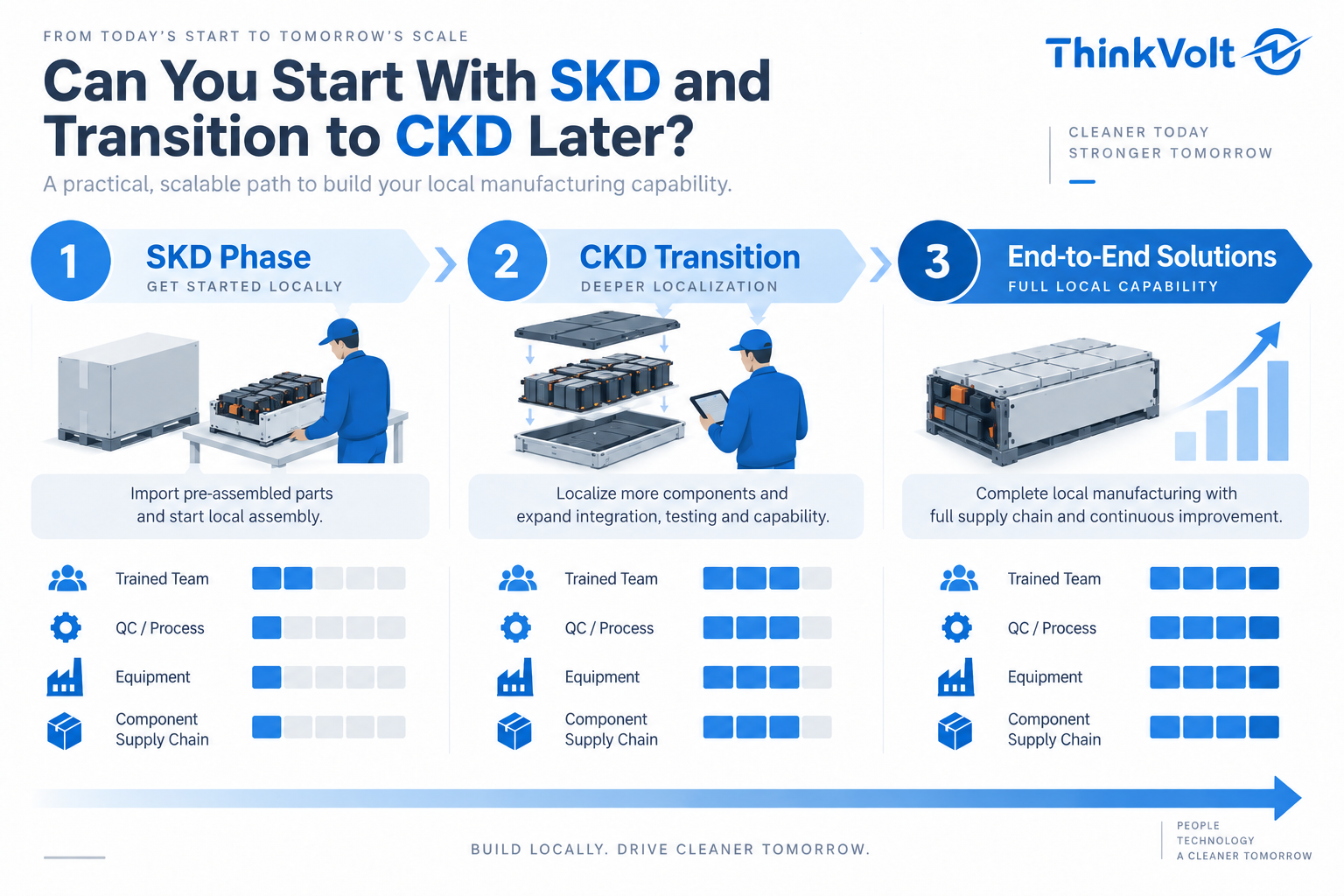
Equipment alone does not make an operation CKD-ready. Personnel, processes, documentation, testing, and supply-chain control must develop with the manufacturing scope.
ThinkVolt’s localization framework follows a phased SKD Phase → CKD Transition → End-to-End Solutions approach. Its documented CKD transition includes localization, technical transfer, training, and equipment support.
The goal, however, is not to reach CKD as quickly as possible. It is to increase localization at a pace the local operation can reliably support.
An SKD/CKD supplier should provide more than components. The required support should match the localization scope and clearly define the technical documentation, manufacturing guidance, training, quality requirements, and responsibilities needed by the local operation.
The supplier should clarify the BOM, supplied assembly condition, and processes to be completed locally. Depending on the project, support may include technical documentation, process guidance, training, and assistance with equipment or production setup.
For deeper localization, technical transfer should be considered part of the manufacturing plan rather than an afterthought.
Both parties should agree on inspection and testing responsibilities, acceptance criteria, issue escalation, and how technical changes will be controlled.
A useful supplier evaluation asks four questions: Who supplies each component? Who performs each process? Who verifies the result? Who handles technical or quality problems?
ThinkVolt’s documented localization offer includes SKD/CKD cooperation and technical transfer. The exact deliverables should still be confirmed for each project.
Before starting, confirm the product scope, BOM, local processes, production objectives, factory capability, quality responsibilities, regulatory requirements, and supplier support. Do not proceed based only on an agreement to use “SKD” or “CKD.”
What to Confirm | Why It Matters |
Battery model and configuration | Defines the product to be manufactured |
Destination country | Affects import and local requirements |
Expected production volume | Supports production and capacity planning |
BOM and supplied components | Defines the supplier’s scope |
Local assembly processes | Defines the factory’s scope |
Factory and equipment capability | Shows whether planned processes can be supported |
Technical workforce | Identifies training and support needs |
QC and testing responsibility | Defines who verifies the product |
Import and compliance requirements | Identifies country-specific issues |
Training and technical support | Clarifies localization support |
Acceptance criteria | Defines how results will be evaluated |
Localization roadmap | Establishes whether deeper localization is planned |
Translate these points into project documents such as the BOM, assembly scope, responsibility matrix, technical requirements, and acceptance criteria.
For an initial discussion, provide your target battery model, destination market, expected production volume, existing factory capability, and desired local assembly scope. These inputs give the supplier a much better basis for evaluating an appropriate SKD or CKD solution.

Not necessarily. SKD describes how a battery is supplied for local assembly, while battery pack assembly describes the manufacturing work itself. The actual processes completed locally depend on the supplied components and agreed project scope.
Not by definition alone. CKD does not establish a universal component boundary. Confirm whether cells, modules, BMS, structural parts, and other components arrive separately or in prepared assemblies through the project BOM.
Potentially, but it depends on the battery design and supplier capability. The supplier should evaluate whether the product can support different localization scopes while maintaining the required manufacturing and quality controls.
No. Equipment requirements depend on which manufacturing processes are transferred locally. Define the assembly scope first, then determine the tooling, production equipment, testing, facility, and workforce required.
Quality controls should expand with the manufacturing scope. Define incoming inspection, process control, testing, traceability, acceptance criteria, training, and procedures for nonconforming products before transferring additional processes locally.
Provide your target battery model or specifications, destination country, expected production volume, factory capability, and desired local assembly level. Equipment status, localization targets, and known regulatory requirements are also useful when available.
Yes, when the supplier supports project-specific localization. The feasible scope should be confirmed against the battery design, local manufacturing capability, quality requirements, and project objectives rather than assumed from the SKD or CKD label.
Choosing between SKD and CKD battery manufacturing means matching the depth of localization to the manufacturing responsibilities your operation can reliably manage. Deeper localization creates value only when your production, quality, supply-chain, and commercial conditions support it.
If you are evaluating local battery assembly, share your target battery model, destination market, expected production volume, factory capability, and desired assembly scope with ThinkVolt to discuss a suitable SKD/CKD approach.