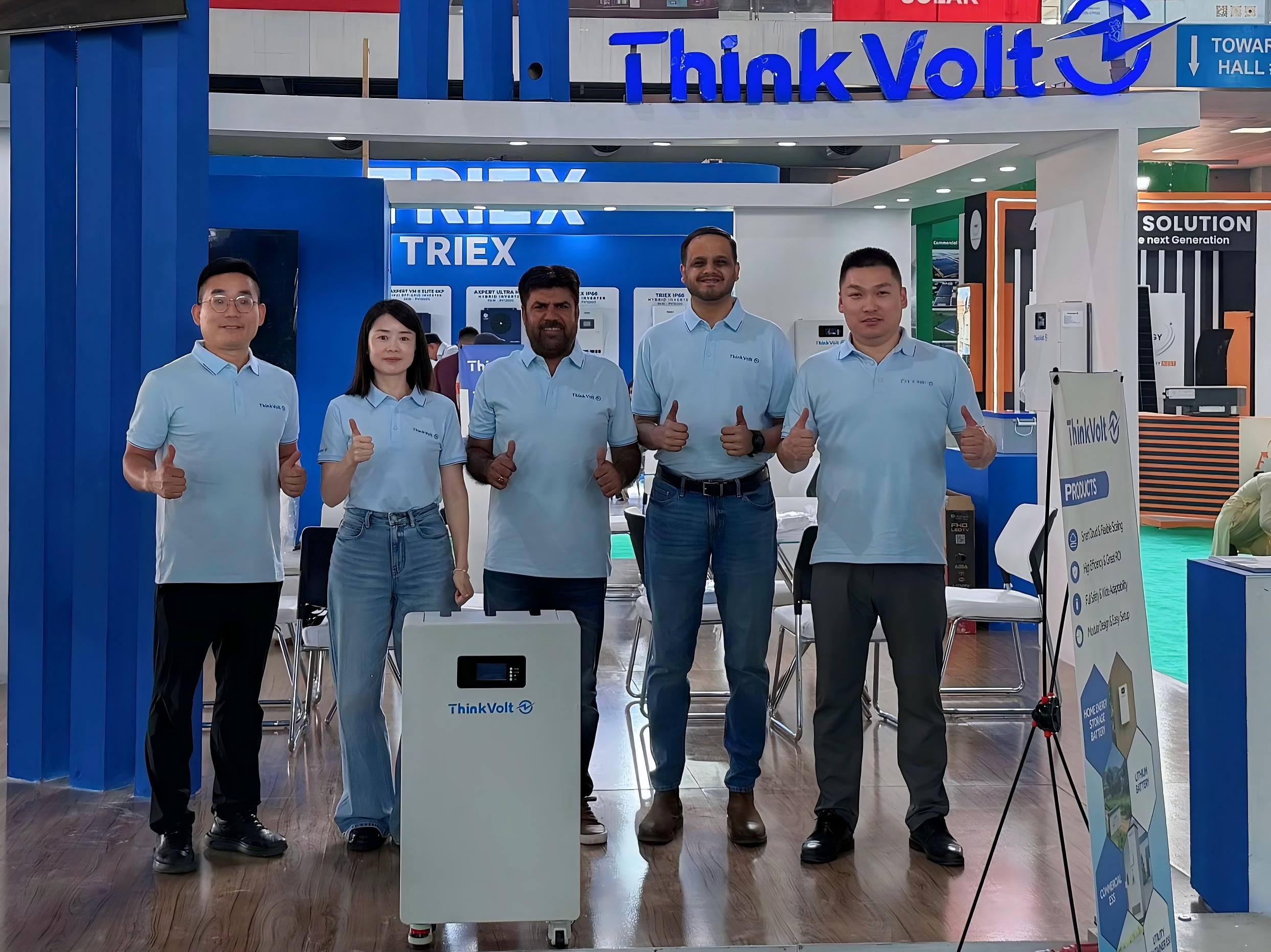
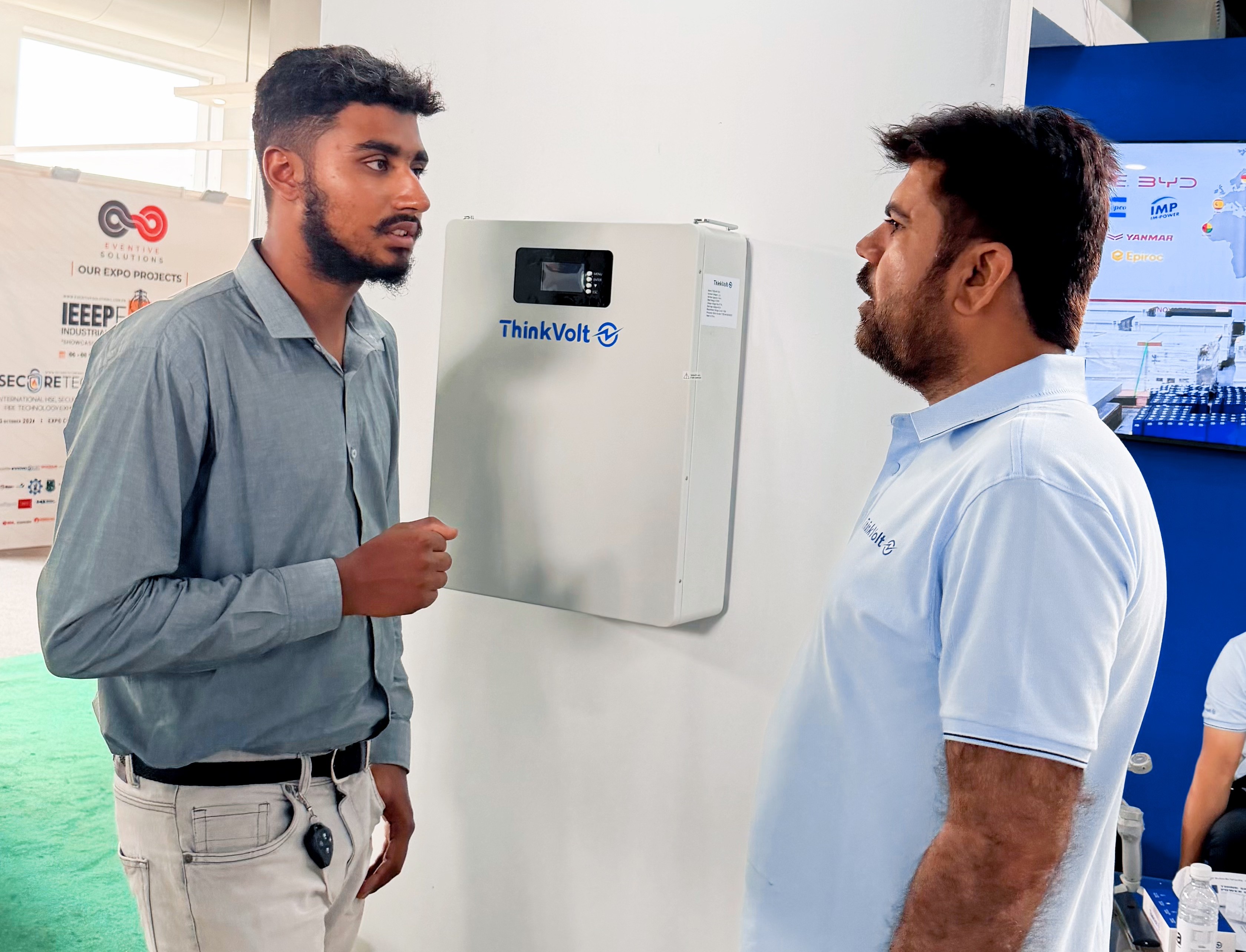
ThinkVolt at Solar & Storage Expo Pakistan 2026: Connecting with Pakistan’s Energy Storage Market
2026-07-23
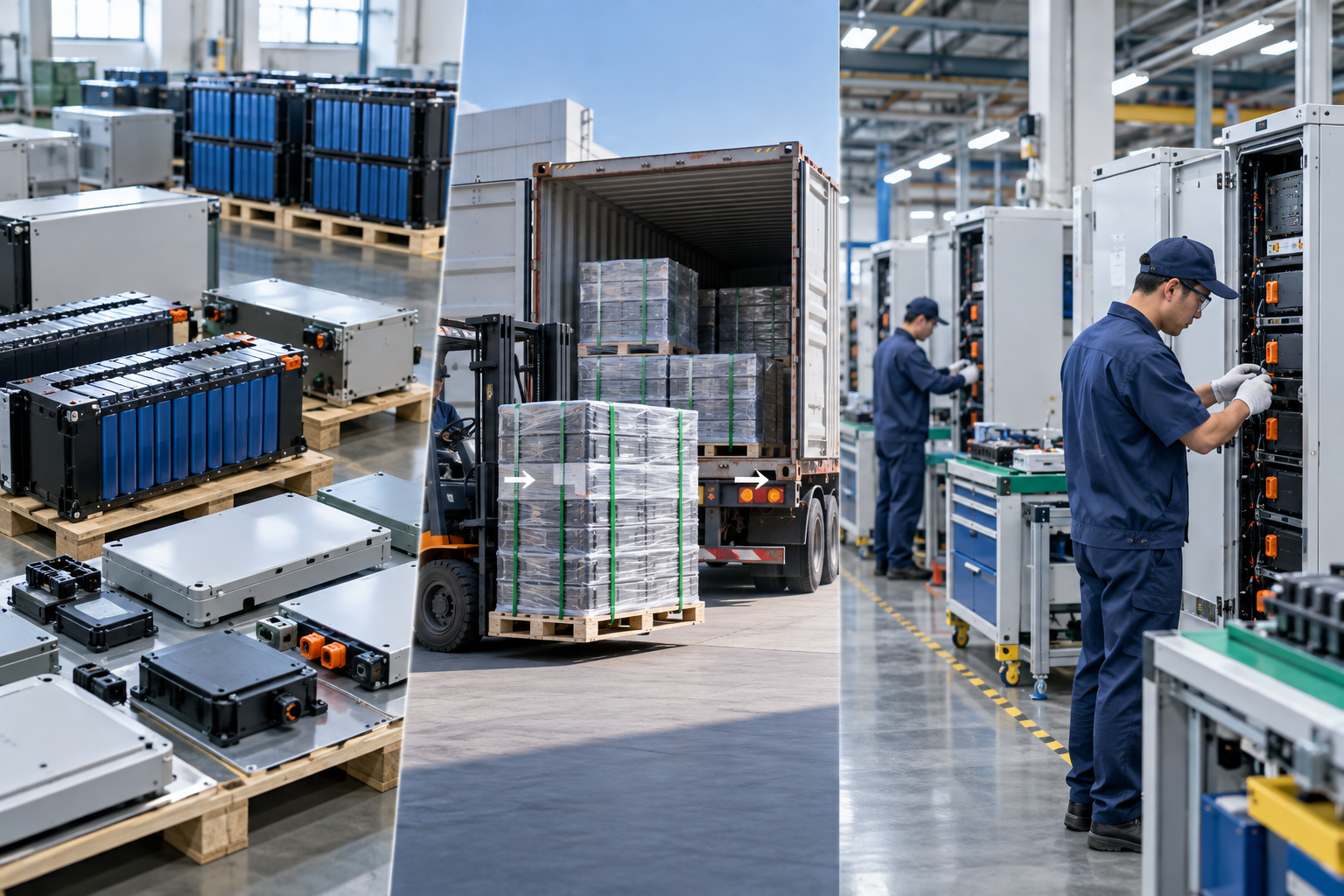
SKD battery assembly is a localization model in which a supplier completes part of the battery production or pre-assembly before shipping agreed components or modules to a local factory for the remaining integration, inspection, and testing. Because there is no single universal SKD configuration, the exact division of work depends on the bill of materials (BOM), pre-assembly level, local assembly scope, and quality responsibilities agreed between both parties.
For battery distributors, manufacturers, and companies planning local production, this division matters more than the SKD label itself. A well-defined SKD project makes it clear what arrives from the supplier, what must be completed locally, and how the finished battery will be verified before release.
SKD battery assembly is a production and localization model in which a battery supplier completes part of the manufacturing or pre-assembly process, while a local factory completes the remaining assembly and verification work. SKD stands for Semi Knocked Down, meaning the product is shipped in a partially assembled form rather than as a completely finished battery.
In practice, SKD describes how manufacturing responsibilities are divided between the original supplier and the local partner. It does not define a specific battery chemistry, pack design, or fixed set of components. An SKD project may involve LiFePO4 battery packs, energy storage batteries, or other battery products, depending on the agreed project scope.
SKD battery assembly is also different from general battery pack assembly. Battery pack assembly is the manufacturing activity itself, while SKD describes how that activity is split across locations. The key question is which production steps are completed before shipment and which remain local.
SKD battery assembly works by dividing production between the original battery supplier and a local assembly partner. The supplier completes the agreed level of pre-assembly and ships the specified components or modules. The local factory then completes the remaining integration, inspection, testing, and final release.
A typical SKD workflow includes six stages:
1. Define the product and assembly scope. Both parties confirm the battery configuration, BOM, pre-assembly level, local work scope, and quality responsibilities.
2. Complete supplier-side pre-assembly. The supplier prepares the modules, components, or structural parts included in the agreed SKD package.
3. Pack and ship the SKD materials. The shipment is prepared according to the defined project scope and documentation.
4. Perform incoming inspection locally. The local factory checks received materials before assembly begins.
5. Complete local assembly and integration. Mechanical, electrical, or structural work is carried out as defined in the process plan.
6. Test and release the finished battery. The completed product is verified against agreed quality and acceptance requirements.
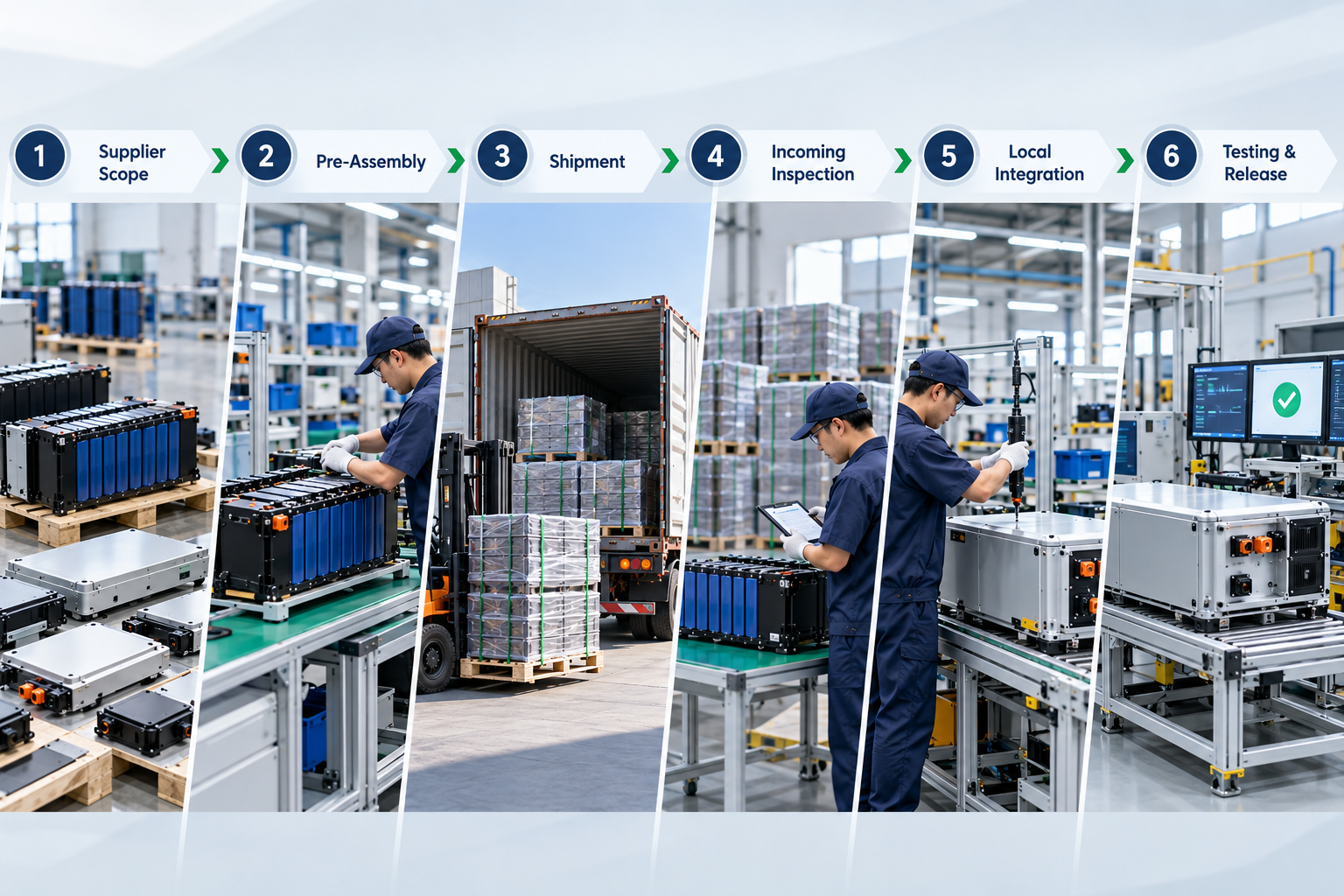
The depth of each stage can vary significantly from one project to another.
In an SKD battery project, the supplier provides the parts, modules, and pre-assembled components defined in the agreed BOM and delivery scope. The exact package varies by battery design, localization target, and the amount of work planned for the local factory.
Depending on the project, an SKD package may include:
· pre-assembled battery modules
· Battery Management System (BMS) components
· structural parts or enclosures
· wiring, connectors, and related hardware
· specified accessories and assembly materials
· technical documents needed for local production and inspection
Some projects use a higher level of pre-assembly, while others transfer more integration work to the local facility. Buyers should therefore avoid assuming that two suppliers offering “SKD batteries” are providing the same production scope.
The practical reference should always be the approved BOM, drawings, technical specifications, and delivery documents.
The local factory completes the production steps that are not finished by the original supplier and that are assigned to the local side in the project documents. Depending on the scope, this can range from simple mechanical integration to more involved electrical assembly, inspection, and final product preparation.
Typical local activities may include:
· incoming inspection of modules and components
· mechanical assembly of structural parts and enclosures
· installation of wiring, connectors, and related hardware
· BMS-related integration where required
· labeling, documentation, and packaging
· in-process checks and functional verification
· final inspection before release
Not every SKD factory performs deep battery-pack processes such as cell sorting, cell welding, or module production. If these operations are already completed by the supplier, the local facility may only need final integration and verification.
This is why the local work scope should be defined before equipment or staffing decisions are made.
A workable SKD battery project should be defined by the actual BOM, pre-assembly level, local process scope, testing requirements, and responsibility split—not by the SKD label alone. These details determine what is supplied, what is completed locally, and what resources the project requires.
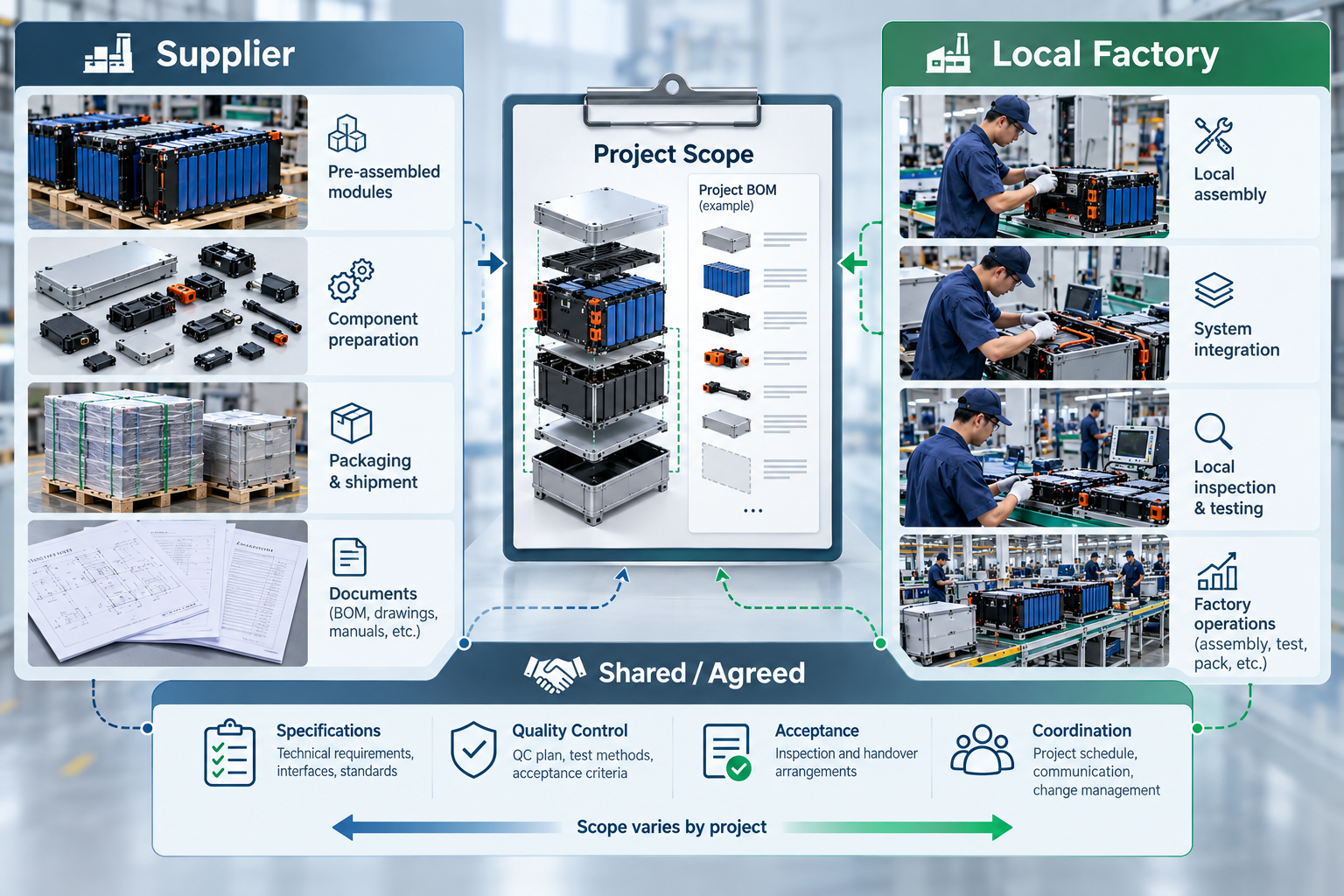
Before launch, both parties should clearly define:
· the approved BOM
· the exact level of supplier-side pre-assembly
· the production steps transferred to the local factory
· tooling and equipment responsibilities
· quality-control checkpoints
· testing and inspection responsibilities
· technical documents and work instructions
· final acceptance criteria
· how design or process changes will be controlled
This matters because two offers described as “SKD” may involve very different levels of local work. One project may use pre-assembled modules with limited final integration, while another may transfer a larger share of production to the local facility.
For buyers, the safest comparison is the BOM, local workload, testing responsibility, and factory requirements behind each offer.
No. SKD battery packages can differ significantly in how much work has already been completed by the supplier and how much remains for the local factory.
One supplier may deliver highly pre-assembled modules that require only final integration, while another may transfer a larger portion of the assembly process. Even when both offers are described as SKD, the required equipment, labor, technical skills, testing steps, and quality responsibilities may be very different.
Product architecture also affects the package structure. Battery design, enclosure layout, BMS integration, production targets, and existing factory capability can all influence the most practical division of work.
For procurement teams, the SKD label should be treated as a starting point rather than a complete technical definition.
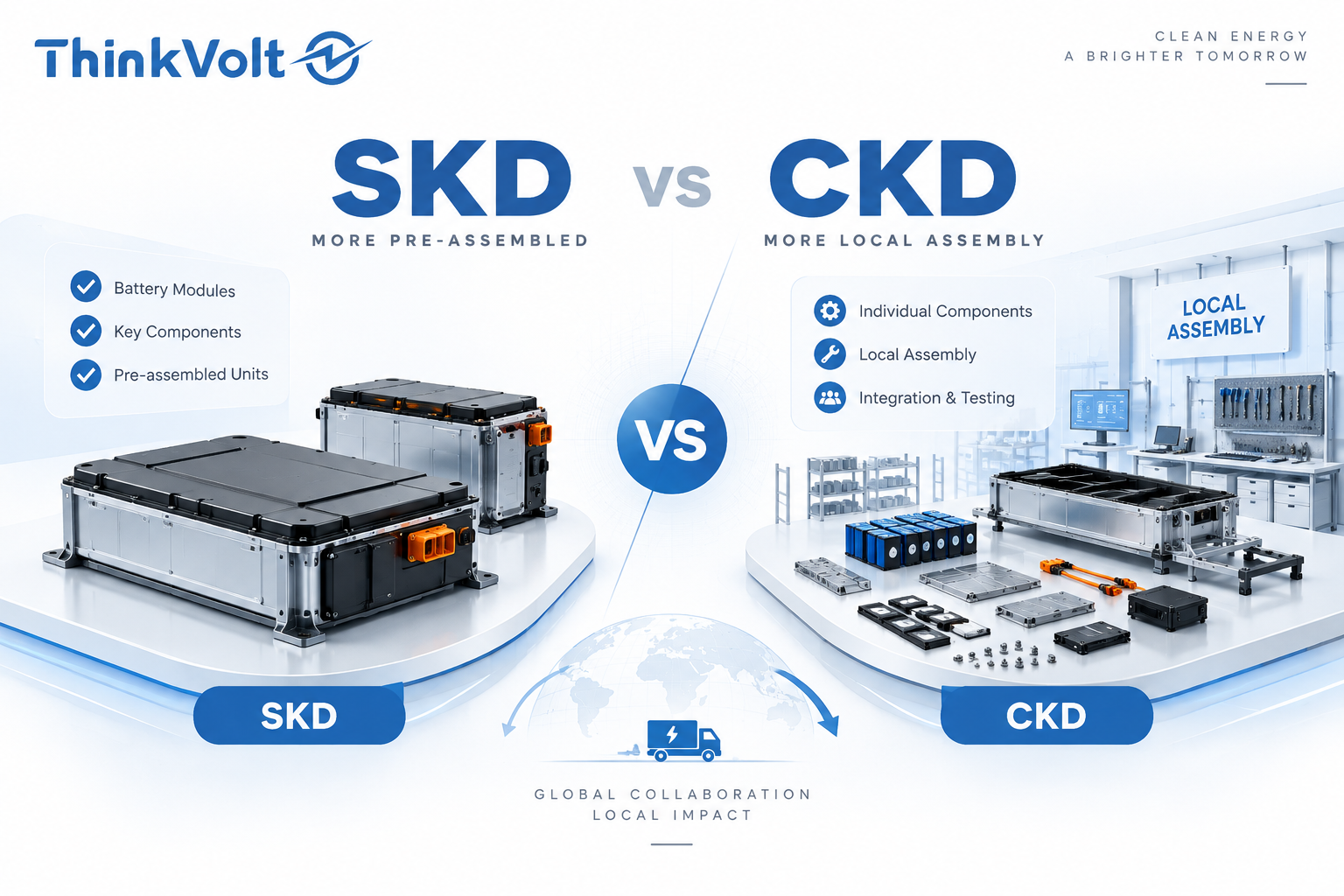
The main difference between SKD and CKD battery assembly is the depth of local manufacturing. In general, SKD keeps more pre-assembly work with the original supplier, while CKD transfers a larger share of component-level assembly and production activities to the local factory.
Dimension | SKD | CKD |
Supplier-side pre-assembly | Generally higher | Generally lower |
Local assembly work | More limited, depending on scope | Deeper and more process-intensive |
Factory capability required | Usually lower | Usually higher |
Localization depth | Often an earlier or intermediate stage | Usually a deeper stage |
There is no universal component count or process boundary that automatically determines when SKD becomes CKD. The actual distinction depends on the BOM, level of pre-assembly, local production steps, and responsibilities agreed between the supplier and local partner.
For buyers, the practical approach is to compare the real manufacturing scope rather than relying only on the SKD or CKD label.
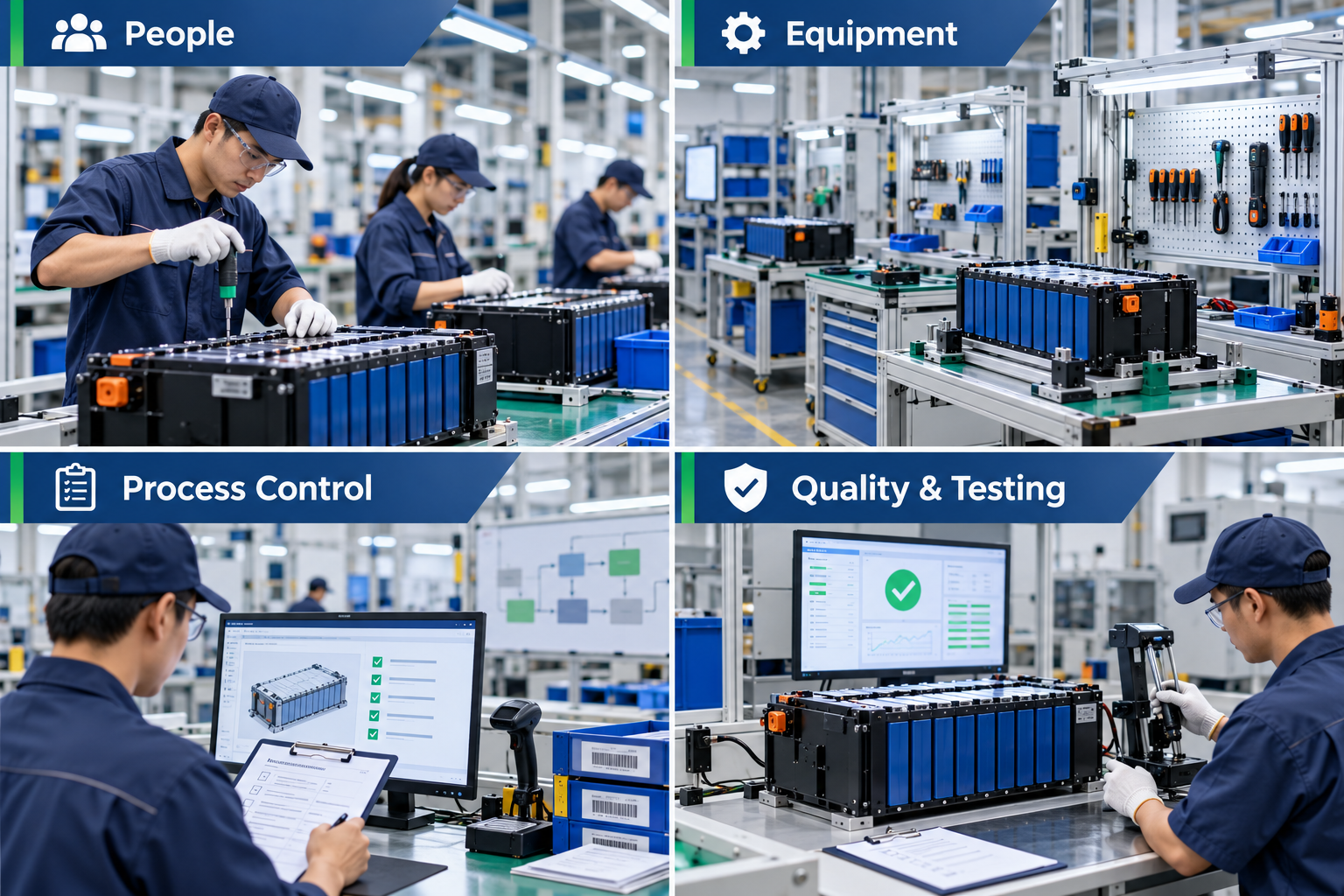
A local factory needs the people, equipment, process controls, and quality systems required for the specific production steps transferred under the SKD project. The deeper the local assembly scope, the greater the need for trained operators, technical supervision, dedicated tooling, inspection capability, and documented process control.
For personnel, the factory may need trained assembly operators, quality inspectors, and technical staff who understand the product, work instructions, and acceptance requirements. The required skill level depends on whether the local work involves simple mechanical integration or more complex electrical and battery-pack processes.
Equipment should follow the actual process scope. A project focused on final assembly may only require appropriate fixtures, assembly tools, and test equipment. A deeper localization project may need additional production and inspection equipment. A complete battery-pack line should not be assumed to be necessary for every SKD project.
The factory also needs clear work instructions, material control, traceability, process records, and suitable production conditions.
The planning rule is simple: define the local process first, then determine the people, equipment, and factory capability needed to perform it consistently.
After local assembly, the finished battery should be verified against the quality plan, technical specifications, and acceptance criteria agreed for the project. The exact checks depend on the battery design and the work performed locally, so there is no single testing sequence for every SKD operation.
Quality control normally starts before final assembly is complete. Incoming inspection can confirm that received modules, components, and materials match the approved specifications. During assembly, in-process checks help identify incorrect connections, missing parts, workmanship issues, or deviations from documented procedures.
After assembly, the project may require electrical and functional verification, connection and protection checks, product identification checks, and other tests specified by the approved process. Where applicable, end-of-line testing can confirm that the finished unit meets the defined release requirements.
Traceability is equally important. Inspection results, test records, component information, and production records should be retained according to the project quality system.
Testing responsibility and acceptance criteria should be agreed before production starts so there is no gap between supplier-side quality control and local factory verification.
Companies often use SKD battery assembly when they want to build local production capability without moving immediately into a deeper manufacturing model. It can provide a middle ground between importing fully assembled batteries and setting up a more complete local battery-pack operation.
One reason is phased localization. A company can begin with a defined level of local assembly, develop its workforce and quality systems, and expand the local process scope as its capability grows. SKD can also support regional manufacturing goals, local service needs, and supply-chain planning.
In some markets, SKD may also affect import treatment, local-content eligibility, or logistics economics. However, these benefits are not automatic. They depend on the destination country, customs classification, shipment configuration, local regulations, and the manufacturing steps completed locally.
SKD should therefore be evaluated as a project-specific localization strategy rather than a guaranteed cost-saving method. The strongest business case comes from matching the assembly scope to the company’s market goals, factory capability, expected volume, and long-term localization plan.
Before starting an SKD battery project, buyers should confirm the product scope, local assembly responsibilities, factory requirements, quality criteria, and market requirements in clear project documents. If these points remain vague, it becomes difficult to compare suppliers, plan equipment, or control finished-product quality.
A practical SKD project checklist should cover:
· exact battery product, configuration, and target specifications
· approved BOM and supplier delivery scope
· production steps completed before shipment
· production steps assigned to the local factory
· expected production volume and ramp-up plan
· existing factory capability and required equipment
· operator and technical training requirements
· quality-control checkpoints and inspection responsibilities
· testing methods and final acceptance criteria
· required technical documents and work instructions
· destination market and applicable compliance requirements
· certification, labeling, and packaging responsibilities
· technical support and change-control procedures
The supplier should also explain what happens if the BOM, component source, product design, or local process changes after the project begins. Clear change control helps prevent differences between the approved product and later production batches.
A useful rule is simple: if you cannot clearly identify what is supplied, what is completed locally, who verifies the finished battery, and what standard defines acceptance, the project scope is not yet sufficiently defined.
Yes, but suitability depends on the factory’s existing equipment, workforce, quality system, and planned local assembly scope. A facility that already handles battery-pack integration may require fewer changes than one starting from a different production process. Compare the SKD process requirements with your current tooling, inspection capability, documentation system, and technical staff before proceeding.
Not necessarily. The required equipment depends on which manufacturing steps are transferred to the local factory. If the supplier delivers highly pre-assembled modules, the local operation may focus mainly on integration, wiring, inspection, and testing. Define the local process scope first, then determine the equipment needed.
It may, but SKD does not automatically result in lower import duties. Customs treatment can depend on the destination country, HS classification, BOM, shipment configuration, origin rules, and local regulations. Confirm the applicable rules using the actual SKD configuration before building a business case around tariff savings.
No. Local assembly does not automatically satisfy local-content, country-of-origin, or manufacturing-status requirements. Different markets use different criteria for determining how much local processing is required. Review the relevant rules before deciding how much production must be transferred locally or making local-manufacturing claims.
Yes, a project can potentially move from SKD toward deeper CKD localization as local capability develops. However, the transition normally requires a new review of the BOM, production processes, equipment, workforce skills, quality controls, testing responsibilities, documentation, and commercial scope.
Quality responsibility should be divided clearly between the supplier and local factory before production begins. The supplier may be responsible for incoming components or pre-assembled modules, while the local factory is responsible for the processes it performs. Final inspection, testing, traceability, acceptance criteria, and non-conformance handling should also be assigned.
Provide the target battery type and specifications, destination market, expected production volume, existing factory capability, desired local assembly level, certification or compliance requirements, and project stage. These inputs help the supplier define a realistic BOM, process scope, equipment requirement, training plan, and support package.
SKD battery assembly works best when the division between supplier-side pre-assembly and local production is clearly defined. The key is to evaluate the BOM, local process scope, factory capability, quality responsibilities, and market requirements together rather than relying on the SKD label alone.
If you are evaluating an SKD battery project, prepare your target battery product, destination market, expected volume, existing factory capability, and desired localization level. These details provide the starting point for defining a practical assembly scope and project plan.