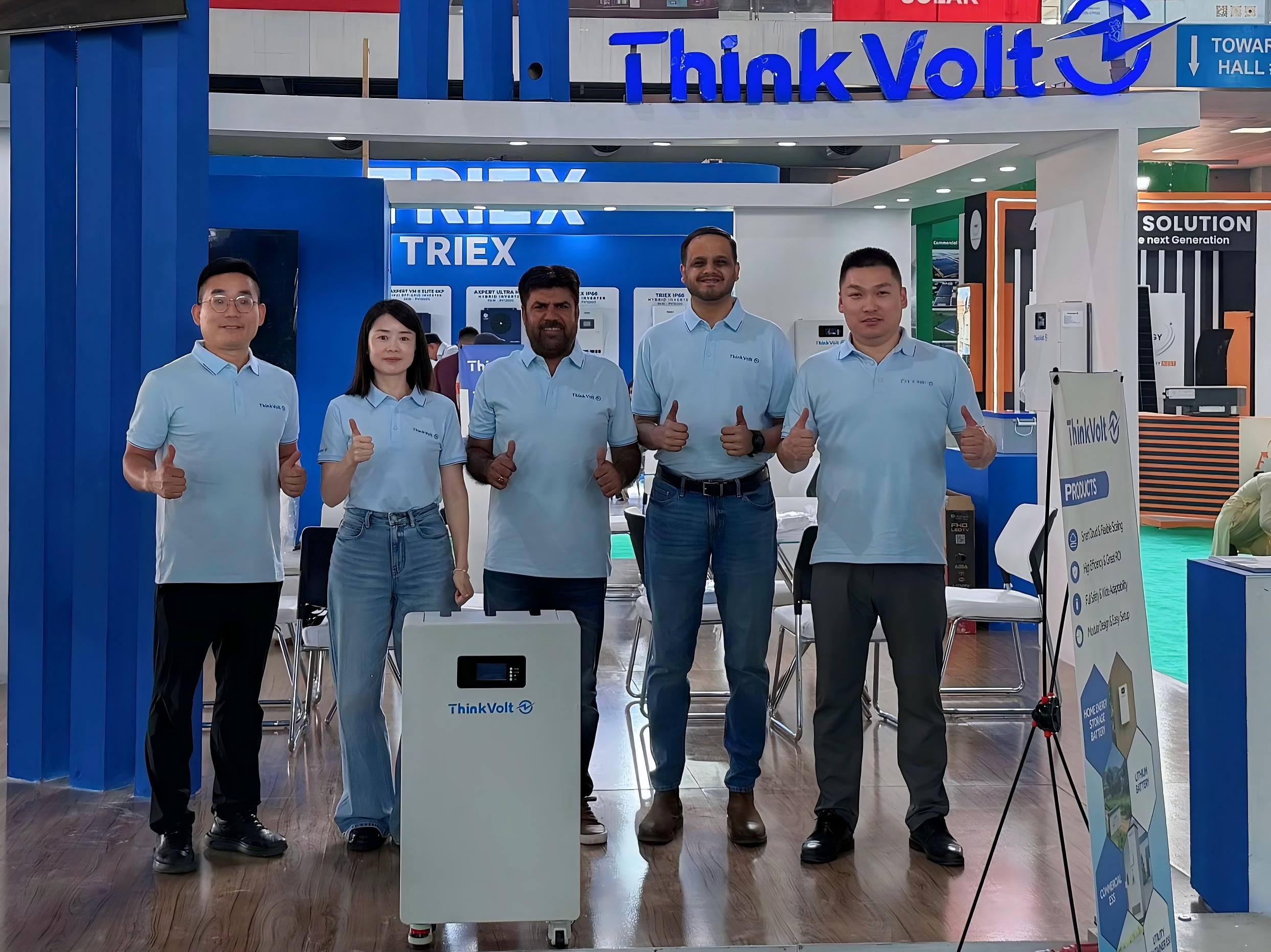
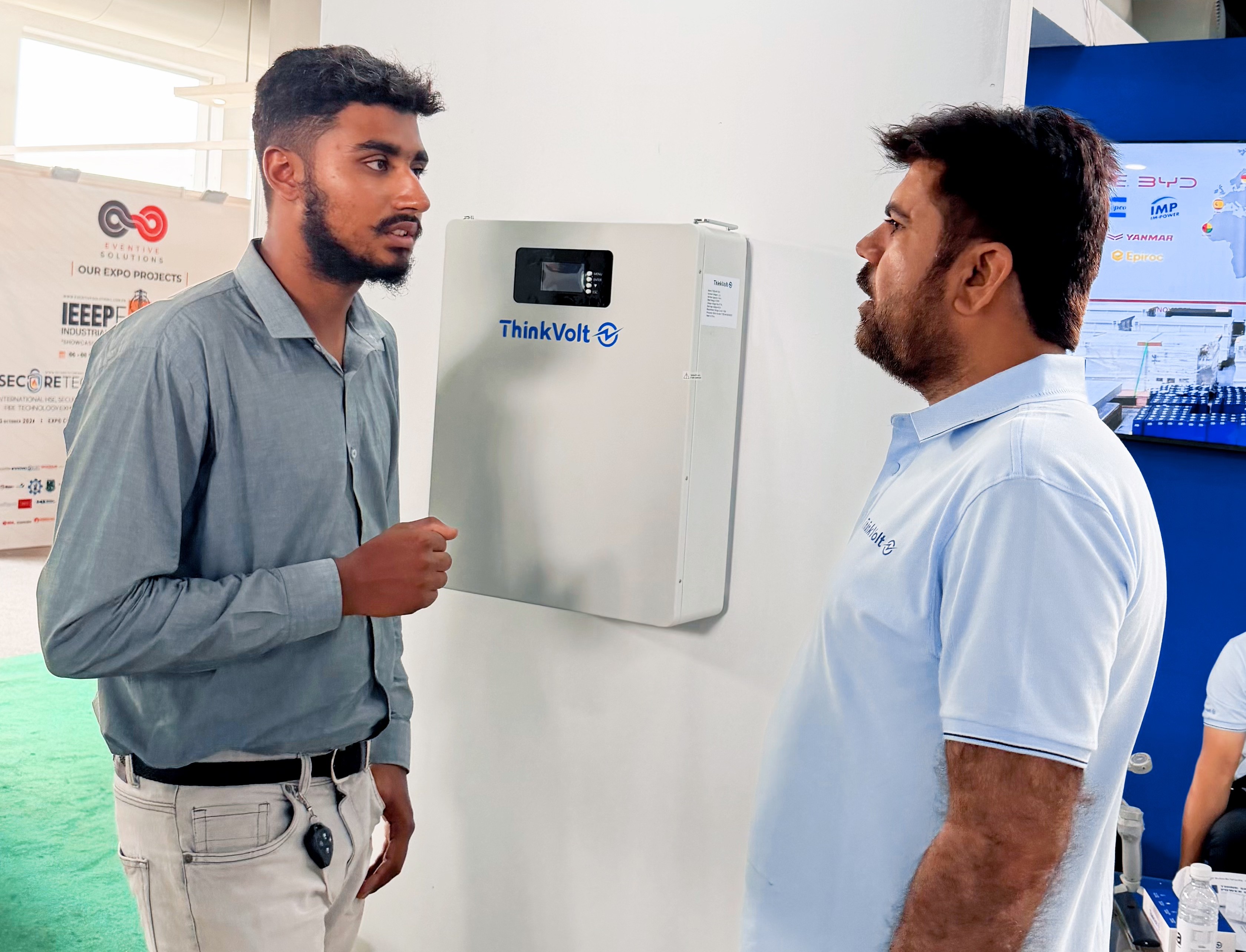
ThinkVolt at Solar & Storage Expo Pakistan 2026: Connecting with Pakistan’s Energy Storage Market
2026-07-23
That is the idea behind the ThinkVolt home energy storage battery range. Instead of offering one enclosure for every project, the range includes wall-mounted, rack-mounted, and floor-standing LiFePO4 batteries in both 25.6V and 51.2V configurations. The result is a product family that can be used for solar energy storage, backup power, and off-grid applications while giving homeowners, installers, and distributors more flexibility at the design stage.
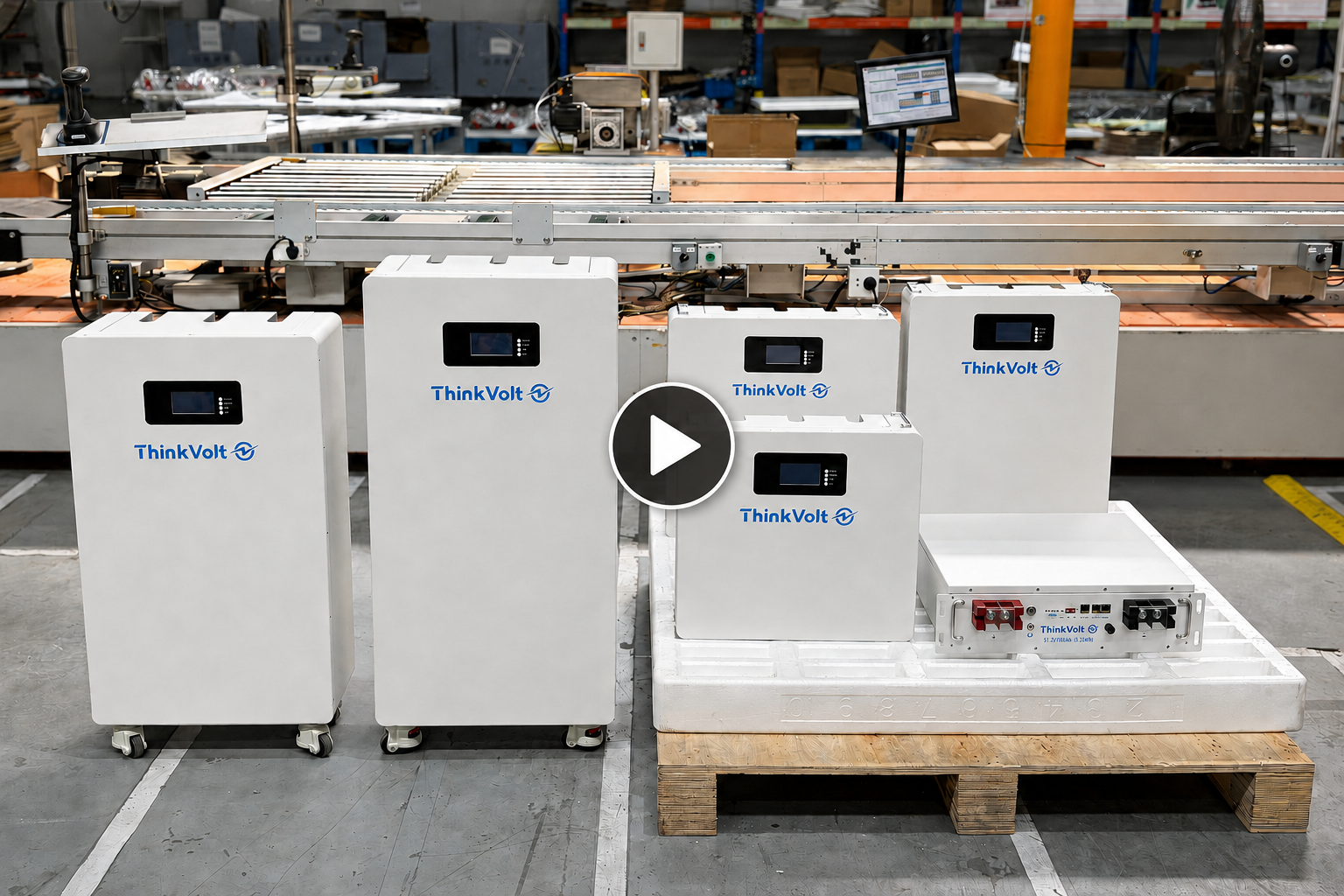
ThinkVolt's current core range covers six models from 2.56kWh to 16.08kWh. All six use lithium iron phosphate (LiFePO4 or LFP) chemistry and are designed around three installation formats. The table below gives a quick view of the main differences.
Model | Installation | Rated voltage | Capacity | Rated energy |
TVES-24100W | Wall-mounted | 25.6V | 100Ah | 2.56kWh |
TVES-24200W | Wall-mounted | 25.6V | 200Ah | 5.12kWh |
TVES-48100R | Rack-mounted | 51.2V | 100Ah | 5.12kWh |
TVES-48100W | Wall-mounted | 51.2V | 100Ah | 5.12kWh |
TVES-48200L | Floor-standing | 51.2V | 200Ah | 10.24kWh |
TVES-48300L | Floor-standing | 51.2V | 314Ah | 16.08kWh |
Rated values are based on the supplied ThinkVolt product materials. Final configuration should be confirmed for the selected model and inverter.
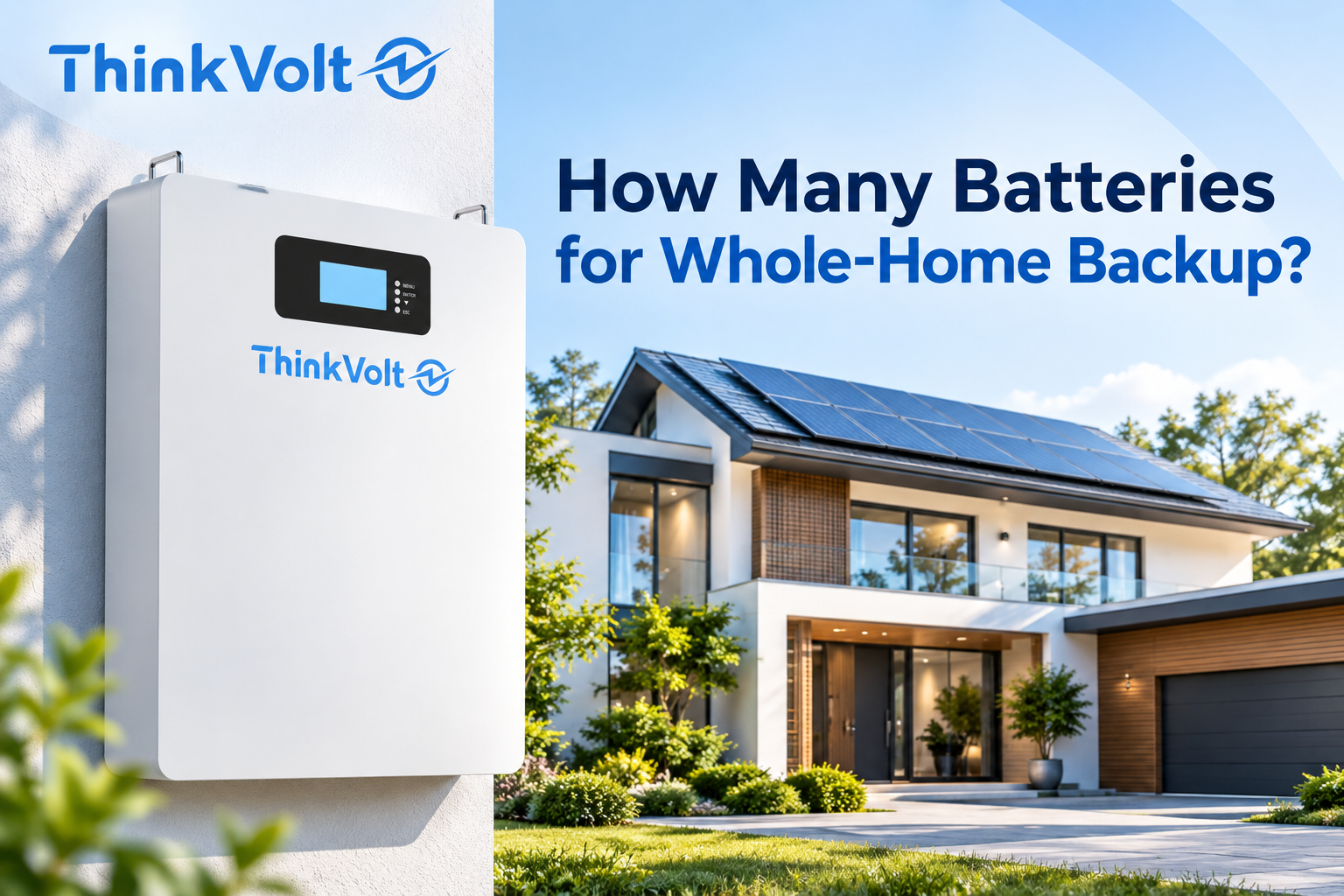
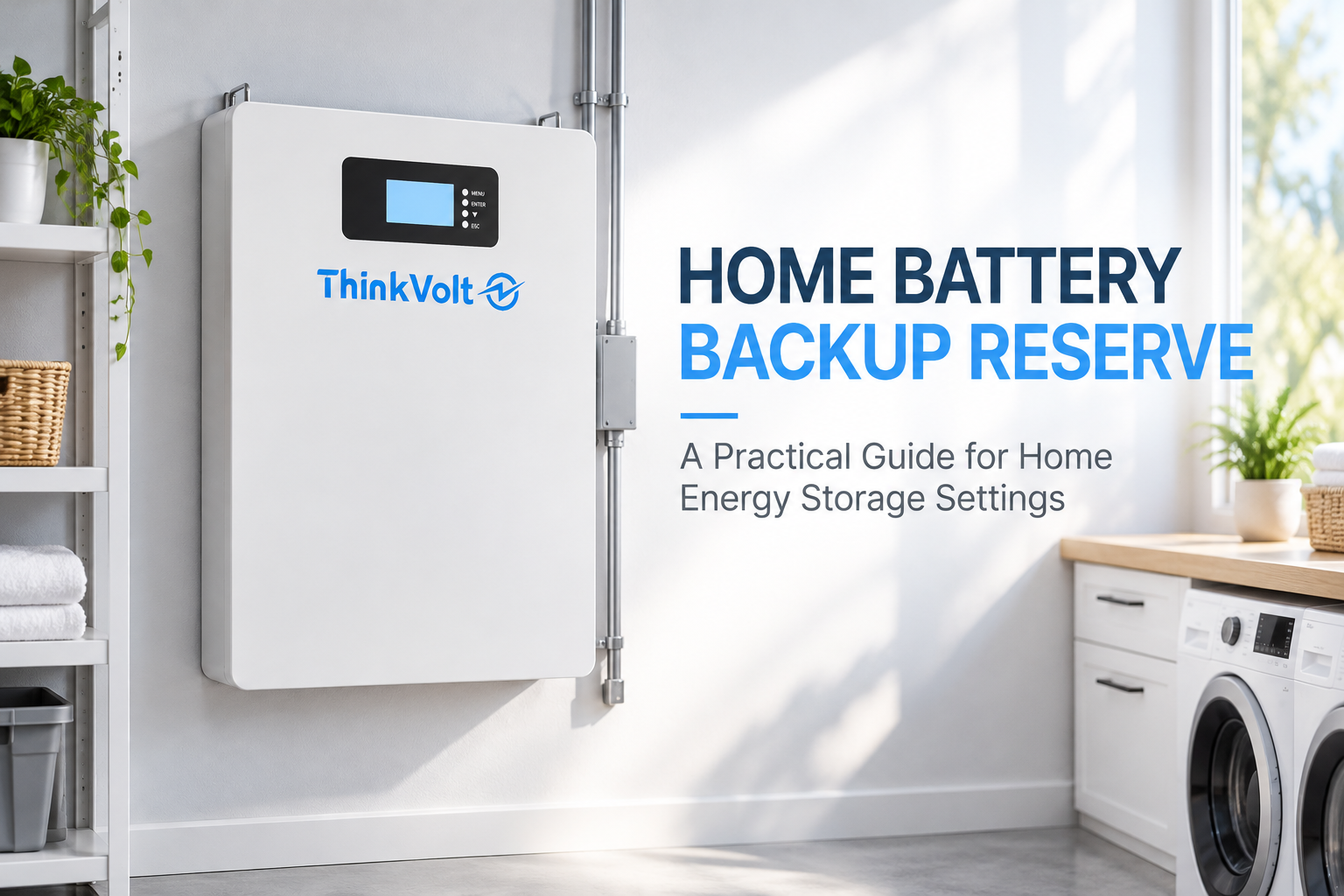
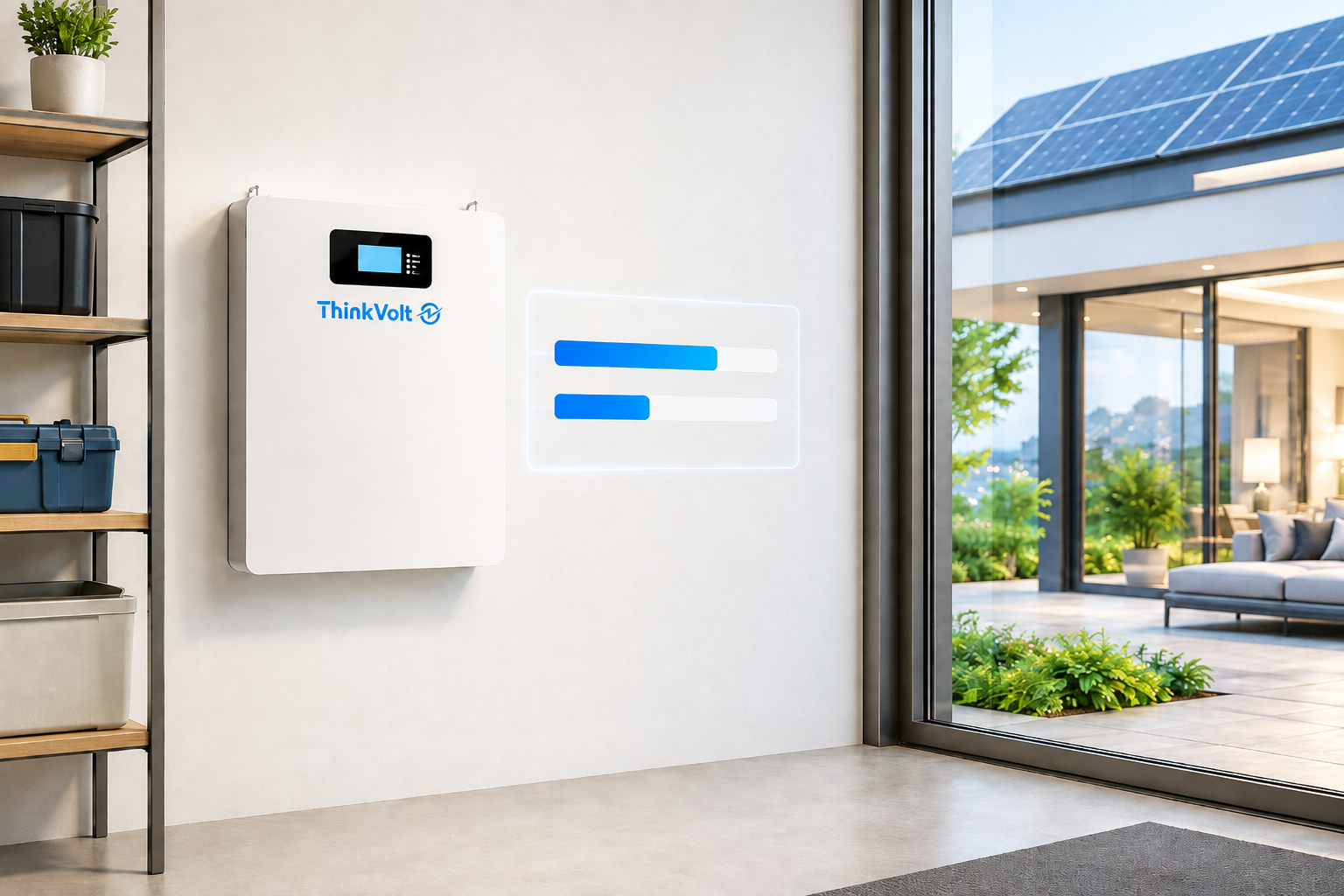
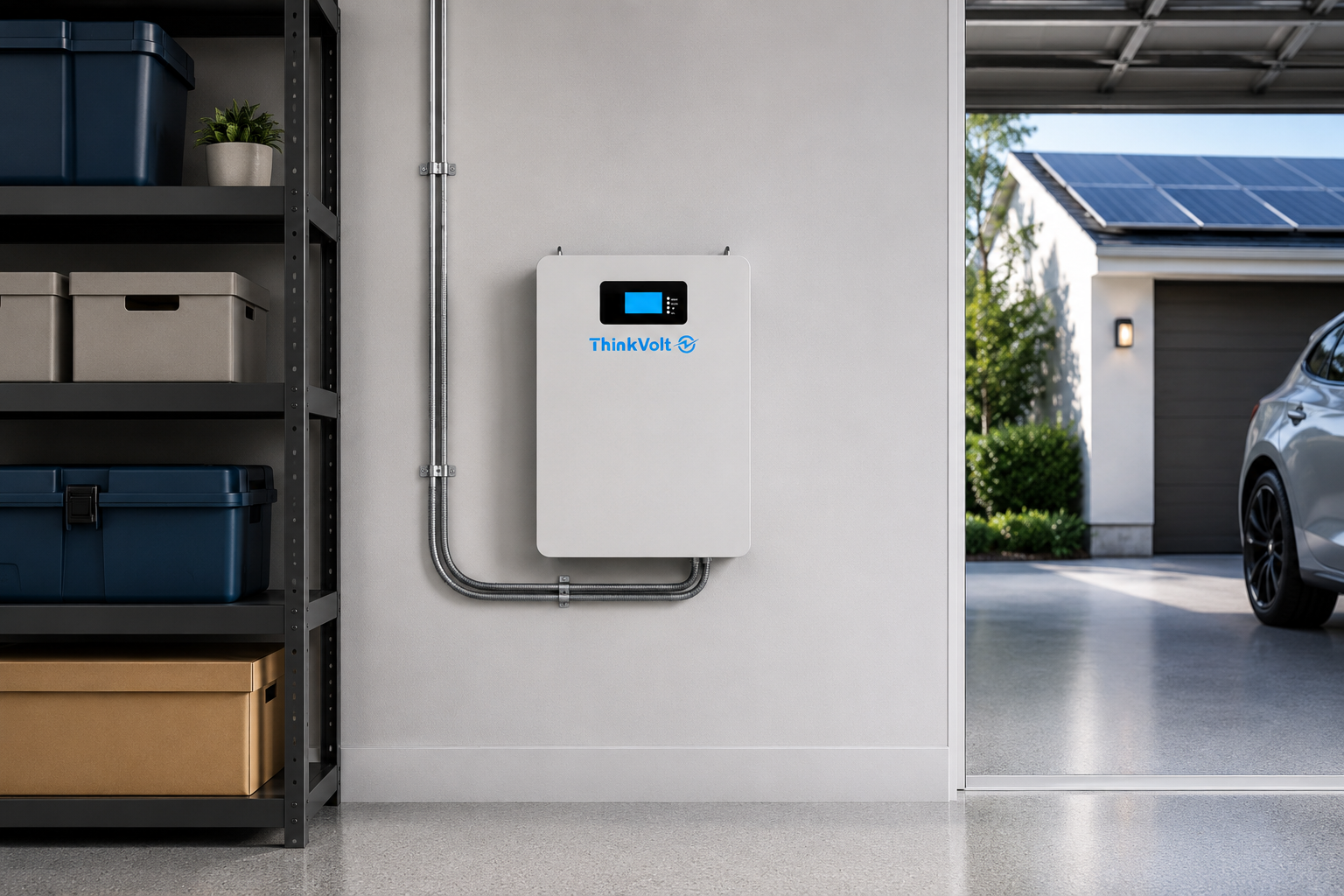
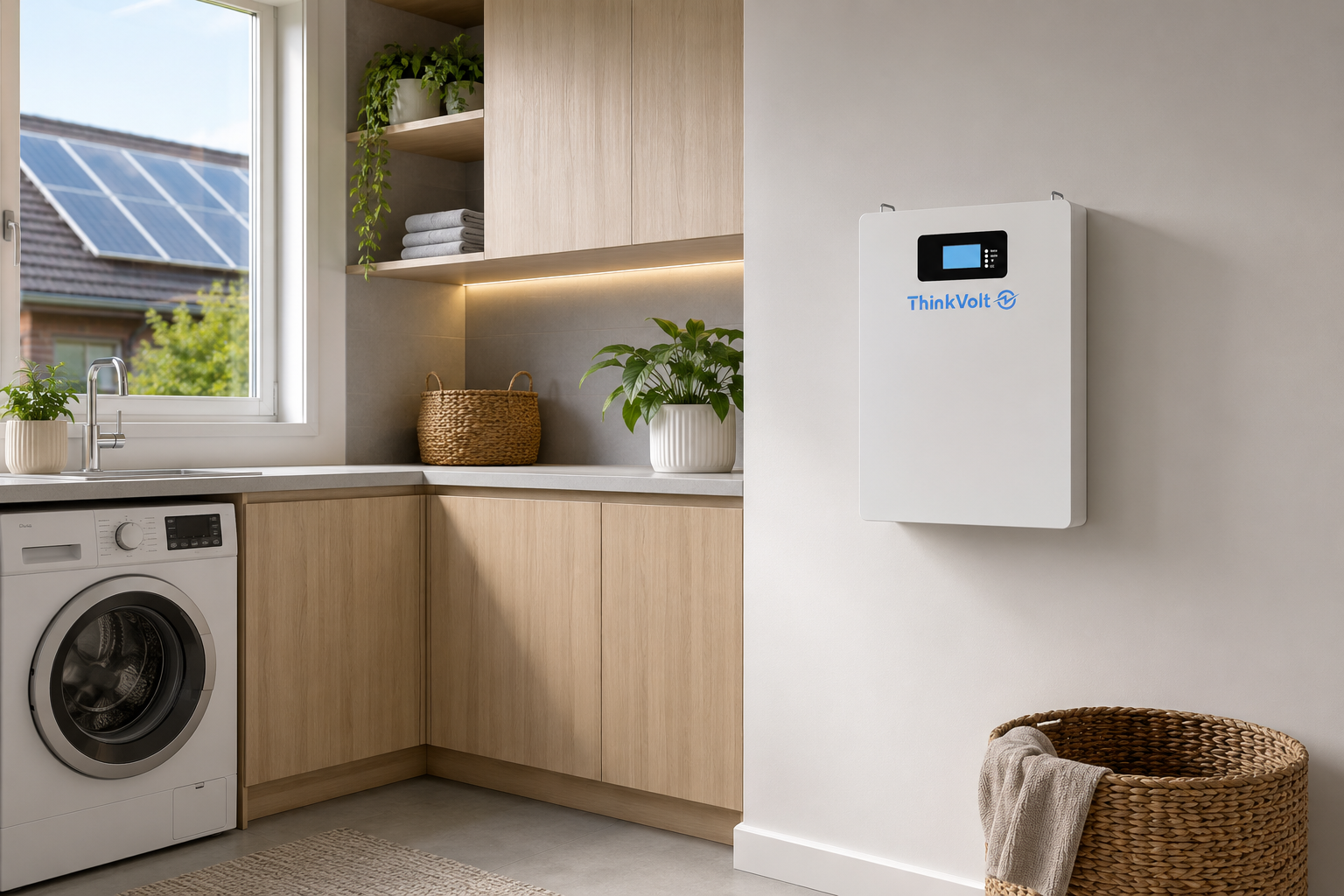
The wall-mounted range includes two 25.6V options and one 51.2V option. These models are a good fit when floor space is limited or when the customer wants a neat installation in a utility room, garage, or dedicated energy area. The 2.56kWh TVES-24100W suits smaller 24V systems, while the TVES-24200W doubles the rated energy to 5.12kWh. For 48V-class systems, the TVES-48100W provides 5.12kWh at 51.2V.
The removable top cover keeps the connection area protected while still giving installers convenient access during wiring and maintenance. A front LCD screen shows key battery information without requiring the user to open an app.
The TVES-48100R is a 51.2V, 100Ah rack-mounted battery with 5.12kWh of rated energy. Multiple modules can be installed together in a standard battery or server rack, making this format useful when a project needs an orderly, serviceable, and expandable battery bank. It also allows an installer to add capacity in clear steps instead of moving directly to one large enclosure.
For homes that need more stored energy in a single unit, ThinkVolt offers the TVES-48200L at 10.24kWh and the TVES-48300L at 16.08kWh. Both are 51.2V floor-standing batteries with built-in wheels, which makes positioning easier during installation. Their removable top covers provide direct access to the connection area and help keep the interface protected when the system is in normal use.
This format can be especially practical for larger backup loads, longer target runtimes, or off-grid homes where a compact wall battery may not provide enough energy. Actual backup time still depends on usable capacity, inverter efficiency, operating conditions, and the loads that remain on during an outage.
ThinkVolt uses lithium iron phosphate chemistry across the home battery range. LFP is widely selected for stationary storage because of its thermal stability and long cycle life. The listed models are rated for at least 6,000 cycles at 25°C and 85% depth of discharge, with charge and discharge efficiency of at least 95%. Those conditions matter: cycle life is always affected by temperature, depth of discharge, charge rate, and everyday operating habits.
The battery management system monitors the battery at cell, module, and system level. It provides protection against overcharge, over-discharge, over-current, short circuit, and abnormal temperature conditions. This is not only a safety feature. Better visibility also helps installers identify a problem faster and reduces unnecessary service visits.
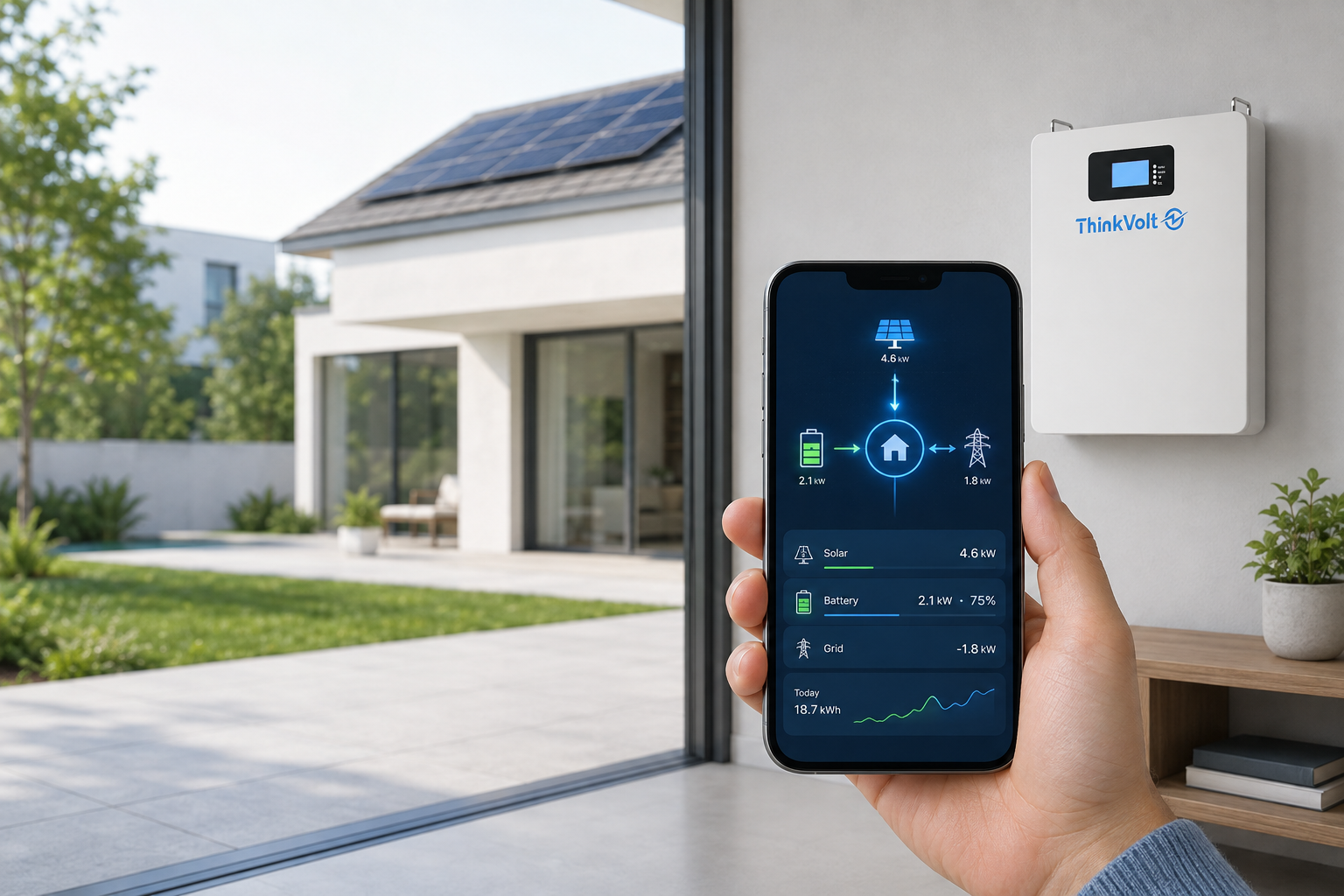
On the front display, users can check information such as voltage, current, capacity, state of charge, and individual cell temperature. The mobile app adds real-time monitoring of voltage, current, power, and temperature, along with production information, cycle count, protection status, cell-level voltage data, fault records, and configurable protection parameters. For distributors and service teams, that data can make remote support much more efficient.
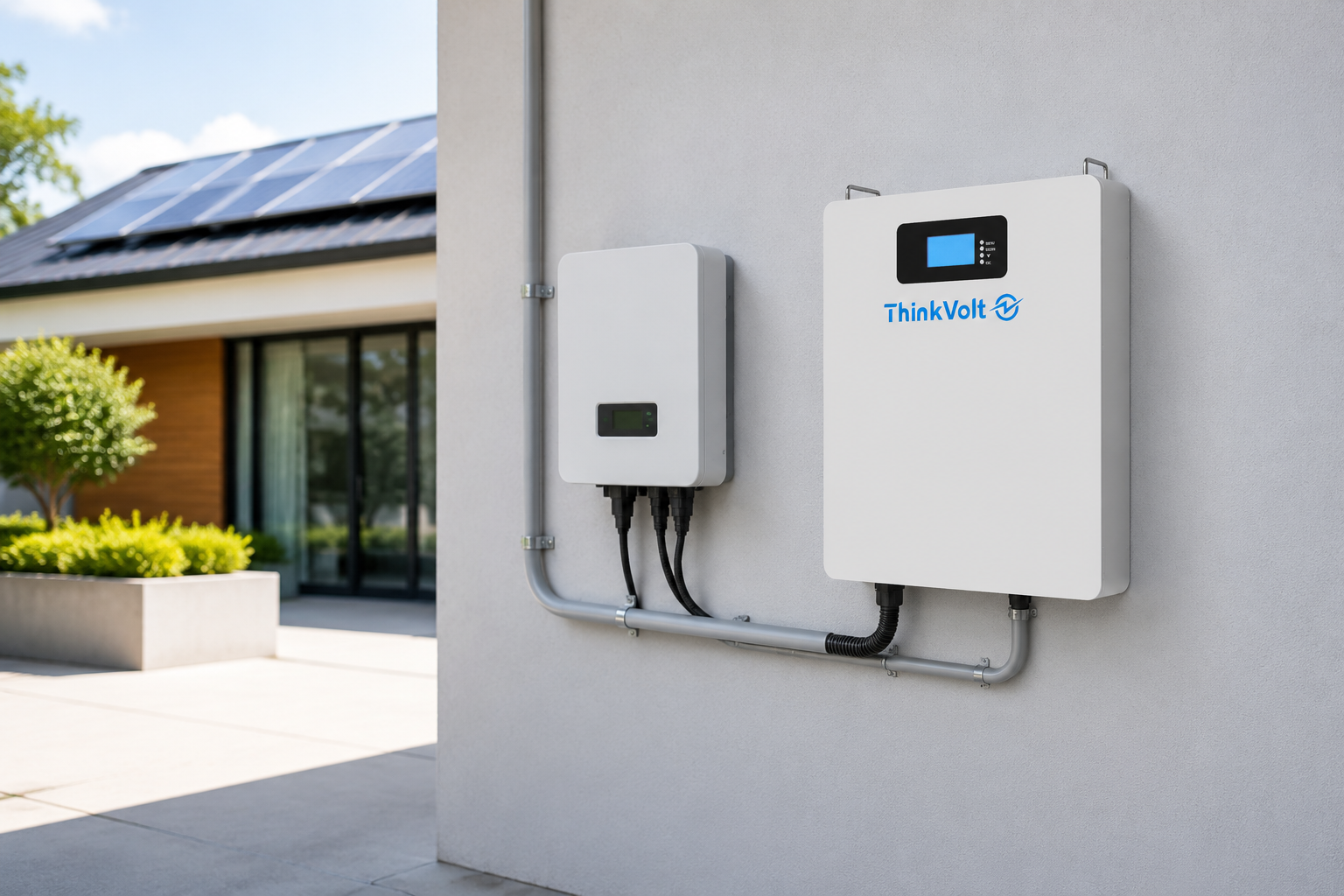
ThinkVolt home batteries support CAN and RS485 communication for integration with mainstream inverter platforms. The supplied compatibility materials include brands such as Deye, Growatt, Victron, SMA, GoodWe, Solis, SolaX, and others. Compatibility should still be checked by exact inverter model, protocol version, wiring definition, and software settings. A brand logo alone is not enough to confirm that two devices will communicate correctly.
Dedicated parallel communication ports and DIP-switch settings support expansion of compatible systems. Depending on the model and system design, up to 16 battery units can be connected in parallel. This gives homeowners a practical path to start with the capacity they need now and expand later if their solar array, backup requirements, or daily electricity use increases.
The home battery models use fanless natural convection cooling, so there is no cooling-fan noise during normal operation. They carry an IP54 protection rating and are specified for charging from 0°C to 55°C and discharging from -20°C to 60°C. As with any battery system, the final location must still follow the installation manual, local electrical rules, clearance requirements, and the inverter manufacturer's guidance.
A home energy storage battery can store surplus solar generation for later use instead of sending all excess energy away immediately. The stored energy can then support evening loads, nighttime use, or periods when solar output is low. The real savings depend on local electricity tariffs, export rules, solar production, and household consumption patterns.
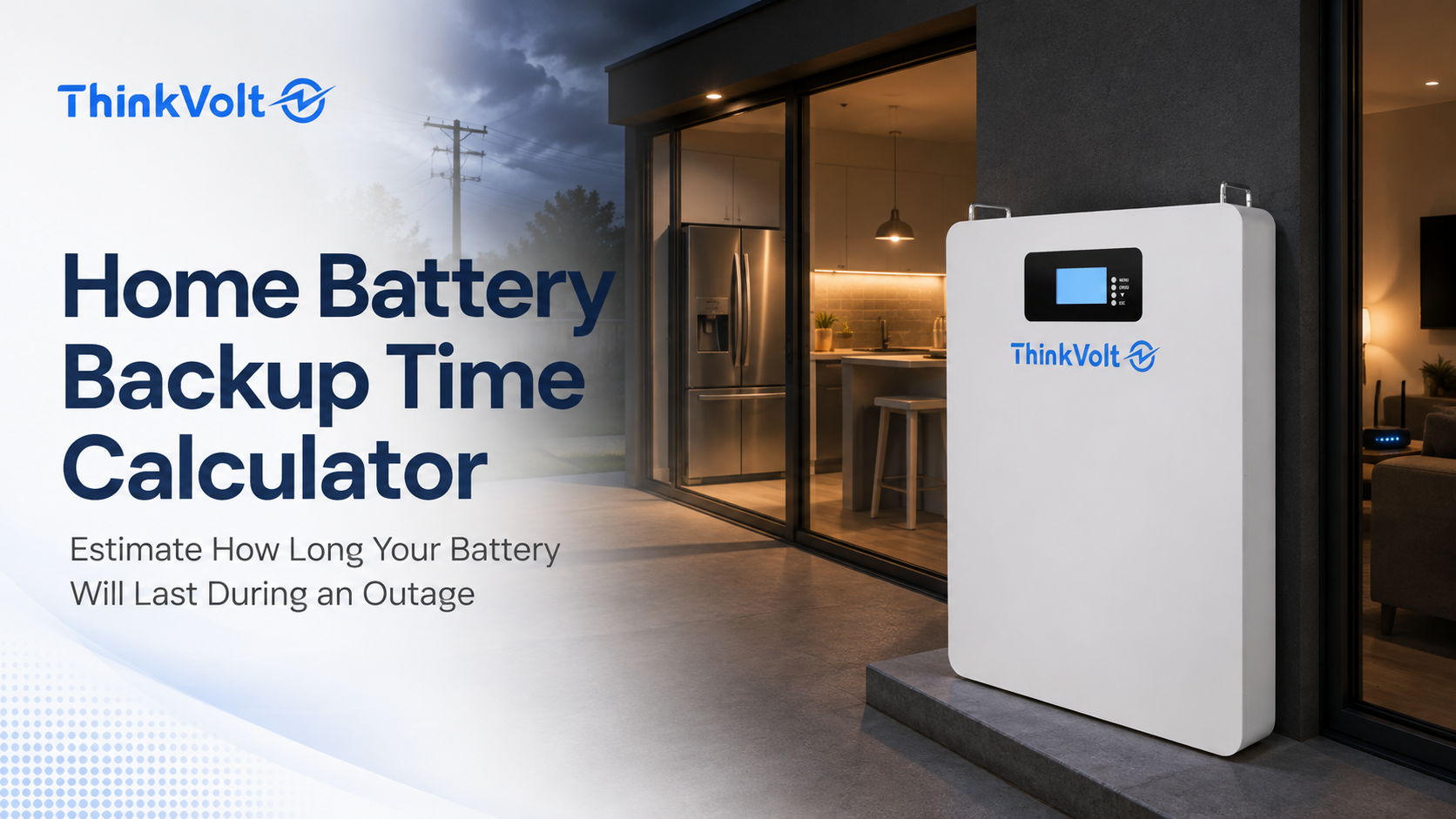
When paired with a compatible inverter and a correctly designed backup circuit, the battery can keep selected loads running during a grid outage. The most effective systems begin with a clear load list: essential lighting, communication equipment, refrigeration, security systems, and other priority loads should be separated from high-consumption devices that are not needed during an emergency.
For homes without a stable grid connection, the battery can work as part of a solar-plus-storage system to balance daytime generation and nighttime demand. Off-grid design requires careful sizing because the battery, inverter, solar array, seasonal weather, and backup generation all affect reliability.
The first decision is whether the inverter and battery system are designed for 24V or 48V-class operation. ThinkVolt offers 25.6V batteries for 24V systems and 51.2V batteries for 48V systems. The voltage must match the inverter's supported battery range.
Battery energy is measured in kilowatt-hours. A 5.12kWh battery stores twice the rated energy of a 2.56kWh model, but usable backup time depends on the allowed depth of discharge and total load. A simple starting estimate is usable battery energy divided by the average load in kilowatts.
Capacity tells you how long the battery may run; current and inverter power determine what it can support at one time. The 25.6V and 5.12kWh models are listed with up to 100A continuous charge and discharge current, while the 314Ah floor-standing model is listed at up to 150A. The complete system must be sized around both energy and power, not capacity alone.
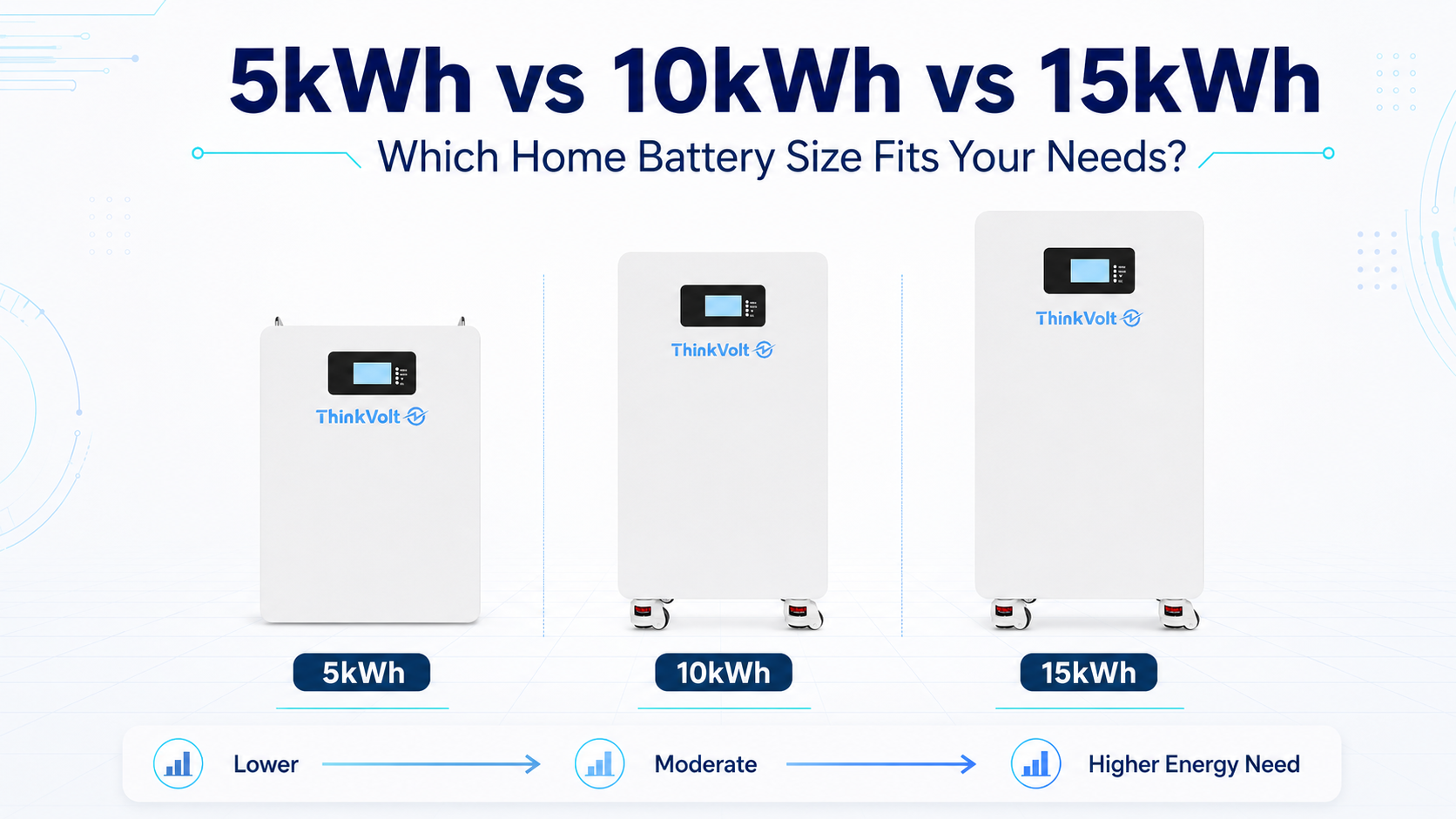
Wall-mounted batteries save floor space, rack-mounted batteries make modular expansion easy, and floor-standing batteries place more energy in a single enclosure. Access for wiring, service clearance, wall strength, ventilation, floor loading, and cable routing should all be reviewed before the model is selected.
Send the exact inverter model and firmware or protocol information to ThinkVolt before finalizing the battery. Confirm the CAN or RS485 protocol, cable pinout, termination requirements, master-slave settings, and any inverter menu settings needed for commissioning.
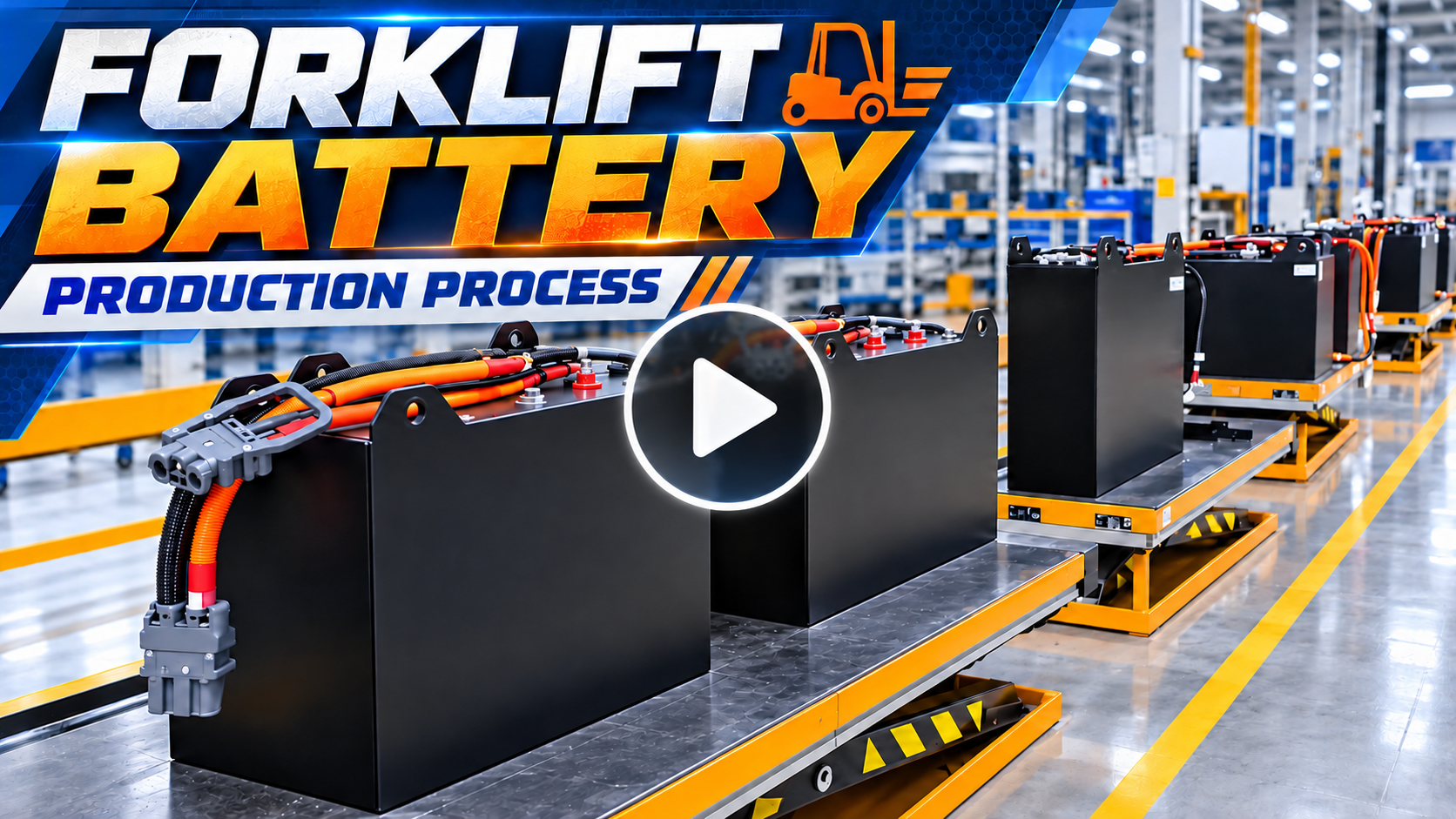
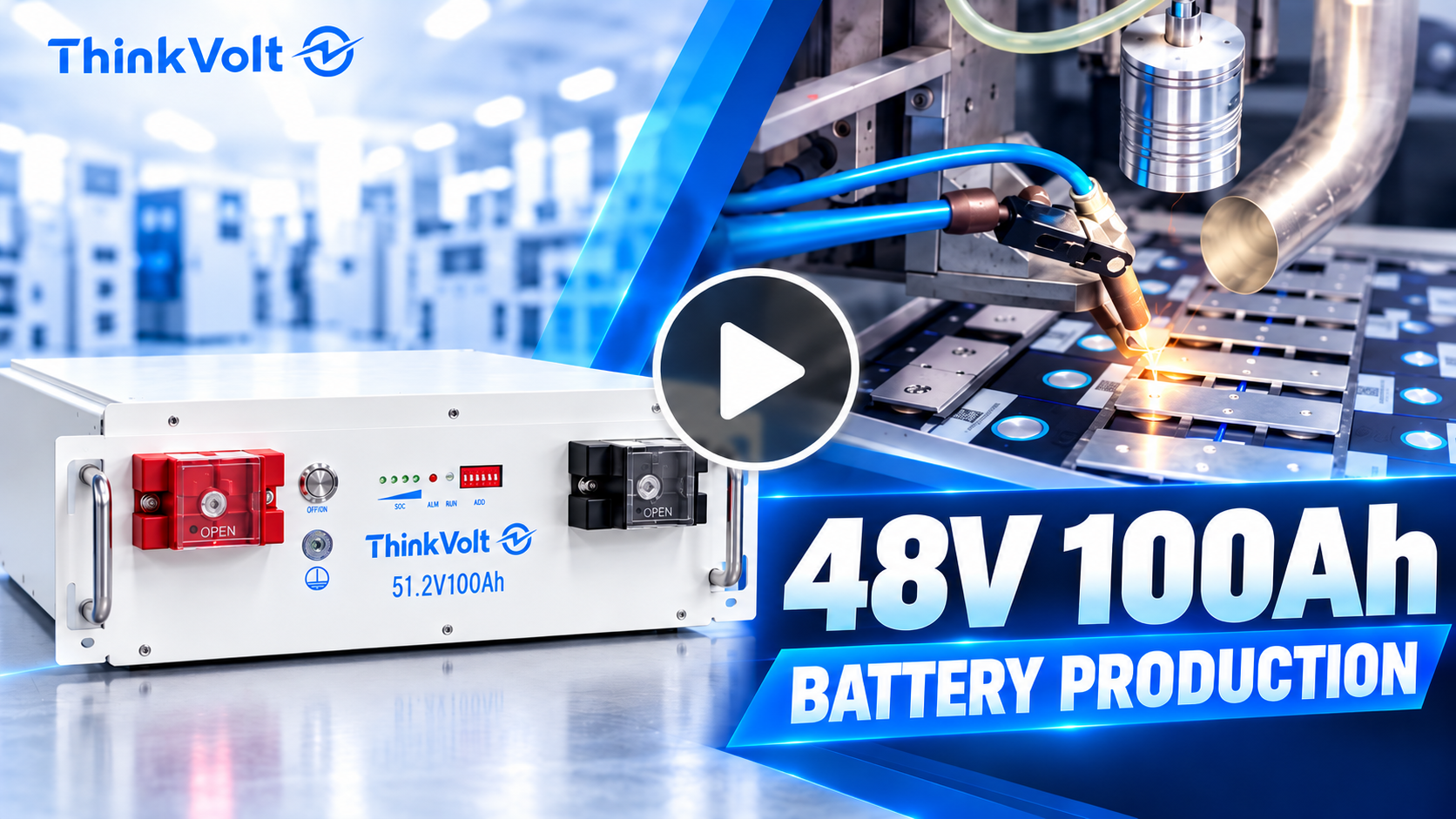
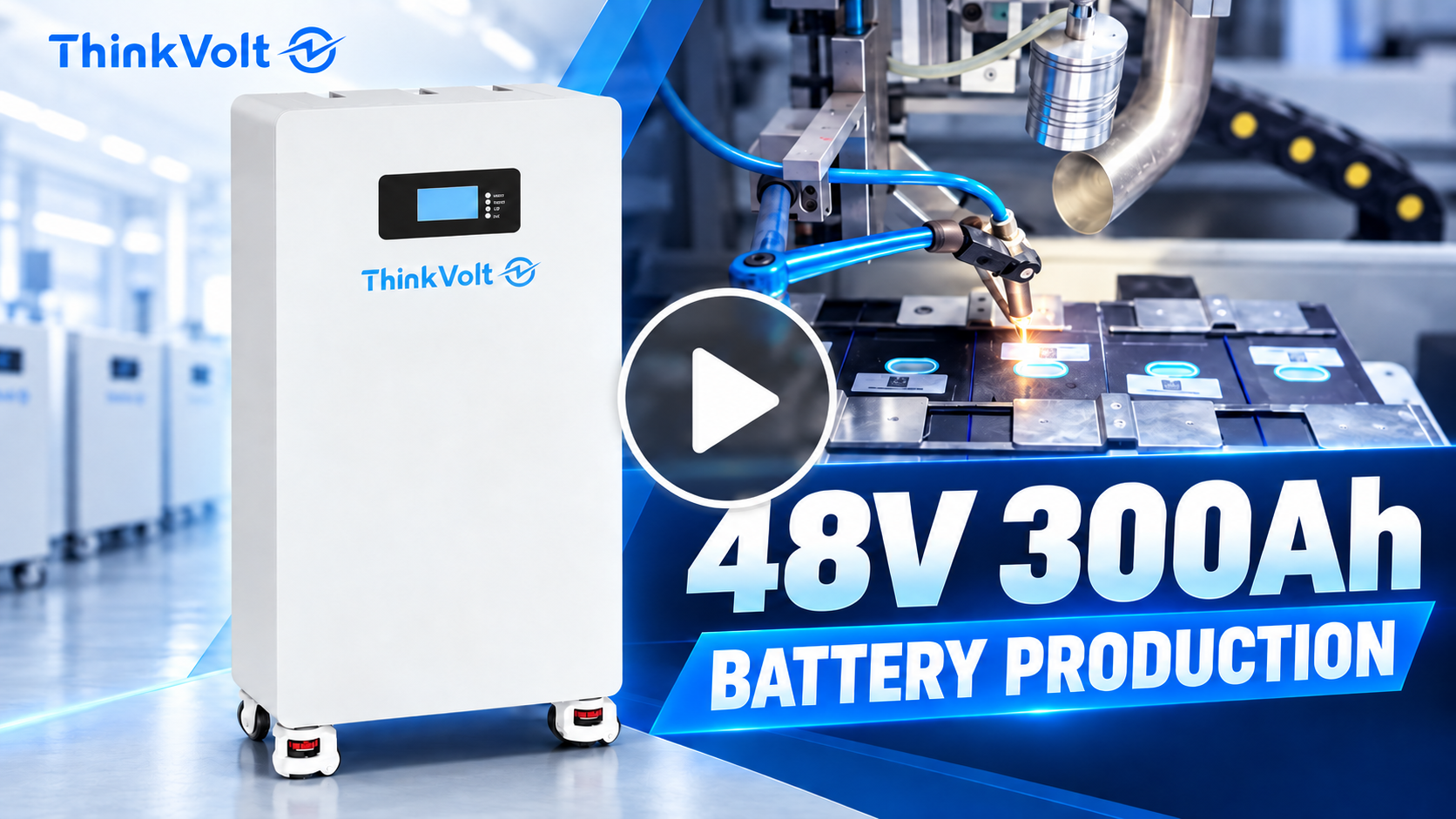
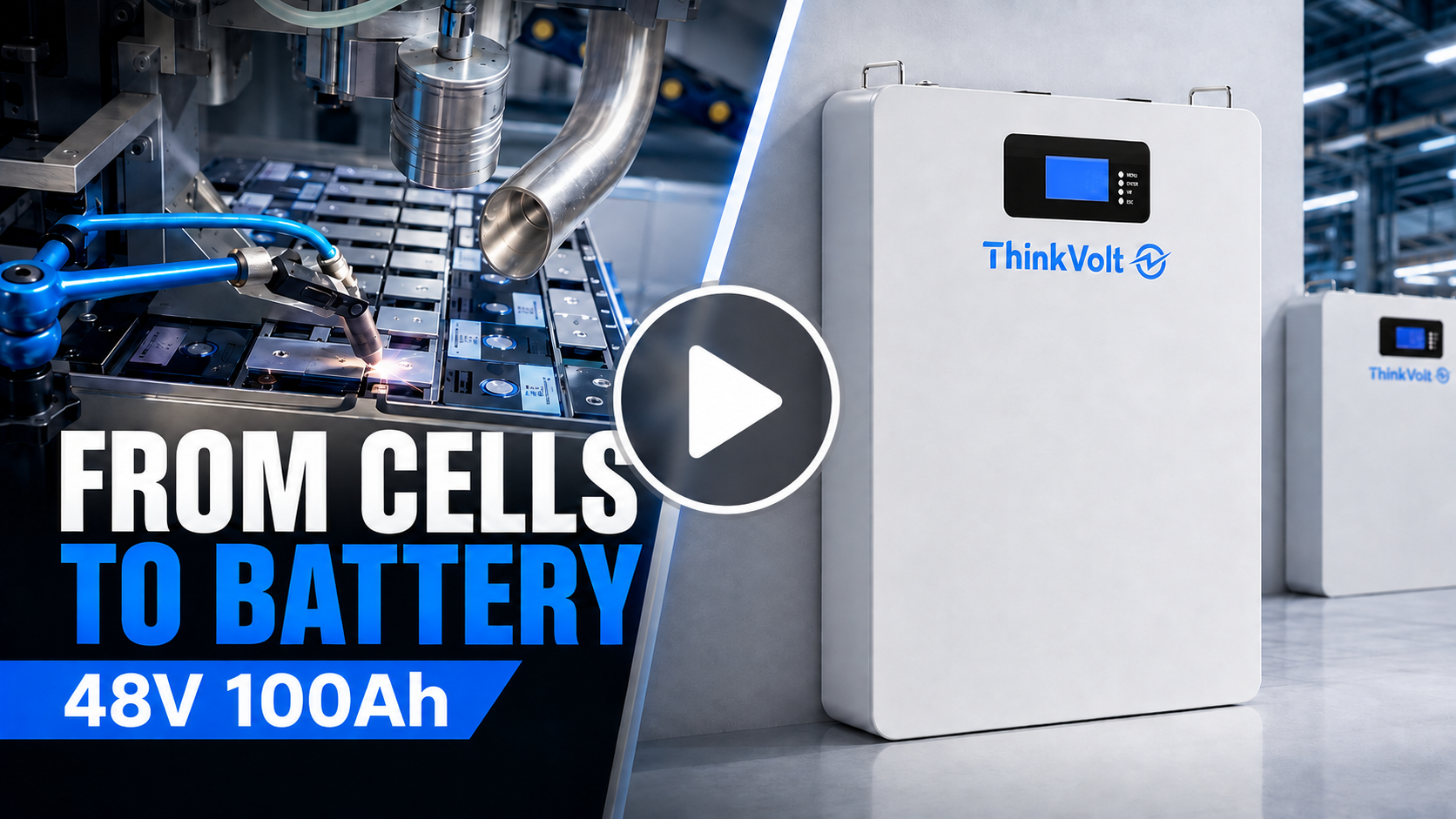
ThinkVolt's production process includes cell inspection and sorting, BMS installation, assembly, welding, electrical testing, and final inspection. The quality assurance process covers cell consistency, BMS functions, insulation, charge and discharge performance, and communication. Traceability from incoming materials to finished products helps the technical team investigate issues with clearer production records.
The company's quality materials list ISO 9001, ISO 14001, ISO 45001, CE, UN38.3, and MSDS documentation. Certification requirements vary by product, destination, and project, so buyers should request the documents that apply to the exact model being ordered.
The six core models cover rated energy from 2.56kWh to 16.08kWh, including 2.56kWh, 5.12kWh, 10.24kWh, and 16.08kWh options.
ThinkVolt supports CAN and RS485 communication with many mainstream inverter platforms. Compatibility must be confirmed using the exact inverter model, protocol version, cable pinout, and system settings.
Supported models provide local monitoring through a mobile app, with real-time battery data, cell information, protection status, and fault records. The front LCD also shows key operating information directly on the battery.
Compatible configurations can be expanded by connecting multiple batteries in parallel. The permitted number of units and the required settings should be confirmed for the selected model and inverter before installation.
Wall-mounted batteries are useful when space is limited, rack-mounted batteries suit modular battery banks, and floor-standing batteries provide higher capacity in a movable enclosure. The best choice depends on system voltage, target energy, installation space, service access, and future expansion plans.
A good home battery is not selected by capacity alone. It should match the inverter, the loads, the available installation space, the local environment, and the owner's plans for future expansion. ThinkVolt's wall-mounted, rack-mounted, and floor-standing LiFePO4 battery range gives installers and buyers several ways to build that fit without forcing every project into the same enclosure.
Planning a home energy storage project? Send ThinkVolt your inverter model, system voltage, target battery capacity, essential loads, and preferred installation method. Our technical team can recommend a suitable battery model and confirm communication requirements before you order.