ThinkVolt at Solar & Storage Expo Pakistan 2026: Connecting with Pakistan’s Energy Storage Market
2026-07-23
Yes, a home battery can keep essential household appliances running for 48 hours, provided the system supports backup operation and has enough usable energy. Powering an entire house for two days is more demanding, especially when heating, cooling, or other high-consumption appliances are involved.
Choosing a home battery for a multi-day outage starts with understanding which appliances need backup power, how much electricity they consume, and how the battery and inverter work together. Solar panels may extend backup time, but their contribution depends on weather conditions and system configuration.
This guide explains how to size and assess a practical 48-hour home backup system.

A two-day home battery backup system should prioritize essential household appliances rather than automatically powering everything in the house. The fewer appliances you need to run, the easier it becomes to maintain backup power for 48 hours.
There are two main approaches to home battery backup:
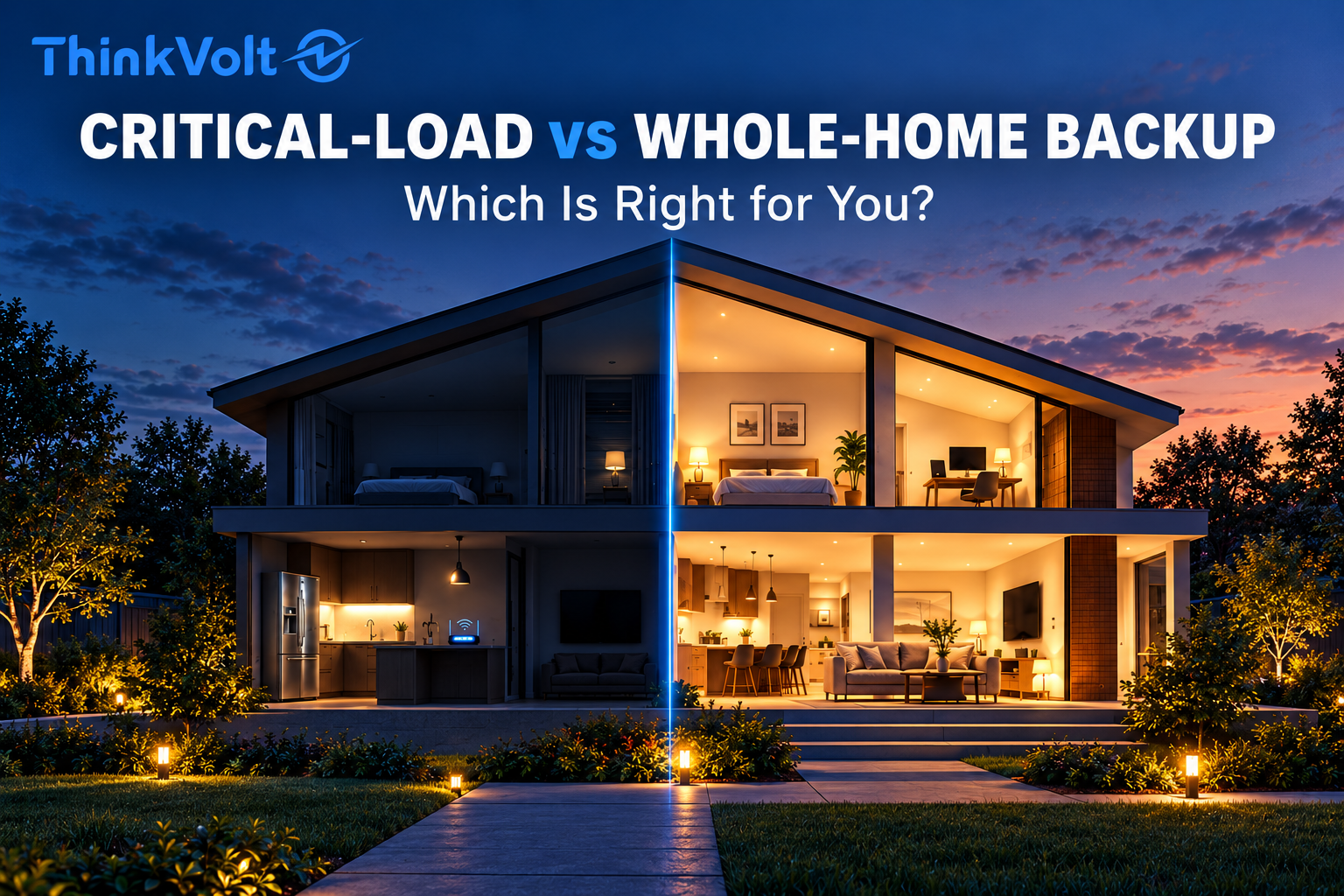
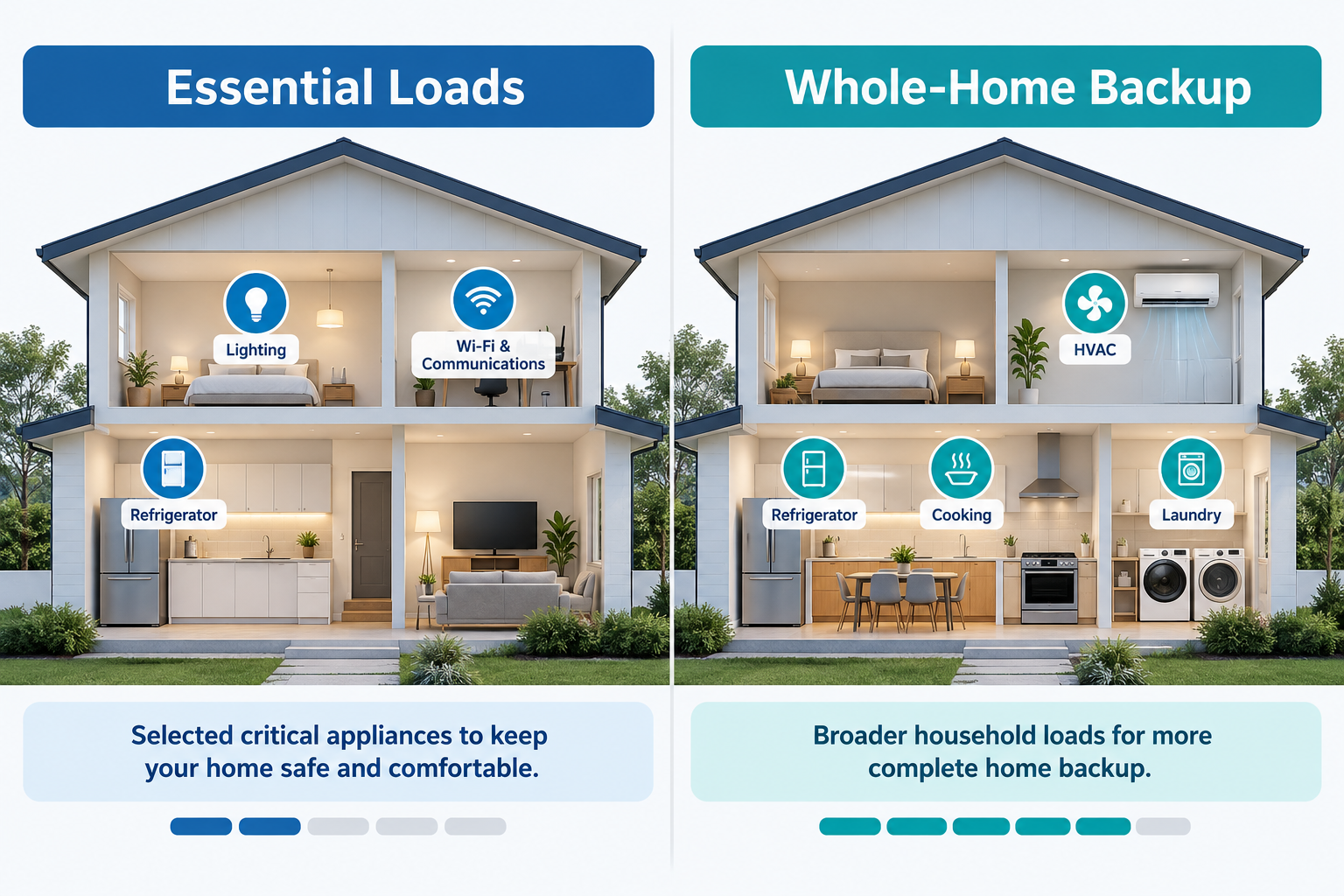
· Essential-load backup: Supplies selected appliances such as refrigerators, lights, internet routers, and other necessary equipment. This approach reduces energy demand and makes longer backup durations more achievable.
· Whole-home backup: Supplies most or all household circuits, potentially including air conditioning, electric heating, and kitchen appliances. It generally requires greater battery capacity and higher inverter output.
For a multi-day outage, the right choice depends on your household's electricity needs and which appliances you can temporarily do without.
Before selecting a battery, identify the circuits that must remain powered throughout the outage. This provides a realistic basis for sizing the system.
During a 48-hour power outage, prioritize appliances that support safety and basic household needs while limiting unnecessary electricity consumption. A priority list helps avoid oversizing.
Start with devices that matter most during an outage:
· Refrigerators and freezers: Help preserve food and temperature-sensitive supplies.
· Internet routers and communication devices: Keep household members connected when networks remain available.
· Essential lighting: Provides visibility without powering every light in the house.
· Necessary medical equipment: Requires a separate review of operating power, permissible interruption time, and backup arrangements. Life-sustaining equipment should not depend on an ordinary home battery system as its only emergency power source.
Air conditioners, electric heaters, ovens, and water heaters can consume substantial energy. Limiting their use can preserve battery power for essential loads. Washing machines and dishwashers can usually wait until grid power returns.
For installers, a prioritized appliance list is the starting point for a useful 48-hour load profile. Account for actual usage, not only nameplate wattage.
Your inverter must provide enough power to run the selected appliances simultaneously, including temporary surges when certain devices start. The required inverter rating depends on the household's peak demand, not on the 48-hour duration alone.
Battery capacity and inverter power serve different purposes. Capacity, measured in kWh, determines how much energy is available over time. Inverter output, measured in kW, determines how much power can be delivered at once.
Two inverter specifications are especially important:
· Continuous output power: Must support the combined running power of appliances operating at the same time.
· Surge power: Must accommodate short starting surges from equipment such as refrigerators, pumps, and some air conditioners.
The battery's discharge-current and power limits, including BMS restrictions, must also support the inverter's demands. More battery capacity cannot correct insufficient inverter power.
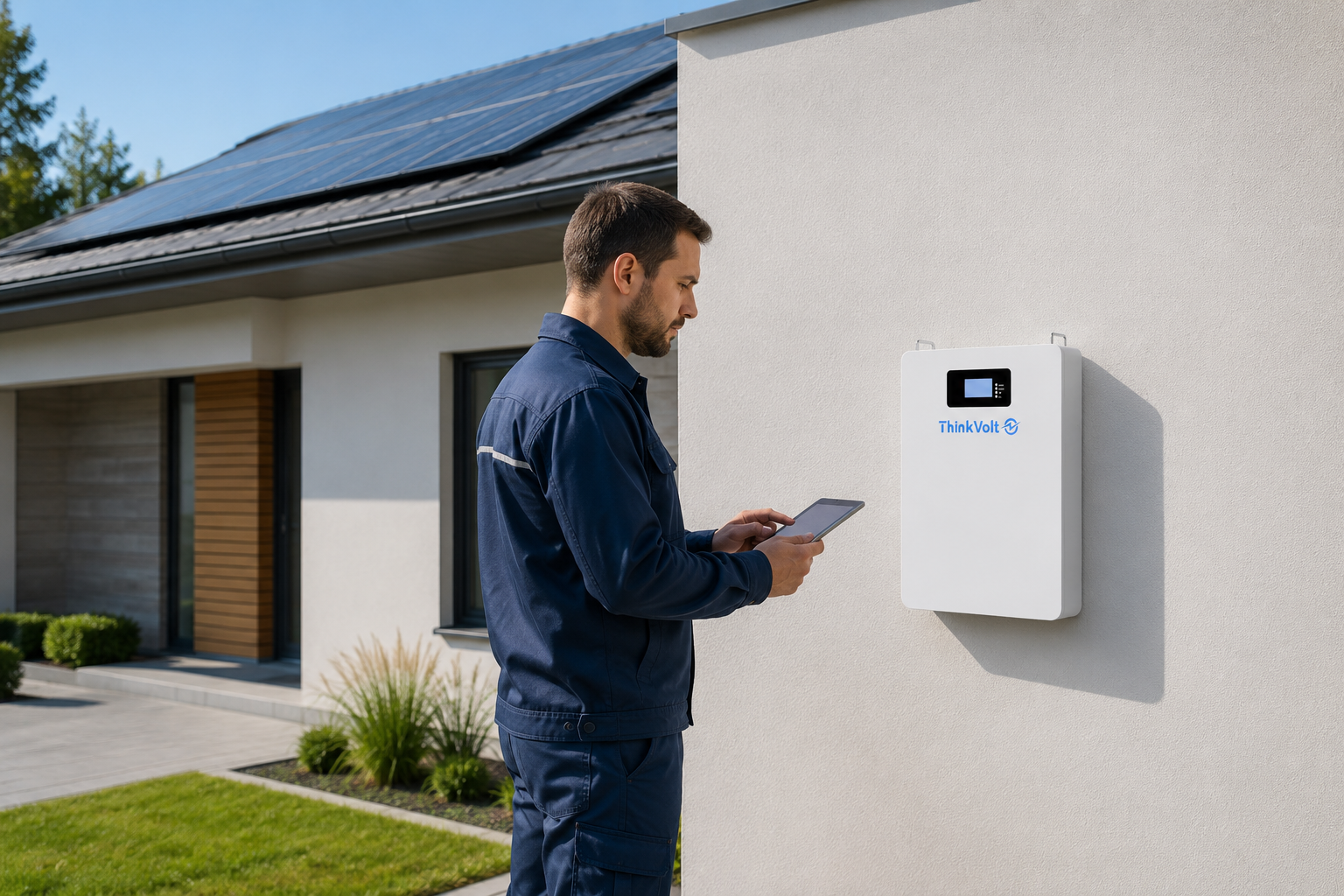
Installers should verify the inverter's continuous and surge ratings, the battery's permitted discharge power, and the expected simultaneous loads before finalizing the backup configuration.
To calculate your home's electricity use over 48 hours, add up the energy consumed by each appliance during the outage. You need its operating power and the total number of hours it will run—not just its rated wattage.
Energy (kWh) = Power (W) × Operating Hours ÷ 1,000
Consider this illustrative two-day load profile:
Appliance | Average Power | Operating Hours Within 48h | Energy Use |
Refrigerator | 100W | 48h | 4.80kWh |
Internet router | 15W | 48h | 0.72kWh |
LED lighting | 60W | 12h | 0.72kWh |
Fans | 80W | 24h | 1.92kWh |
Air conditioning | 600W | 24h | 14.40kWh |
Electronics | 120W | 12h | 1.44kWh |
Total | 24.00kWh |
All values are illustrative, not typical consumption guarantees. The refrigerator figure represents an assumed time-averaged power draw, including compressor cycling; actual appliance consumption may differ substantially.
This household uses 24kWh over 48 hours, equivalent to a 0.5kW average load across the full outage. Air conditioning accounts for much of the demand.
Use measured consumption where possible, particularly for variable loads.
The battery capacity required for two days depends on the household's energy demand, the accessible part of the battery's charge range, and losses between the battery and household loads. A home using 24kWh over 48 hours will normally need more than 24kWh of nominal storage if there is no recharging.
For a simplified no-recharging estimate, use:
Required Nominal Capacity (kWh) = 48-Hour AC Energy Demand ÷ [(Starting SOC − Minimum SOC) × Discharge-Path Efficiency]
Continue with the 24kWh household example, using these assumptions:
· 48-hour AC energy demand: 24kWh
· Starting state of charge (SOC): 90%
· Minimum allowable SOC: 15%
· Assumed discharge-path efficiency: 90%
· Solar recharging: None
24 ÷ [(0.90 − 0.15) × 0.90] ≈ 35.6kWh
The home needs approximately 35.6kWh of nominal battery capacity before extra margin. The assumed discharge-path efficiency represents the proportion of available battery-side energy delivered to AC loads; additional auxiliary consumption and project-specific losses are excluded.
This is not a specific ThinkVolt product rating. Verify model limits and avoid deducting losses already included in the manufacturer's usable-energy figure.
Once the required storage capacity is established, the installer can determine an approved module combination. For a more detailed battery-count method, see ThinkVolt's whole-home battery sizing guide.
Usable battery capacity and discharge-path efficiency determine how much stored energy can actually reach your home. Even when nominal capacity looks sufficient, the starting SOC, discharge limit, and conversion losses reduce the amount available for a blackout.
A battery starting at 90% SOC with a 15% minimum SOC has 75% of its nominal energy available within that operating window. At an assumed 90% discharge-path efficiency, the simplified model delivers 67.5% of nominal energy as usable AC electricity.
Inverter standby consumption, variable loads, temperature, and battery condition can affect results. Use model-specific data and appropriate margins.
There is an important distinction between nominal capacity and a manufacturer's published usable energy. If the published usable-energy figure already accounts for an SOC restriction, applying the same restriction again will overstate the required battery size.
For accurate 48-hour planning, keep the energy accounting consistent from battery terminals to household AC loads.
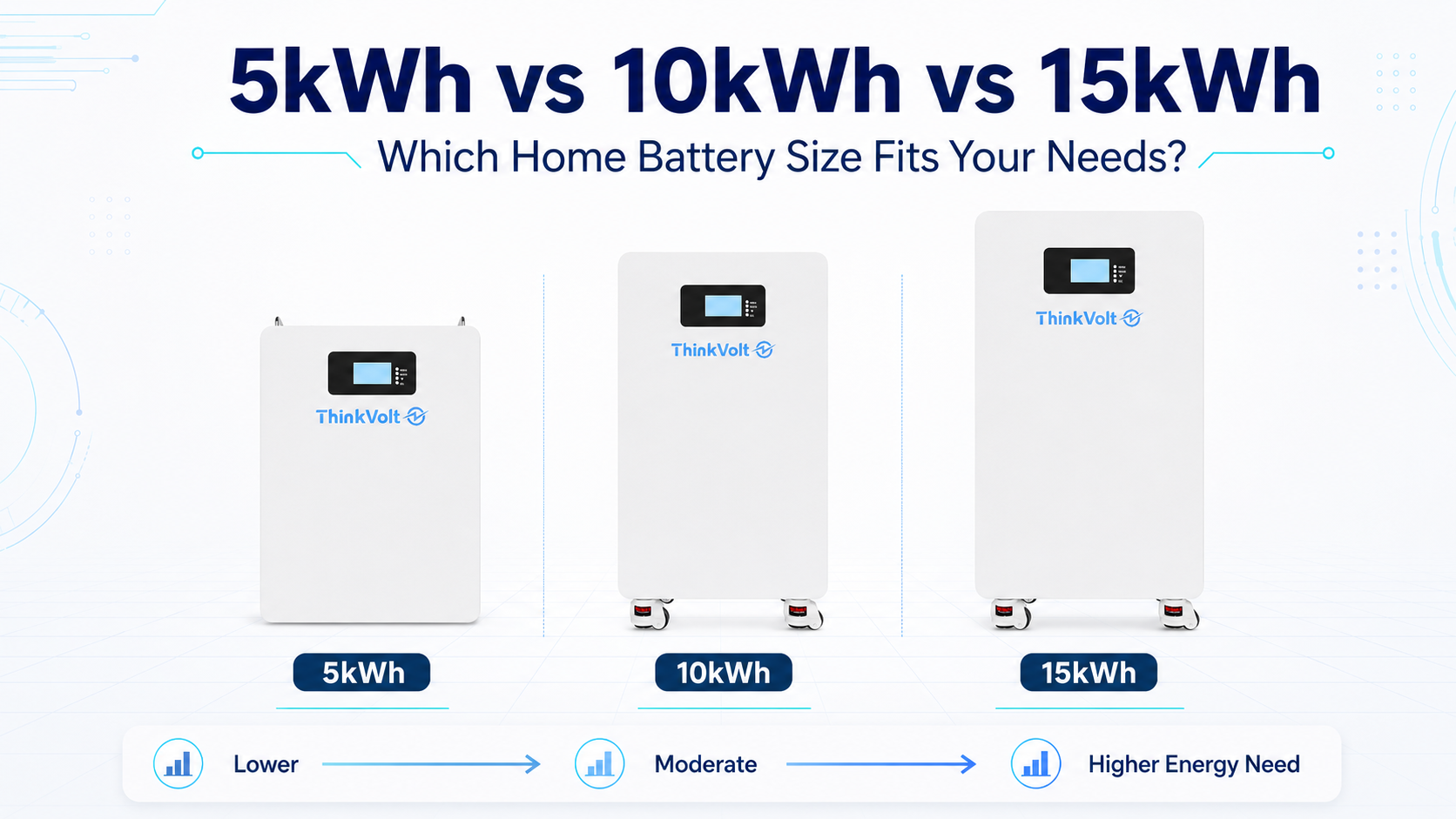
A 5kWh, 10kWh, or 20kWh battery can support a two-day outage only if the selected loads use little enough energy, or if effective recharging makes up the difference. With the 0.5kW average load used in this guide, none would last 48 hours without recharging.
Using a 90% starting SOC, 15% minimum SOC, 90% assumed discharge-path efficiency, and no solar recharging gives this comparison:
Nominal Battery Capacity | Usable AC Energy | Estimated Runtime at 0.5kW |
5kWh | 3.375kWh | 6.75 hours |
10kWh | 6.75kWh | 13.5 hours |
20kWh | 13.5kWh | 27 hours |
These are illustrative calculations based on a constant average load and the stated assumptions, not guaranteed runtimes for particular battery models.
Even the 20kWh example falls short of the two-day target at this load. A lower average load could change the answer substantially: the same amount of available energy lasts longer when fewer appliances operate.
A nominal kWh label alone cannot establish 48-hour suitability. For a broader capacity comparison, see ThinkVolt's 5kWh vs 10kWh vs 15kWh guide.
Battery energy declines as household appliances draw power, and consumption rarely stays constant from morning to night. To validate a two-day backup plan, track energy remaining throughout the outage rather than looking only at the total 48-hour requirement.
Consider a hypothetical 40kWh nominal battery, with 90% starting SOC, 15% minimum SOC, and 90% discharge-path efficiency. It begins with approximately 27kWh of usable AC-equivalent energy under this simplified model.
Elapsed Time | AC Energy Used Since Previous Check | Remaining Usable AC-Equivalent Energy |
0 hours | — | 27kWh |
12 hours | 4kWh | 23kWh |
24 hours | 8kWh | 15kWh |
36 hours | 4kWh | 11kWh |
48 hours | 8kWh | 3kWh |
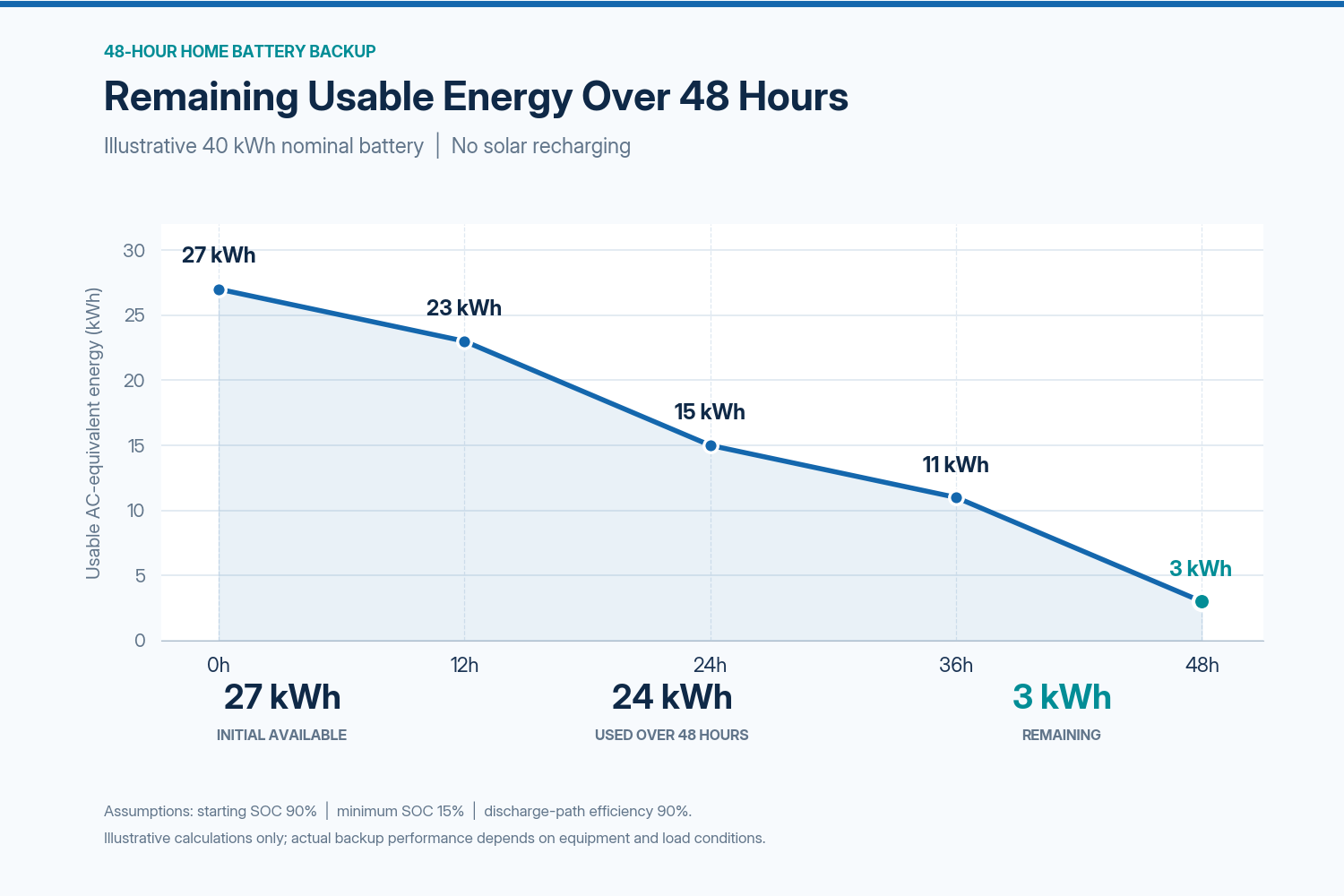
In this scenario, the system completes the two days with approximately 3kWh of modeled usable AC-equivalent energy left. The 12-hour periods reflect variable demand.
Check the minimum energy balance between charging periods. A battery that shuts down before solar recharging arrives does not provide uninterrupted 48-hour backup.
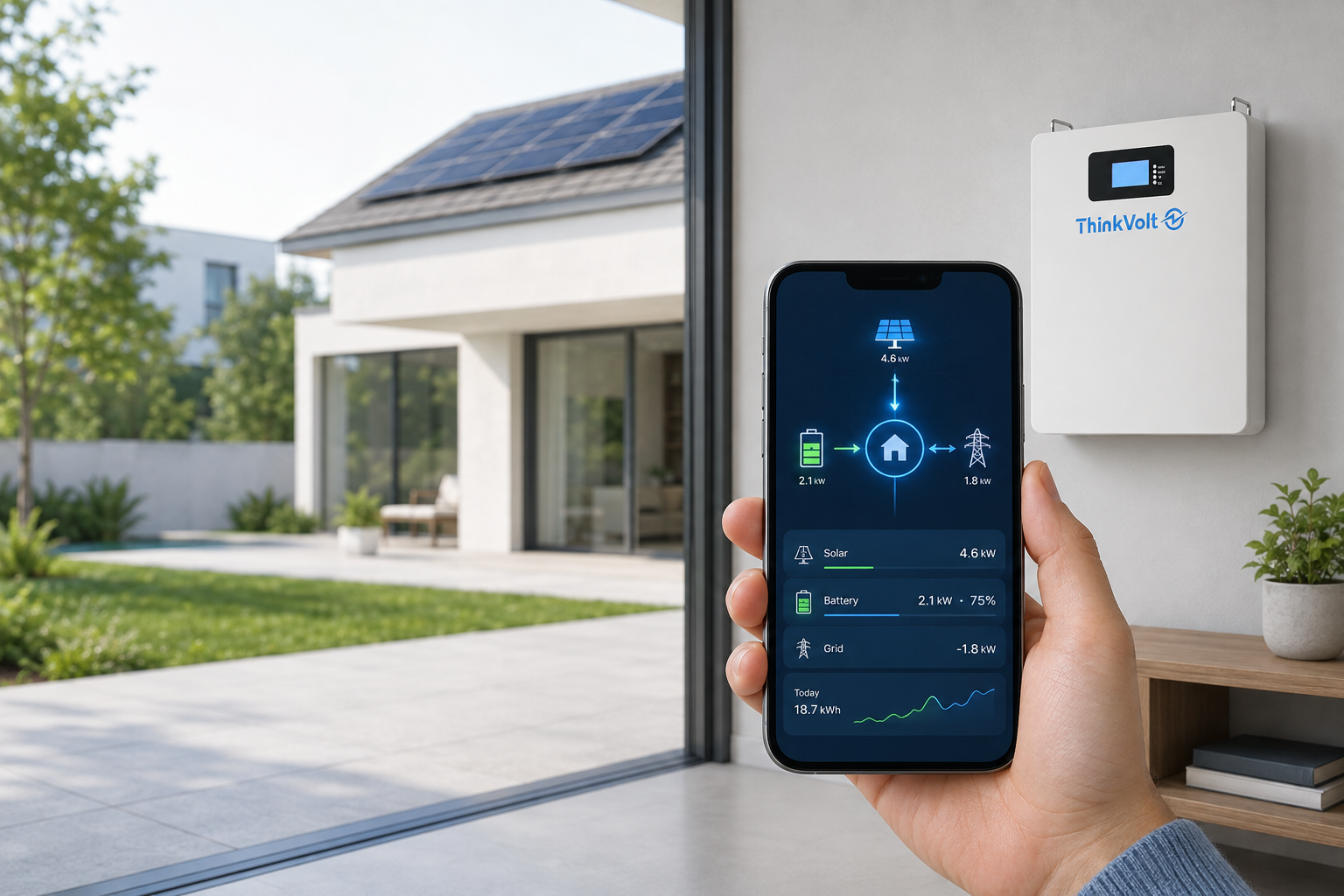
Yes, solar panels can recharge a home battery during an outage if the solar and storage system supports safe operation while isolated from the utility grid. Usable output depends on sunlight, system settings, and charge limits.
Keep the previous example: 40kWh nominal battery capacity, 27kWh of initially usable AC-equivalent energy, and 24kWh of household consumption over two days.
Solar Conditions | Effective Solar Contribution Over 48 Hours | Modeled Energy Remaining at 48 Hours |
No solar recharging | 0kWh | 3kWh |
Limited solar generation | 4kWh | 7kWh |
Favorable solar generation | 8kWh | 11kWh |
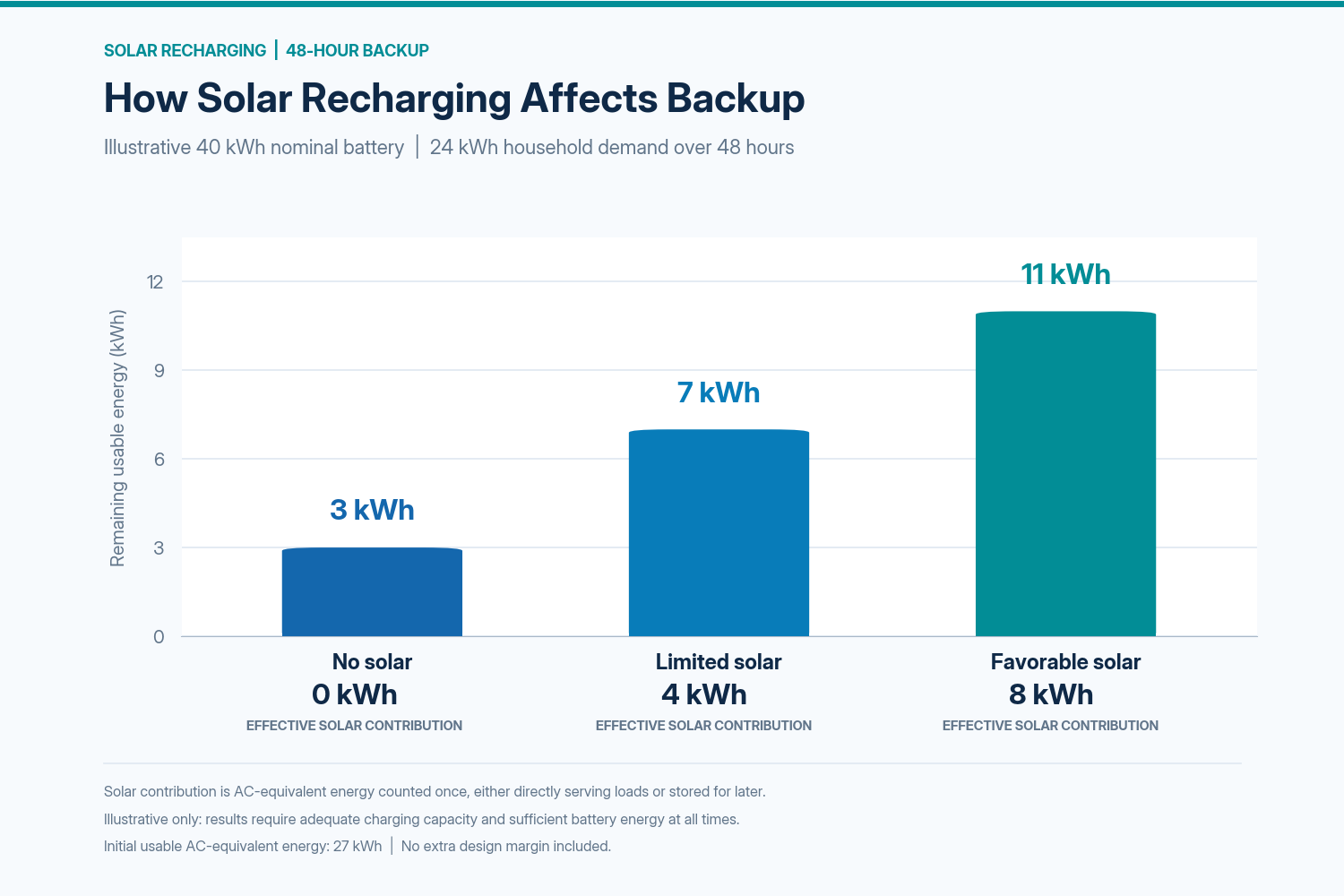
These results require the system to accept the solar input and remain above minimum SOC throughout the outage. Solar energy arriving after a shutdown cannot prevent that earlier interruption; charging limits and insufficient storage headroom may also reduce usable generation.
For critical backup needs, plan around realistic low-sun conditions and confirm off-grid solar charging. Sunny-day estimates are not guaranteed.
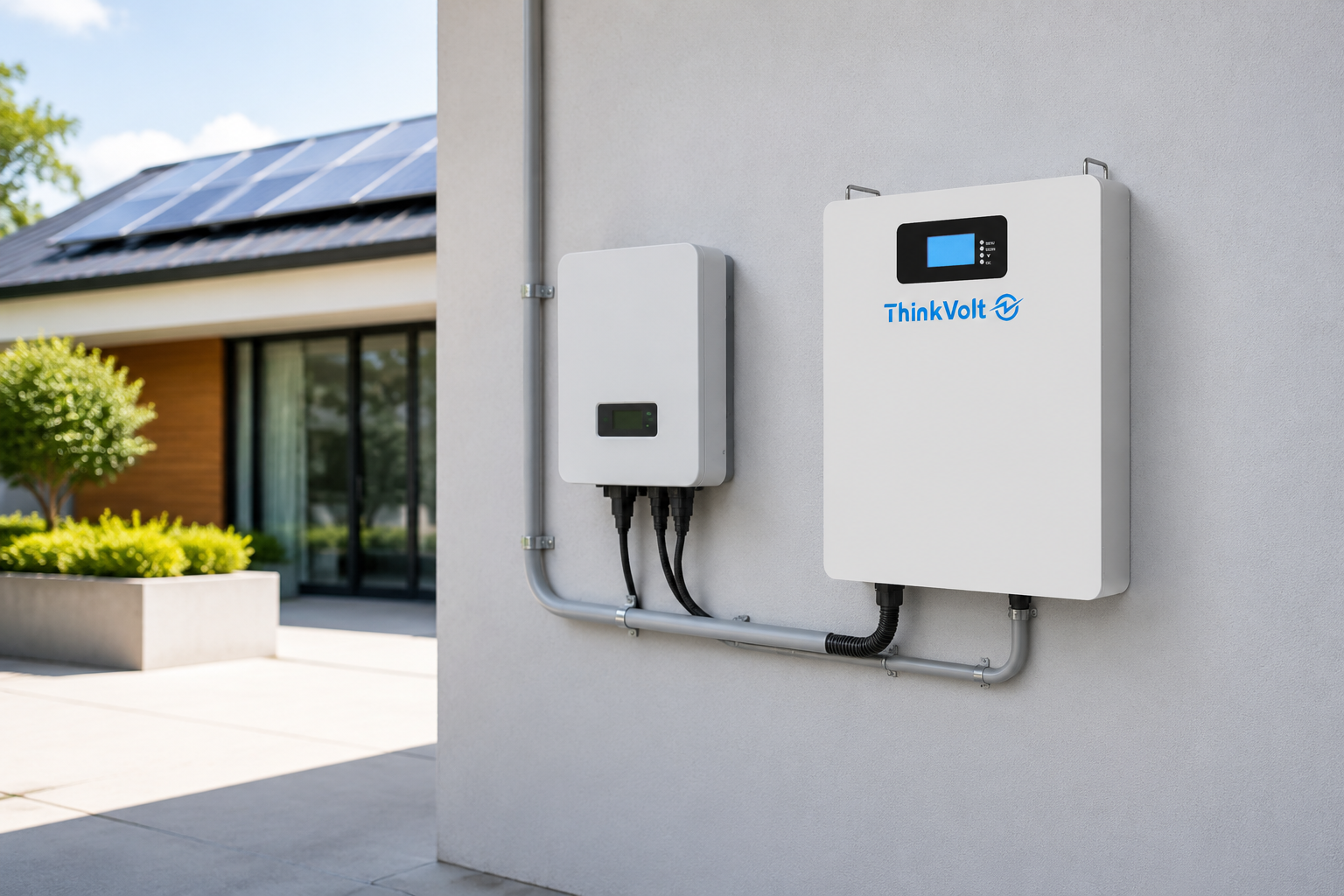
Not necessarily. A home battery may store enough energy for an outage but still be unable to power household circuits if the complete system is not designed for backup operation. Standard grid-connected solar equipment generally disconnects during a grid outage to prevent unsafe energizing of utility lines.
Before installing a home battery backup system, confirm:
· Backup-capable inverter: It can supply the intended loads when grid power is unavailable.
· Safe grid isolation: The backup system uses an approved method to separate from the utility supply.
· Supported backup circuits: The design identifies which household circuits receive power.
· Battery compatibility: The exact inverter and battery models have compatible voltage ranges, operating limits, and communication requirements.
· Backup switching: The switching method and expected interruption time suit the connected loads.
A qualified installer should verify local electrical requirements, protective devices, and commissioning procedures. A large battery is not a substitute for properly configured and tested backup operation.
To avoid running out of battery before the 48-hour outage ends, control nonessential loads, monitor remaining energy, and adjust appliance use as conditions change. The goal is to keep consumption within the energy budget established before the outage.
Switch off unnecessary devices and limit high-consumption appliances where practical. If your system can use solar power during an outage, schedule optional tasks around periods of available generation without assuming the next day's weather will be favorable.
Check battery SOC more frequently when demand is higher than planned, especially overnight when solar production is unavailable. Respond early to unexpectedly fast discharge instead of waiting until a low-battery warning appears.
For installers, clear operating guidance and suitable reserve settings can help homeowners use the system as intended. If essential loads still exceed the available 48-hour energy budget, review the load plan or investigate a supported storage expansion rather than relying on optimistic runtime estimates.
Yes, some home battery systems support later expansion, but this depends on the battery model, BMS, inverter capabilities, and approved module limit. Before purchasing, confirm whether additional modules can be installed and whether firmware, age, or matching requirements apply. Planning for future capacity during the initial design can help prevent compatibility problems and unnecessary replacement costs.
Yes, multiple 51.2V LiFePO4 batteries can operate in parallel when the manufacturer explicitly supports that configuration. Installers must verify approved module combinations, BMS communication, discharge and charging limits, overcurrent protection, and the maximum parallel quantity. Matching nominal voltage alone is not enough. Follow the manufacturer's approved installation and commissioning instructions rather than assuming that any 51.2V modules can be combined.
Sometimes, but only when the manufacturer approves the specific combination. Differences in capacity, age, state of health, and electrical behavior can affect current sharing and battery management. Some systems require identical modules; others allow limited variations under defined conditions. Confirm the precise models and approved expansion rules before connecting batteries from different production batches or systems.
Check the exact inverter model and firmware, not just the brand name. Confirm the battery voltage window, communication protocol, permitted charge and discharge settings, and supported backup modes. A published compatibility list may not cover every version of an inverter. When the pairing is not documented, seek confirmation from both equipment suppliers and carry out the required commissioning checks.
Only if the specific battery model is rated for that environment and the installation meets applicable requirements. Review its enclosure IP rating, temperature and humidity limits, ventilation needs, exposure to water or sunlight, and required clearances. A wall-mounted format does not automatically make a battery outdoor-rated. Have a qualified installer check relevant electrical and fire-safety requirements for the site.
Check the battery's permitted charging temperature range, low-temperature BMS protection, and any available heating function. LiFePO4 charging may be restricted or stopped at low cell temperatures, even when discharging remains possible. For colder climates, installers should assess the proposed location and how winter conditions may affect charging opportunities, available power, and overall backup performance.
Provide the installation country, required backup loads, estimated two-day energy demand, simultaneous peak power, and desired backup duration. Include your inverter model, existing solar PV system, installation environment, and expansion plans. If you are an installer or project buyer, share the project stage and expected quantity so a supplier can review suitable battery configurations and compatibility requirements.
A home battery can support a two-day outage when its usable energy, power output, backup controls, and expected recharging match the household's real needs. Start with essential loads and a transparent 48-hour energy budget, then verify the proposed equipment against the actual installation conditions.
ThinkVolt offers LiFePO4 energy storage solutions for residential backup projects. If you are a homeowner, installer, or system integrator planning a 48-hour backup system, share your load list, required backup time, inverter and solar details, installation country, and project requirements with our team.
Contact ThinkVolt to discuss an appropriate battery configuration and the compatibility checks needed for your project.