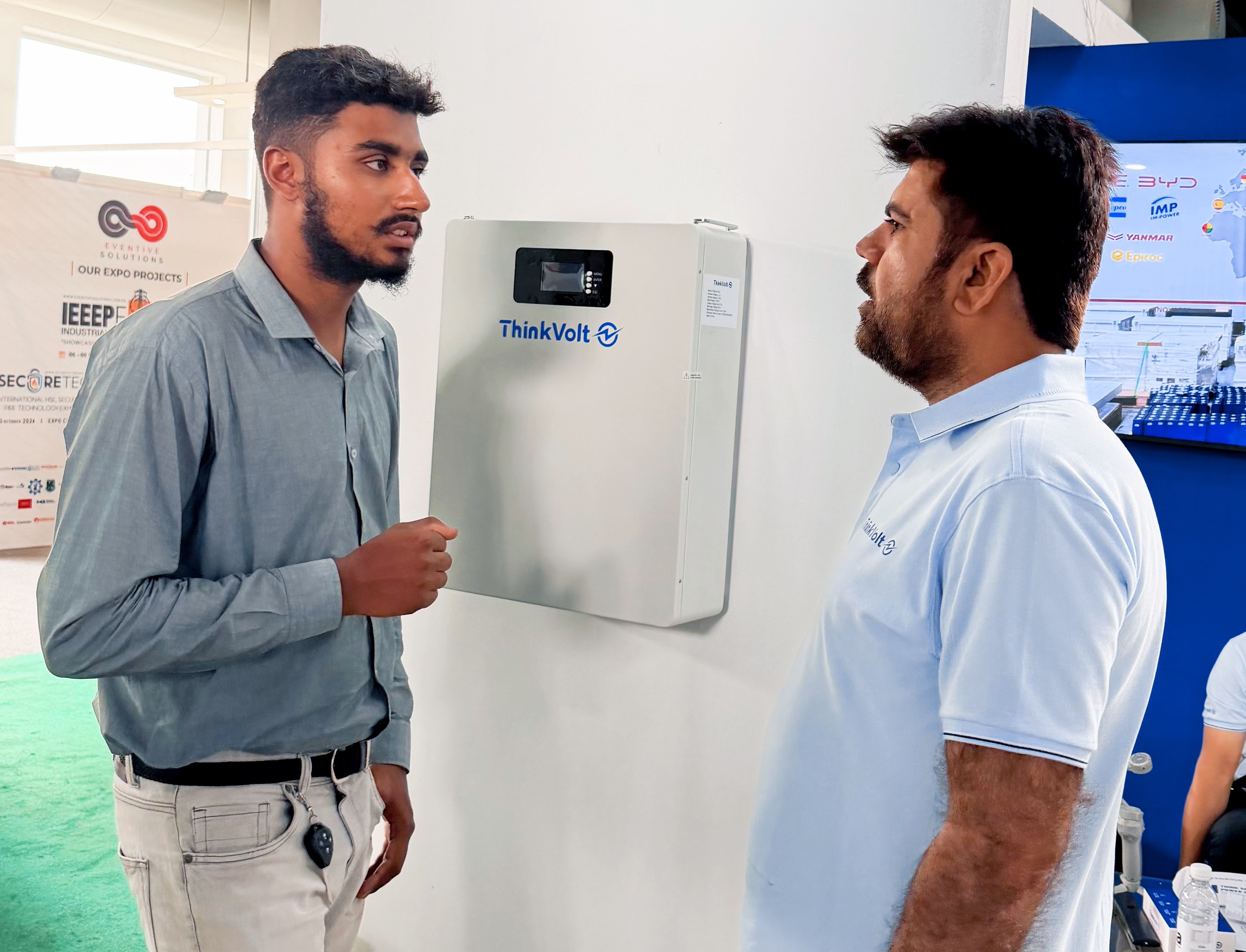
ThinkVolt at Solar & Storage Expo Pakistan 2026: Connecting with Pakistan’s Energy Storage Market
2026-07-23
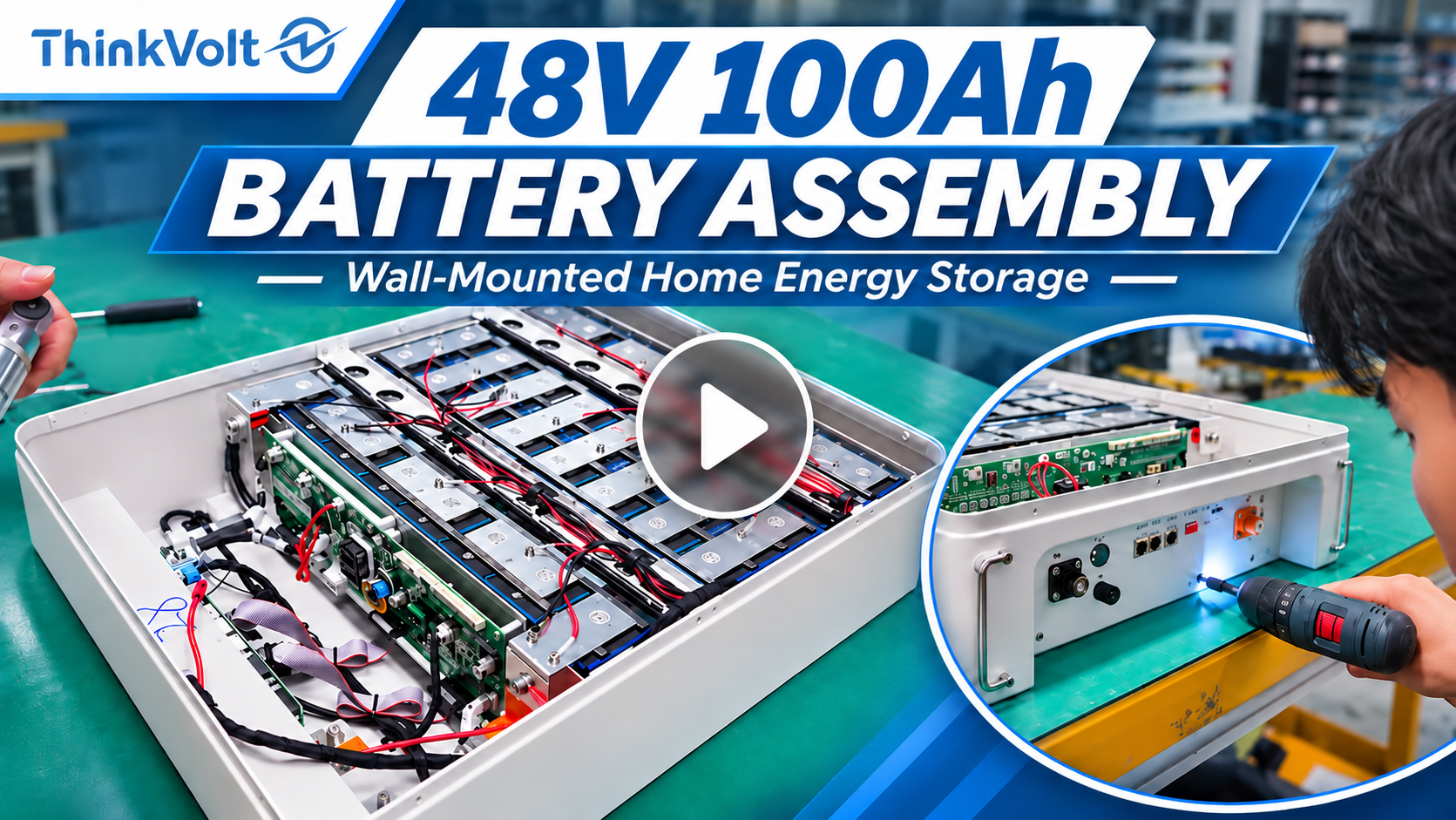
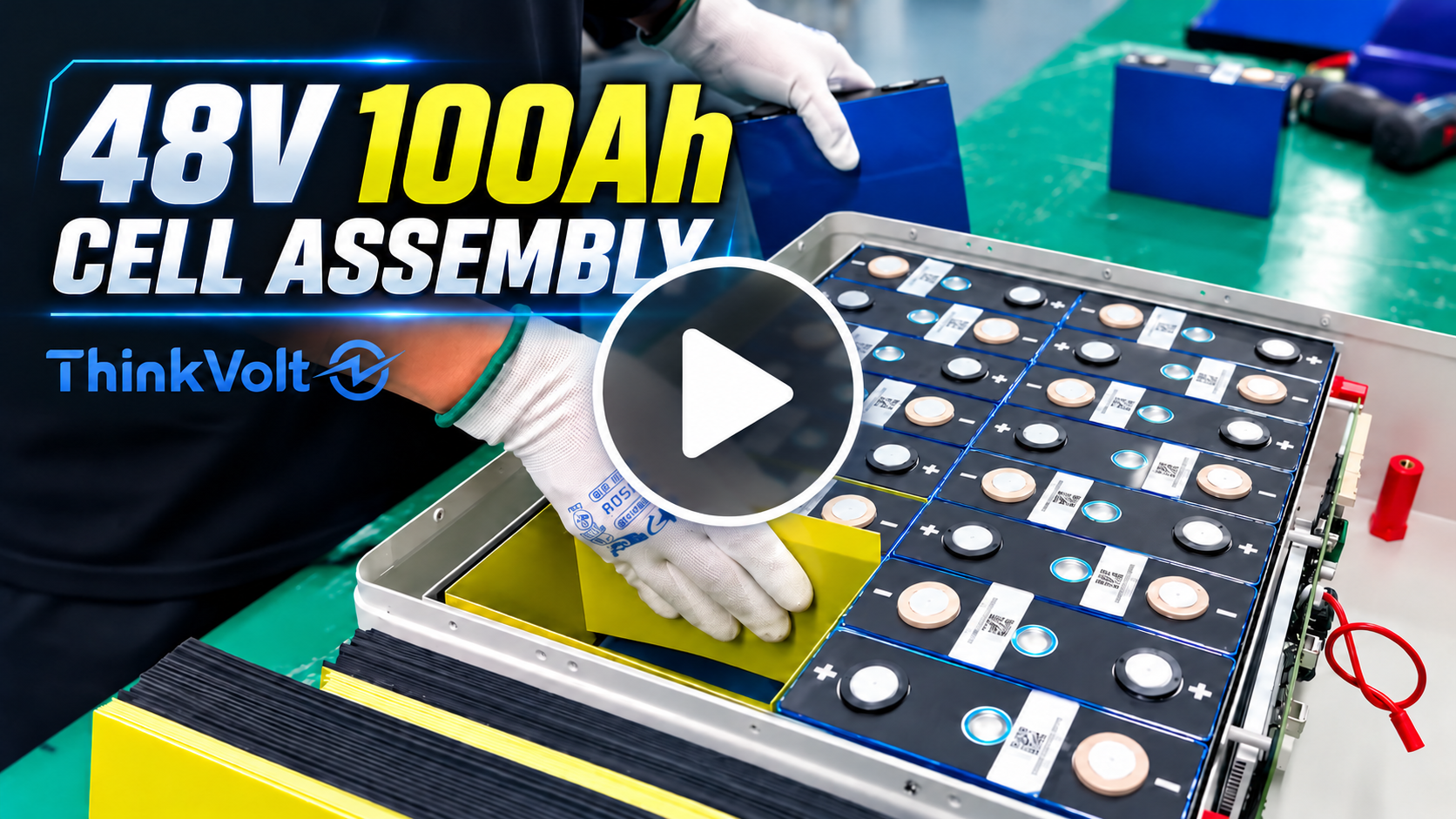
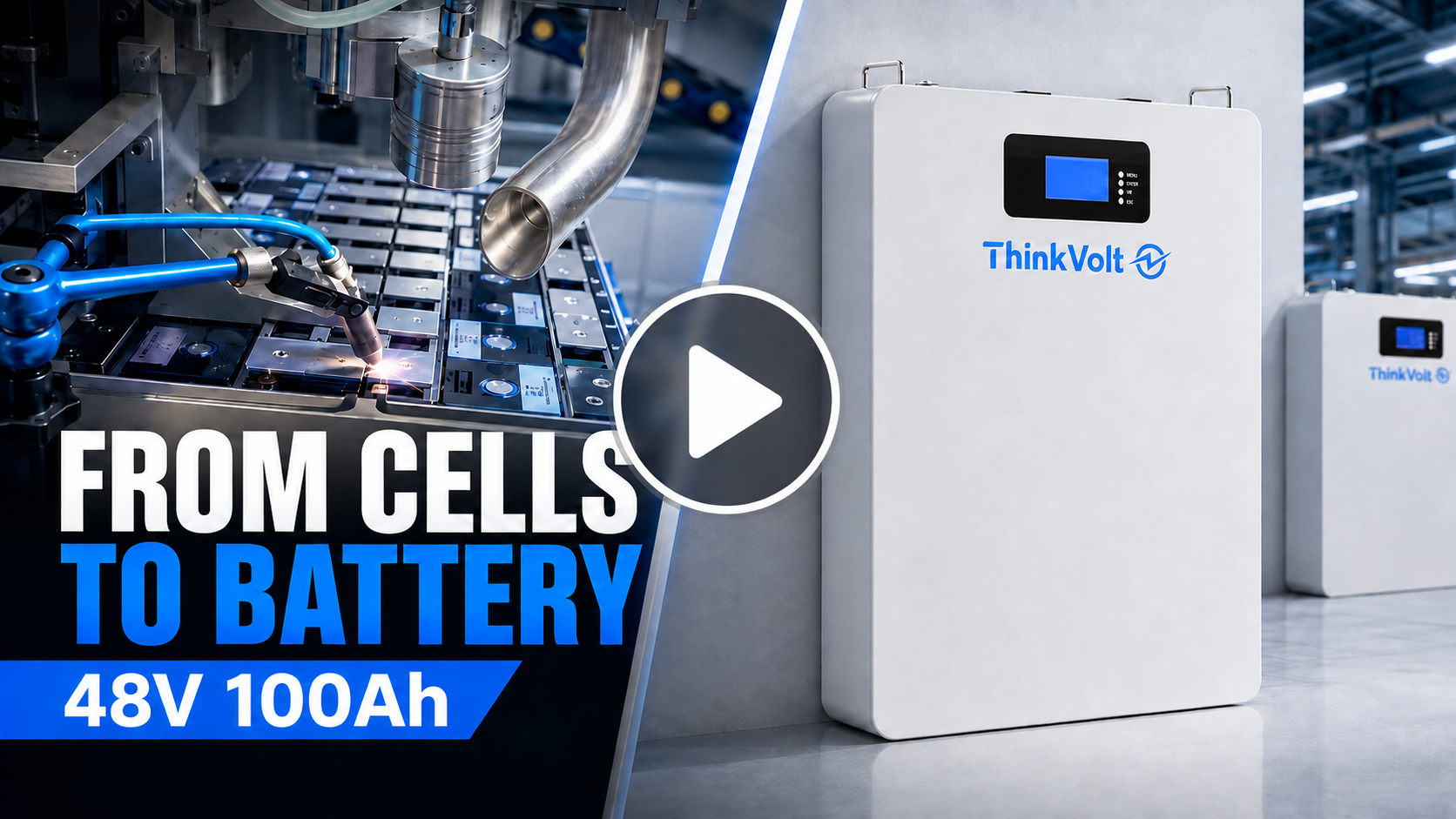
How is a 48V 100Ah wall-mounted home battery assembled? The internal assembly process involves securing components within the battery enclosure, connecting electrical cables and terminals, organizing internal wiring, and fastening parts around the battery modules and control electronics.
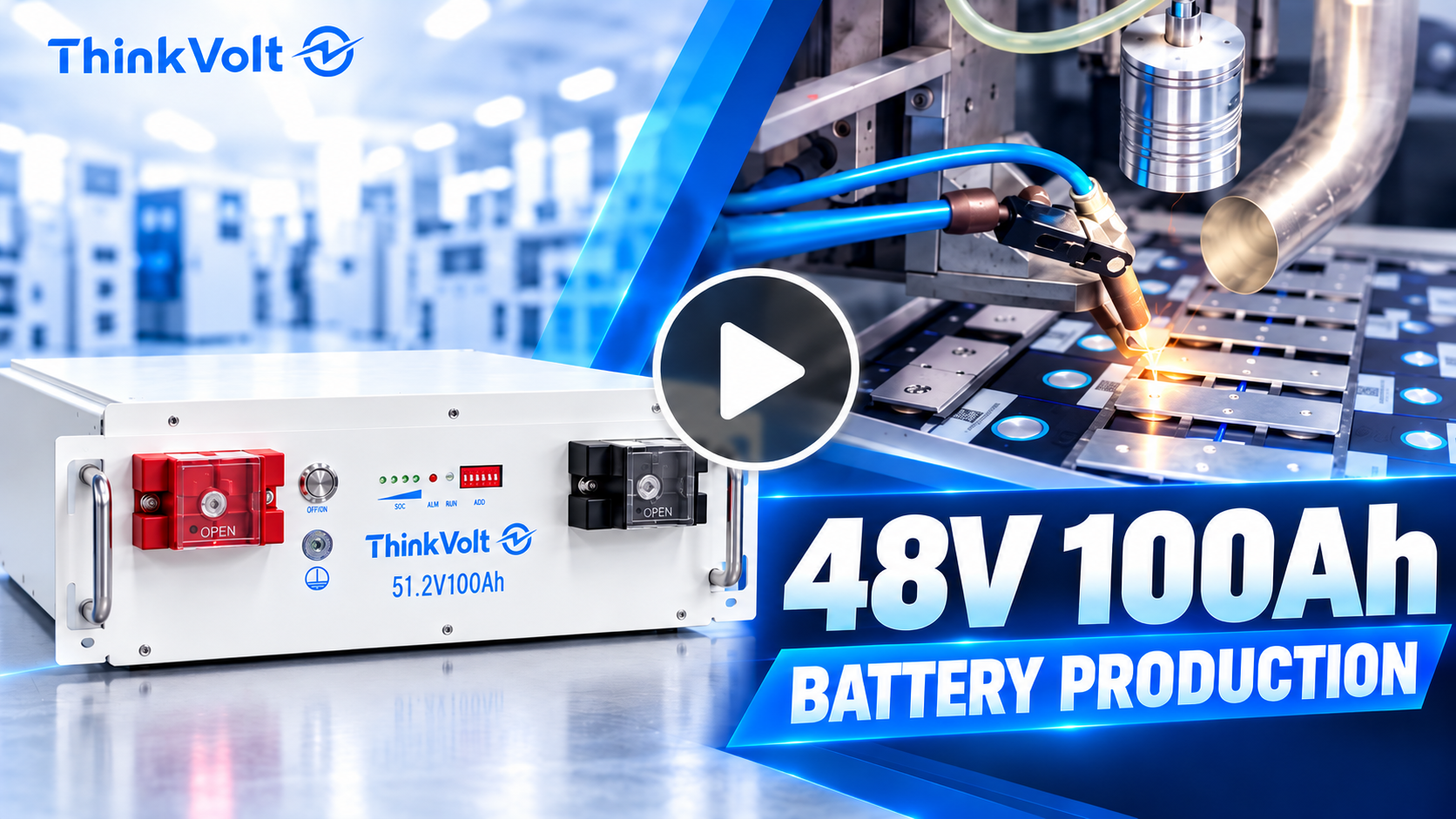
In this article, we take a closer look at the ThinkVolt 48V 100Ah wall-mounted home battery assembly process, highlighting the practical operations shown in our production video and explaining why these details matter.
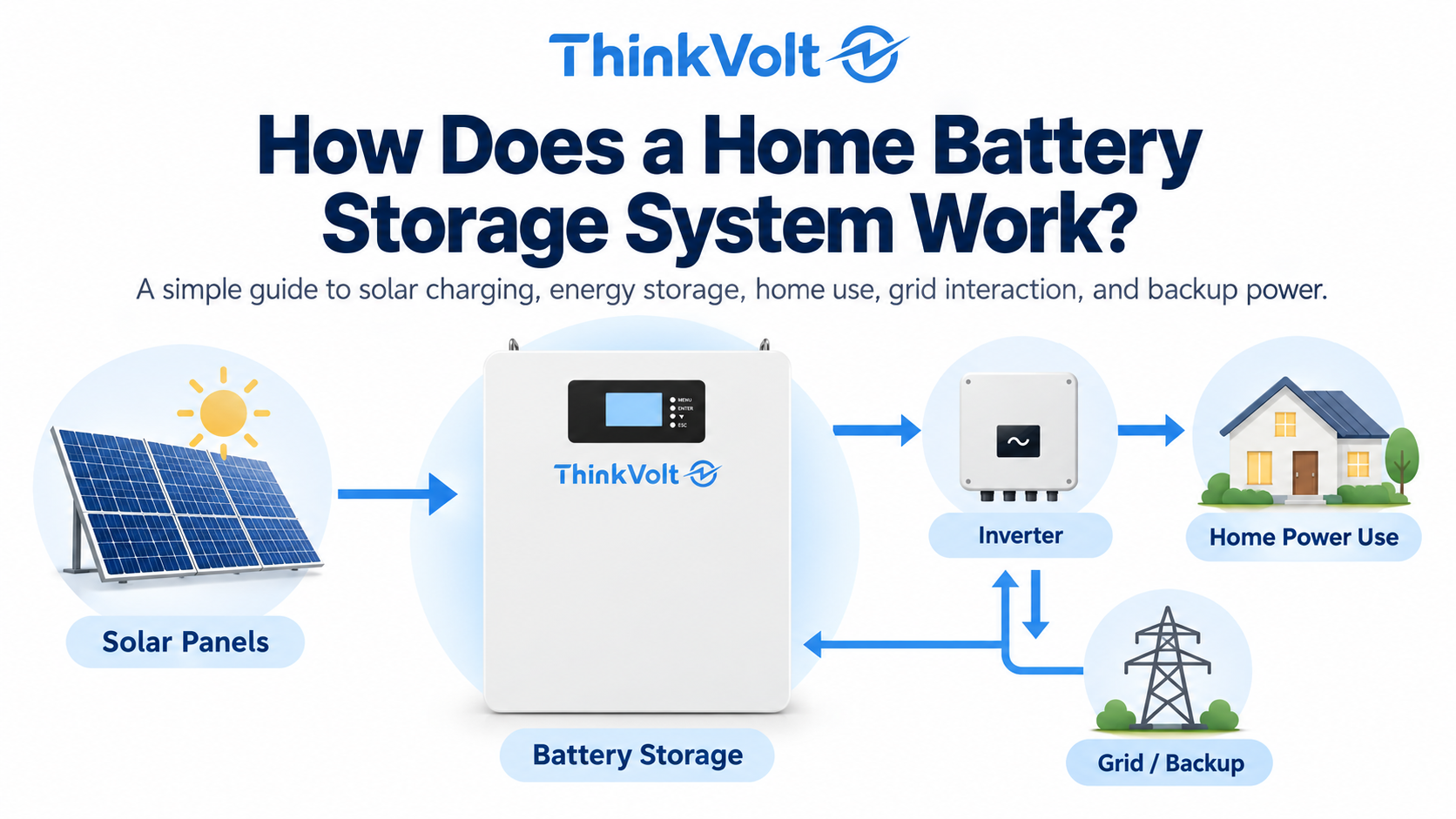
A wall-mounted home battery integrates energy storage cells, electrical connections, control electronics, and supporting components within a compact enclosure.
Although these components perform different functions, they must work together as an integrated energy storage system.
The ThinkVolt assembly footage provides a close-up view of several key areas:
Battery cell assembly: The internal arrangement of battery cells and their connecting components.
Electrical connections: Cables and terminals connecting different parts of the battery system.
Internal wiring: Smaller wires routed across and around the battery modules.
Control electronics: Circuit board areas and associated wiring connections.
Battery enclosure: The structural housing that supports and protects internal components.
Each area requires attention during assembly to help ensure that the finished product is mechanically secure and properly connected.
The following sections describe the main assembly operations visible in the ThinkVolt production video.
The assembly process begins with work around the battery enclosure and its installed components.
In the video, technicians use handheld power tools to tighten fasteners around the enclosure's connector area and internal assembly.
Mechanical fastening is an important part of battery manufacturing because electrical and structural components must remain securely positioned during handling, transportation, and operation.
Properly secured components can help reduce unwanted movement and minimize mechanical stress on internal connections.
The appropriate fastening method and torque must follow the manufacturer's engineering requirements.
Electrical connections provide the pathways required for the battery's internal components to function together.
During the assembly process, technicians position cables and connect wiring terminals around the battery assembly.
These connections require careful handling because loose, damaged, or incorrectly installed electrical connections can affect battery performance and safety.
Important considerations during cable connection include:
Correct placement of cables and terminals
Appropriate mechanical fastening of electrical connections
Protection against unnecessary cable strain
Separation of wiring from potentially damaging edges or components
Careful cable installation helps establish a reliable foundation for the battery's internal electrical system.
One of the most visible operations in the ThinkVolt assembly video is the arrangement of internal wiring across the battery cell assembly.
Technicians manually position multiple wires along the battery modules and guide them toward their intended connection areas.
Why is cable routing important in a home battery?
Well-organized battery wiring helps prevent unnecessary interference between cables and other internal components. It also makes the internal layout easier to inspect and maintain.
Good cable routing practices can help:
Reduce unnecessary mechanical stress on wire connections
Minimize the risk of cable abrasion or pinching
Keep wiring organized within the limited enclosure space
Improve accessibility for inspection and servicing
Support consistent assembly procedures
For compact wall-mounted energy storage batteries, efficient use of internal space is particularly important.
The assembly footage also shows technicians working with smaller wires and connectors positioned around the battery cell modules.
In lithium battery systems, monitoring and control circuits commonly rely on electrical connections to obtain information from the battery assembly.
These connections support the broader battery management architecture, although their exact functions depend on the product's electrical design.
During assembly, technicians must position and connect the relevant wires according to the applicable wiring layout.
Correct connections are essential because battery monitoring and protection functions depend on accurate electrical interfaces.
Another important part of the process takes place around the internal circuit board and connector area.
The video shows technicians handling wires and fastening components close to the battery's electronic assemblies.
Control electronics play an important role in modern home energy storage batteries. Depending on the system design, they may support battery monitoring, protection, communication, and other operating functions.
During assembly, particular attention is needed to ensure that connectors are properly seated and wiring is routed without excessive tension.
Organized connections also make subsequent inspection and troubleshooting more manageable.
After the wiring and connection operations shown in the video, technicians continue working on fasteners and internal assembly parts.
Handheld tools are used at different locations inside the battery enclosure to secure components.
This stage helps ensure that installed parts remain correctly positioned and that their mechanical connections are maintained.
For battery manufacturers, consistent fastening procedures are important for reducing assembly variation between production units.
The video captures selected fastening and securing operations, rather than a complete final assembly or inspection sequence.
The internal assembly of a home battery is more than a mechanical production task. It directly supports the electrical integrity, maintainability, and overall reliability of the battery system.
Three aspects are especially important.
Electrical connections must remain stable under normal operating conditions. Appropriate terminal installation and fastening can help reduce connection-related problems.
A carefully arranged wiring layout helps limit unnecessary cable movement and potential contact with sharp edges or other components.
It also provides a clearer structure for technical inspection and maintenance.
Battery components must be properly supported within their enclosure. Secure fastening helps protect internal assemblies from movement and mechanical stress.
However, assembly quality alone does not demonstrate that a battery has passed electrical safety, functional, or performance tests. Those results require separate, documented verification.
At ThinkVolt, we share practical footage of home energy storage battery production to help customers better understand the components and workmanship behind our products.
Our 48V 100Ah wall-mounted battery assembly video offers a close-up view of technicians carrying out internal cable connections, wire routing, component positioning, and fastening operations.
Rather than presenting a complete manufacturing process, this video focuses on the hands-on assembly details inside the battery enclosure.
Watch the ThinkVolt 48V 100Ah Wall-Mounted Home Battery Assembly Video
[Embed assembly video here]
For distributors, installers, and energy storage system integrators, understanding these manufacturing details can provide useful context when evaluating battery products and discussing technical requirements with suppliers.
The internal assembly process generally includes positioning and securing components, connecting electrical cables and terminals, routing internal wiring, connecting control electronics, and fastening assembly parts. Additional manufacturing and verification stages depend on the battery design and production procedures.
Internal wiring connects the battery's electrical and electronic components. Proper wire routing and secure connections help support reliable operation while reducing the risk of cable damage, strain, or incorrect connections.
A battery management system monitors battery operating conditions and supports protective functions such as voltage, current, and temperature management, depending on its design. Its electrical connections must be installed correctly for the intended monitoring and control functions to work.
No. Assembly involves installing, connecting, and securing battery components. Quality testing involves separate procedures used to verify electrical integrity, safety, and functional performance. The ThinkVolt video featured here focuses on selected internal assembly operations and does not show final performance testing.
Buyers should consider connection quality, internal wiring organization, component fastening, production consistency, and documented quality-control procedures. They should also request relevant product specifications, certifications, and test documentation to evaluate whether a battery meets their project requirements.
A well-assembled home battery depends on careful attention to electrical connections, internal wiring, and mechanical fastening.
Through this look inside the ThinkVolt 48V 100Ah wall-mounted home battery, we hope to provide a clearer understanding of the practical assembly work involved in residential energy storage products.
For more information about ThinkVolt home battery solutions, product specifications, or B2B cooperation opportunities, contact our team.