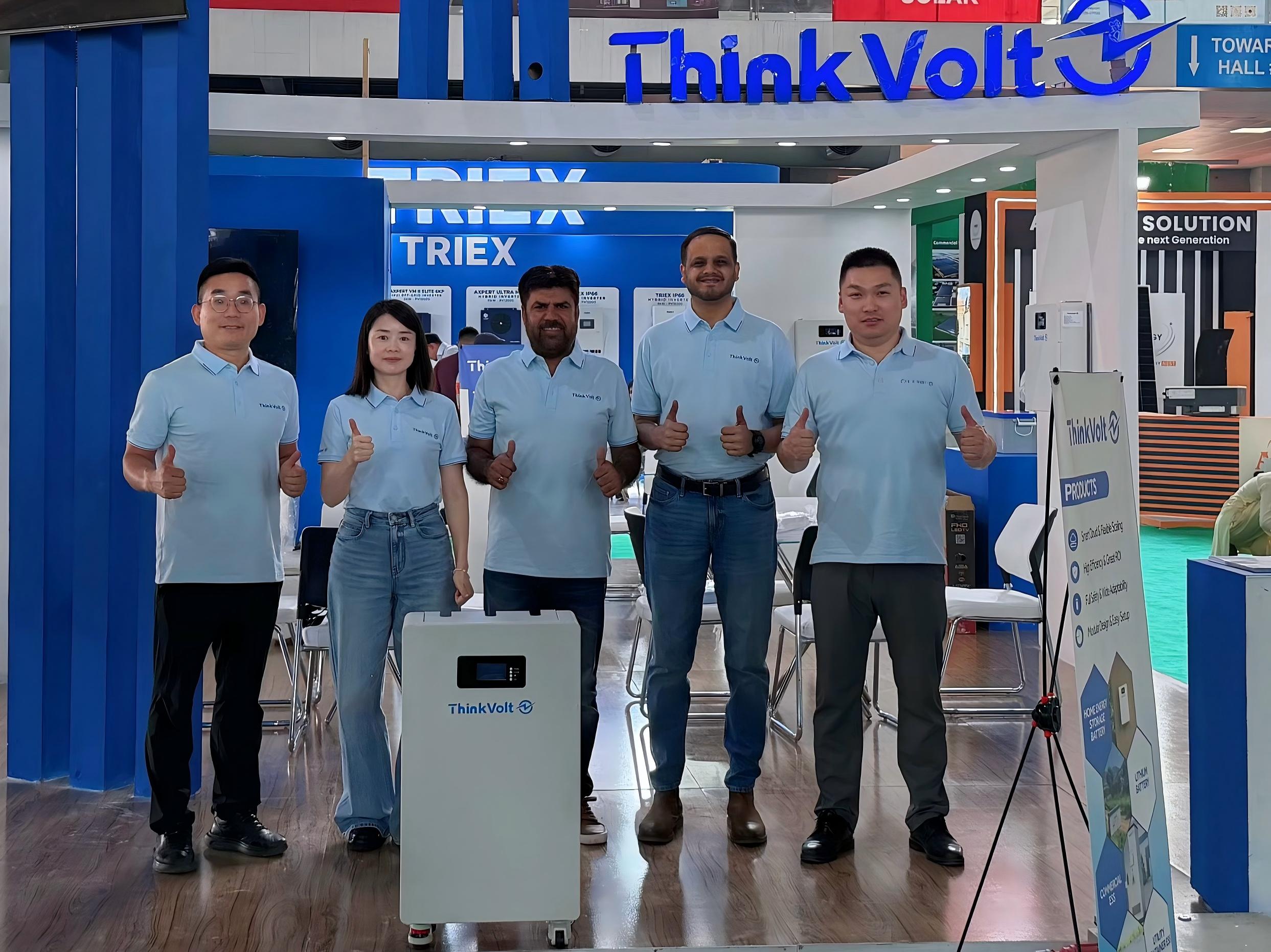
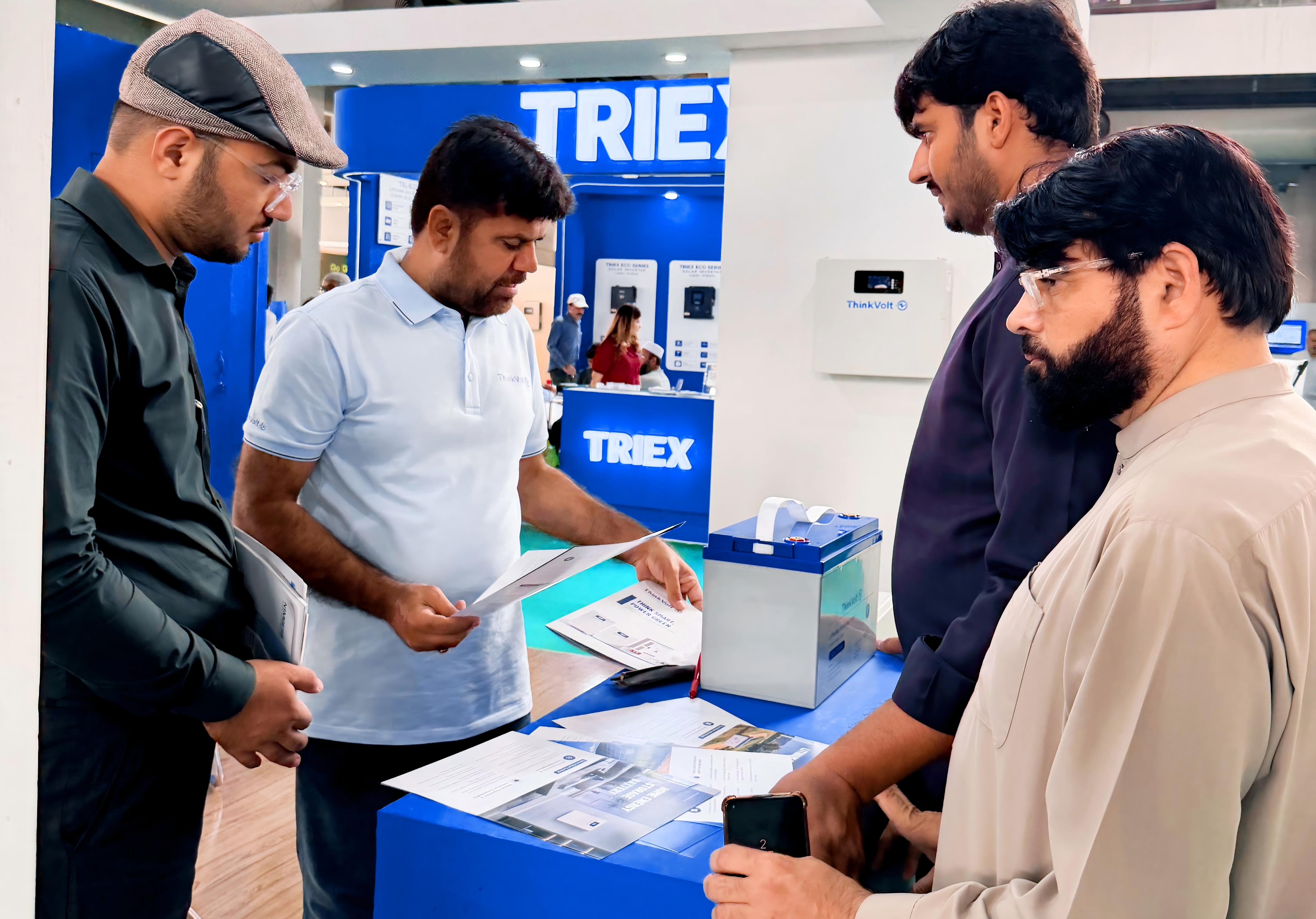
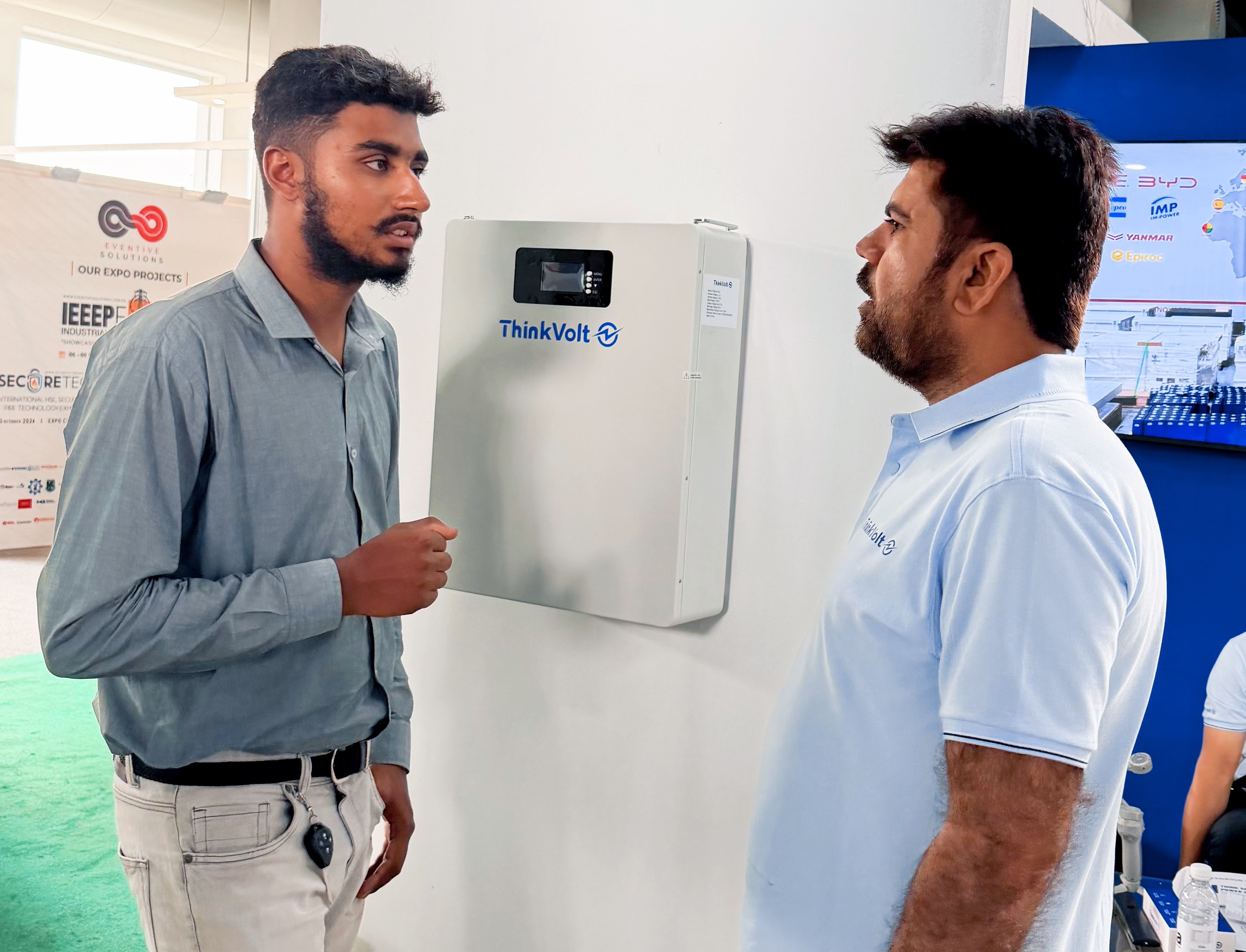
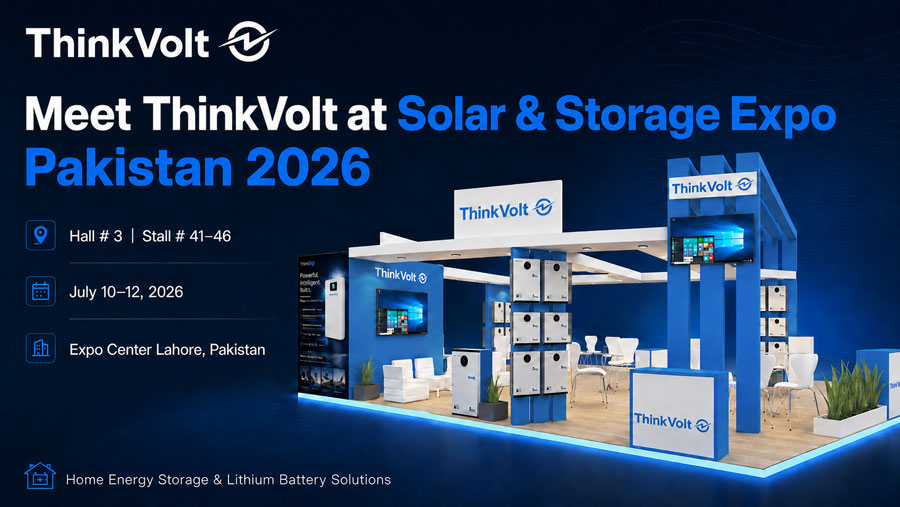
ThinkVolt at Solar & Storage Expo Pakistan 2026: Connecting with Pakistan’s Energy Storage Market
2026-07-23
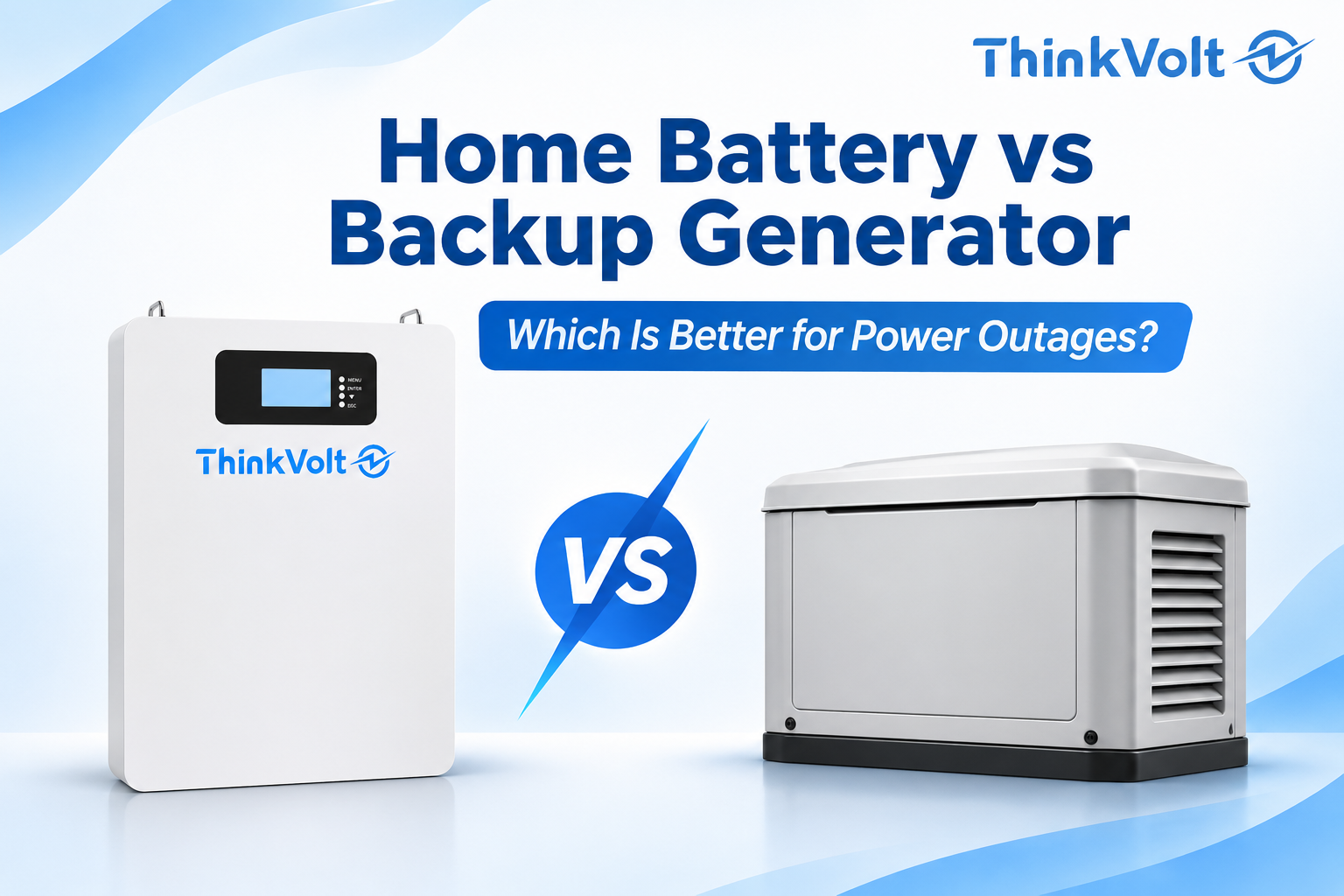
A home battery is usually the better fit for quiet, automatic backup during shorter outages and for households that want to use solar power, while a fuel-powered generator is often more practical for extended outages with large continuous loads. The right choice depends on your critical appliances, required backup hours, fuel access, and whether you want the system to provide value when the grid is working.
A home battery stores electrical energy and releases it through a compatible inverter when needed; a generator makes electricity by burning fuel. Both can support essential household loads, but neither automatically guarantees whole-house power.
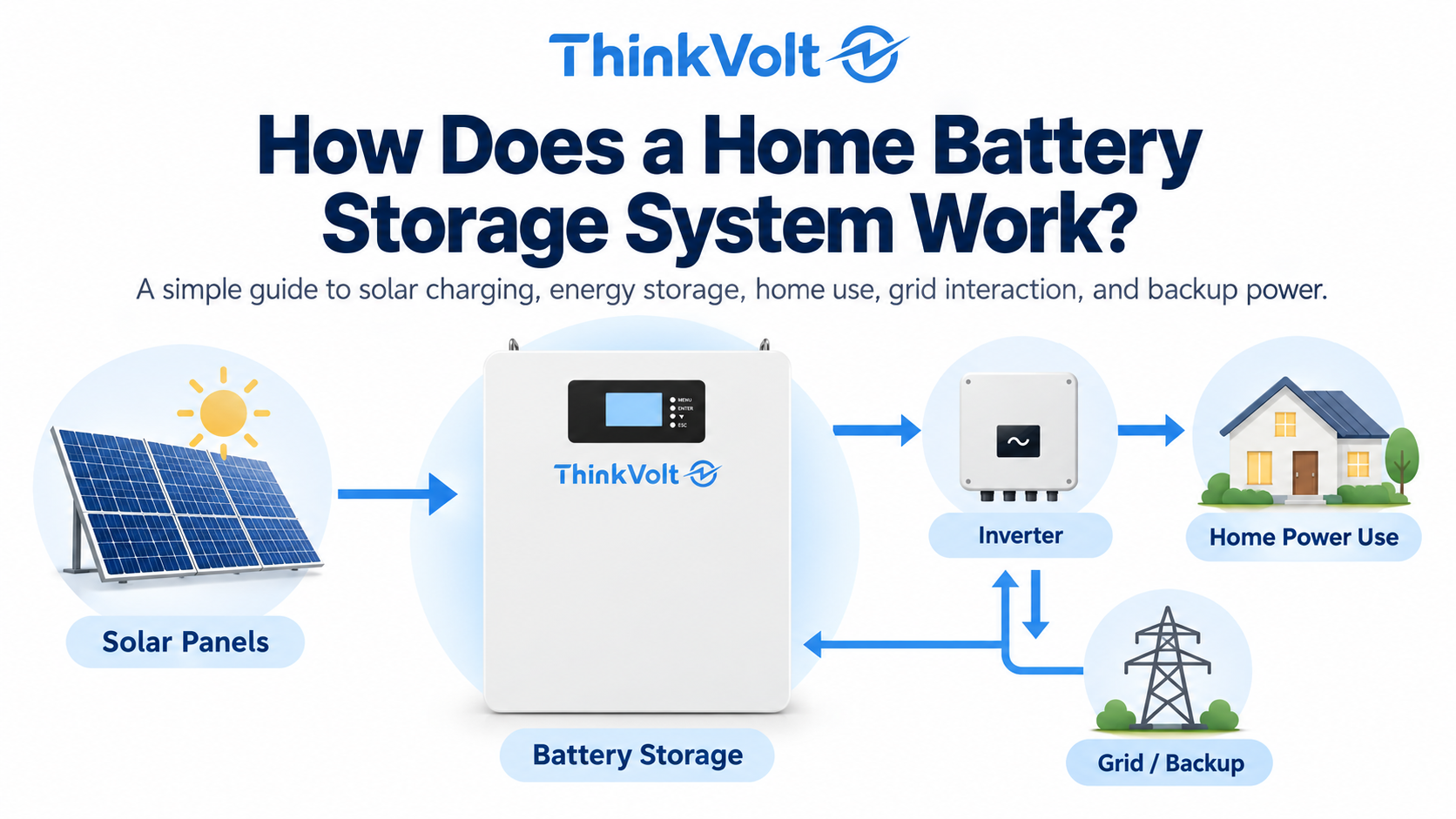
An installed home battery energy storage system (ESS) typically includes battery modules, a battery management system (BMS), an inverter or power conversion system, protection devices, and equipment that safely separates backed-up circuits from the utility grid. Batteries can be charged from the grid or from an appropriately configured solar array. Lithium iron phosphate (LiFePO4 or LFP) is a common chemistry for residential storage.
A generator converts the energy in gasoline, diesel, propane, or natural gas into electricity. Portable generators generally need manual setup, while permanently installed standby generators may start automatically and transfer selected circuits or the whole home after an outage. Exact capabilities depend on the rated output, fuel supply, electrical connection, and transfer equipment.
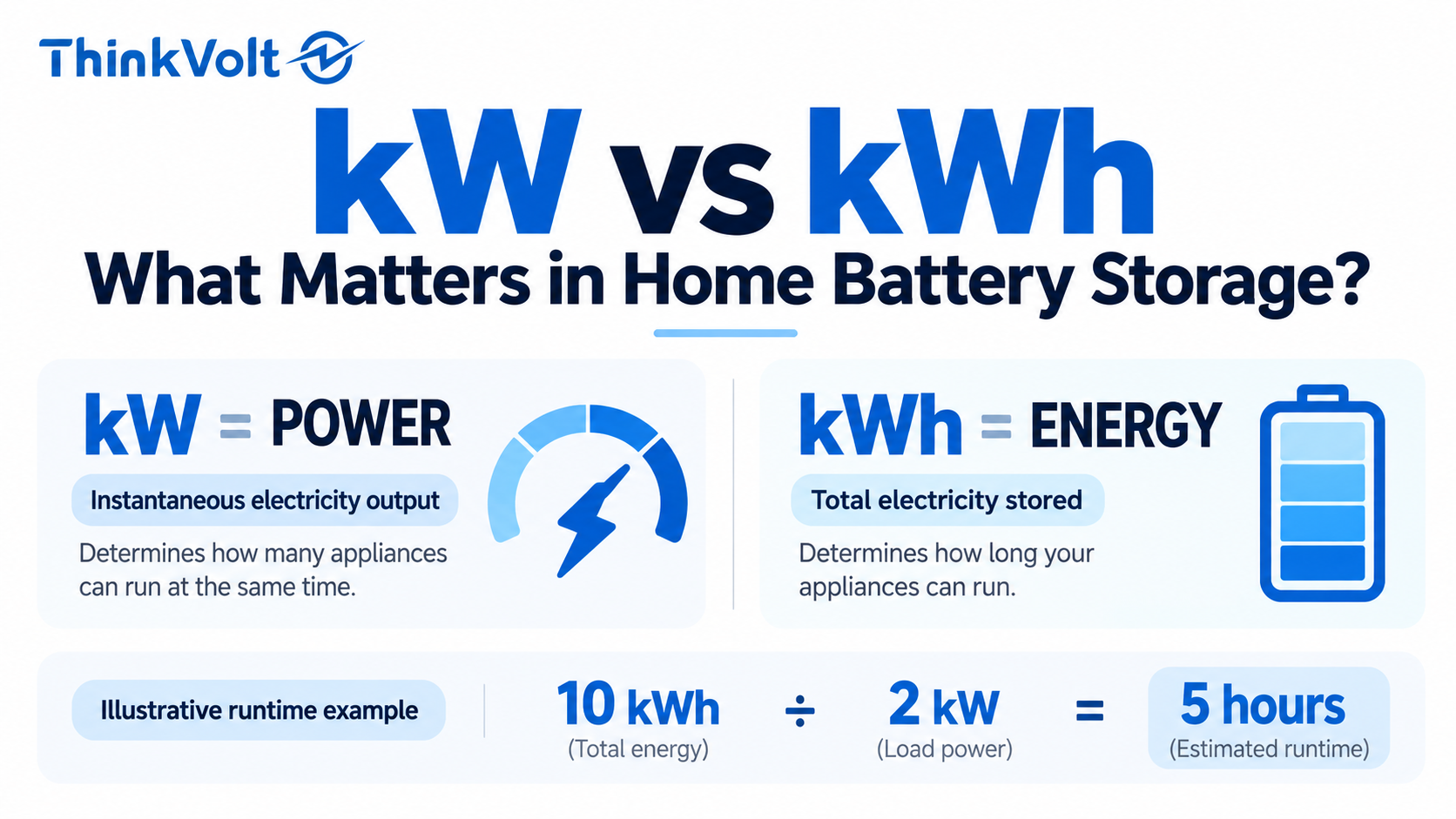
A useful way to compare them is to separate power from energy: power (kW) determines what can run simultaneously, while energy (kWh) determines how long those loads can run. Generator specifications also require attention to sustained output and motor-starting surge.
The most important trade-off is stored energy versus replenishable fuel. Batteries excel at quiet operation and frequent everyday use, while generators can support longer outages if fuel remains available and the equipment is maintained.
Decision factor | Home battery backup | Fuel-powered generator |
Energy source | Stored electricity; grid or compatible solar charging | Gasoline, diesel, propane, or natural gas |
Runtime | Limited by usable kWh, load, and recharge | Limited by fuel supply, load, servicing, and operating conditions |
Noise | Usually quiet, with possible inverter or cooling noise | Engine and exhaust noise while running |
Exhaust at point of use | No combustion exhaust | Produces combustion exhaust and carbon monoxide |
Starting and transfer | Can be fast or nearly seamless when designed for backup | Standby systems can start automatically; portable units often require manual action |
Upfront cost | Often higher for installed multi-kWh systems | Portable units often lower; installed standby systems cost more |
Ongoing care | Monitoring, inspections, and eventual battery replacement | Fuel management, testing, oil/filter service, and engine care |
Solar integration | Possible with compatible inverter and islanding controls | Possible only in an engineered hybrid configuration |
Everyday electricity management | May support solar self-use or time-of-use optimization | Generally used mainly for backup |
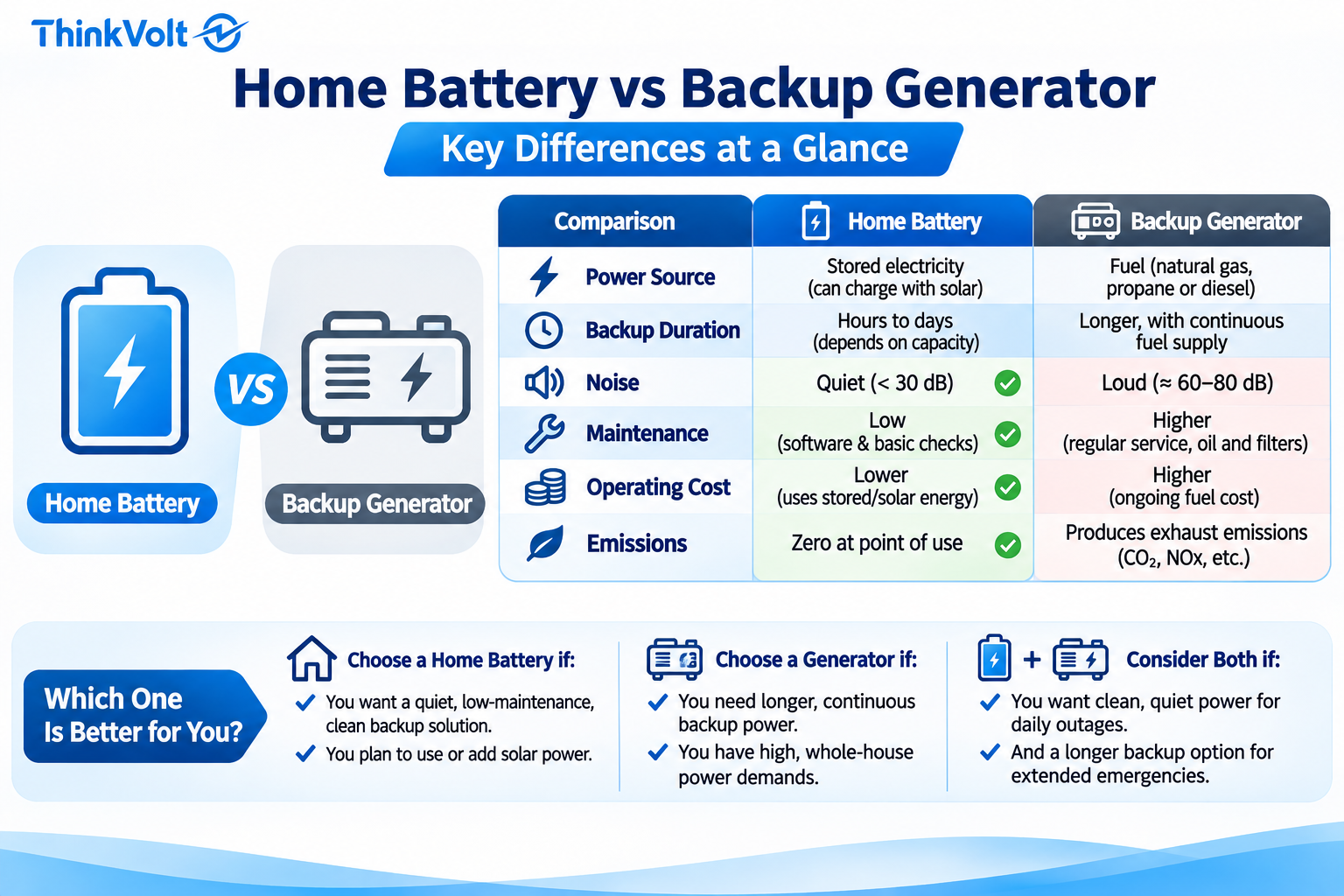
These are system-level tendencies, not promises for a specific model. An installed battery with a small inverter may power fewer loads than a large generator, while a large battery bank can support substantial household demand if properly engineered.
A generator generally has the advantage for prolonged outages because more fuel can replace the energy already consumed. A battery has a fixed stored-energy budget unless the grid returns or a correctly configured solar or other charging source replenishes it.
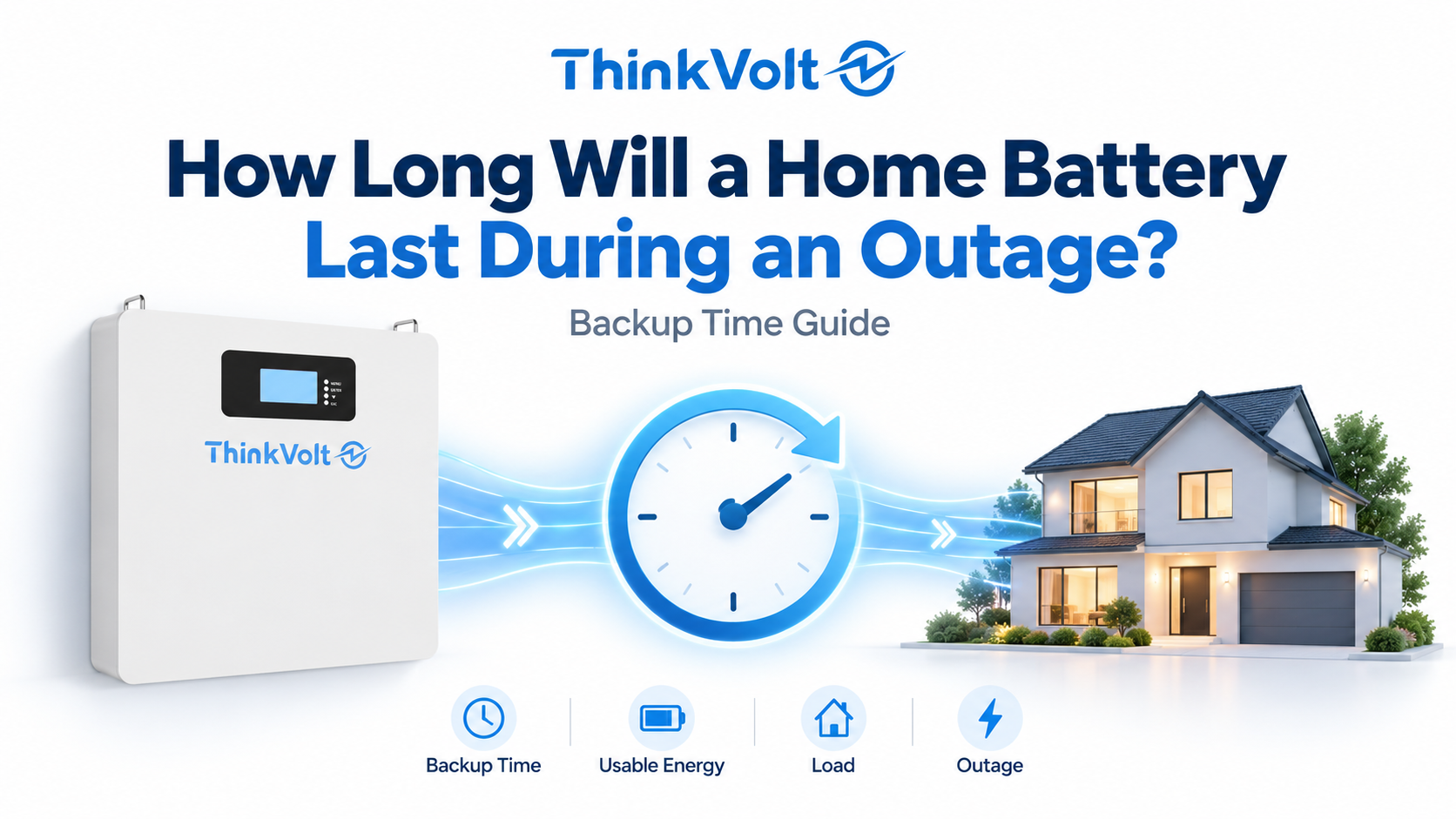
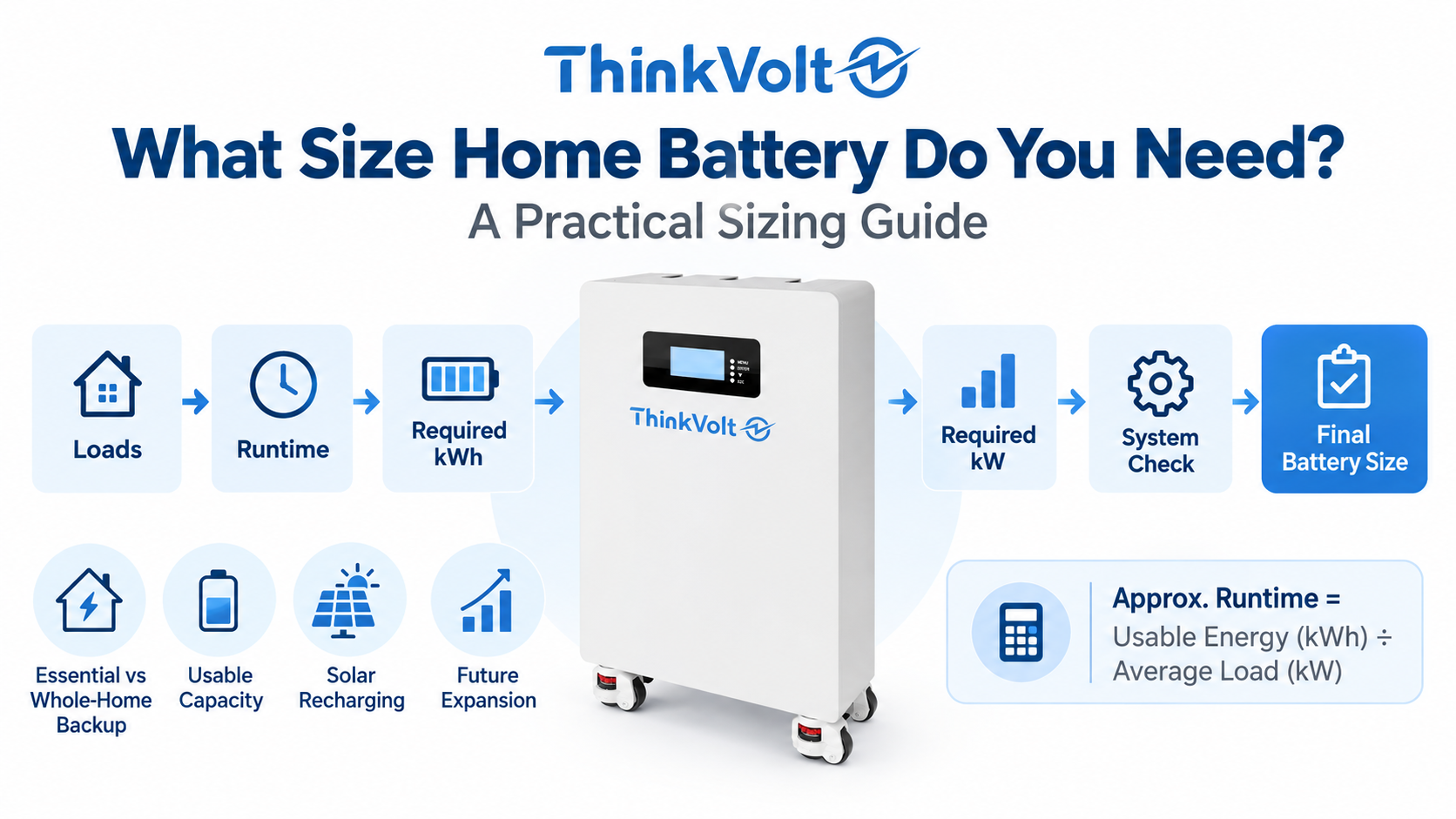
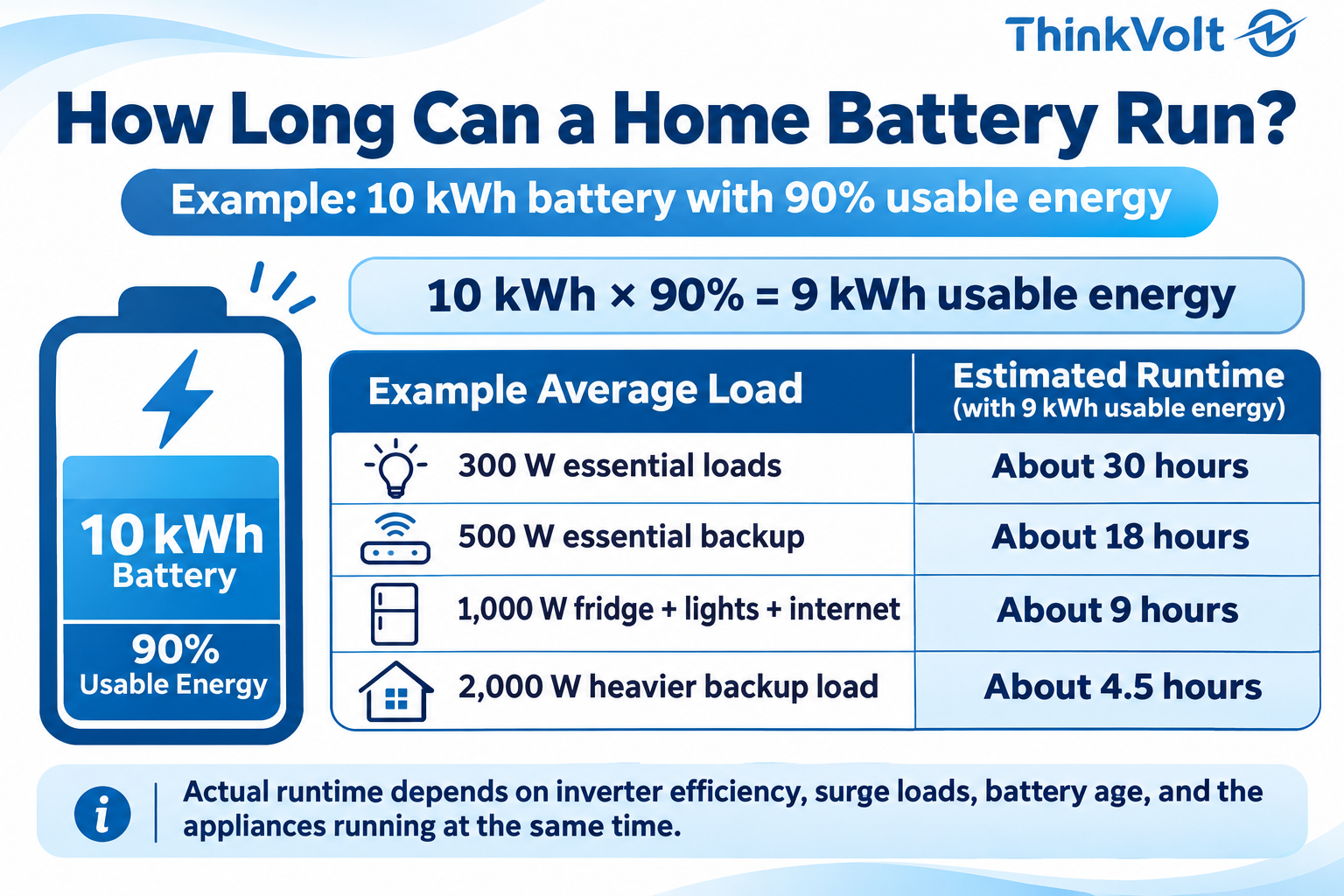
A practical first estimate is: backup time (hours) = usable battery energy (kWh) × inverter delivery efficiency ÷ average backed-up load (kW). If the quoted usable energy is already measured as AC energy delivered to the loads, do not deduct inverter losses twice.
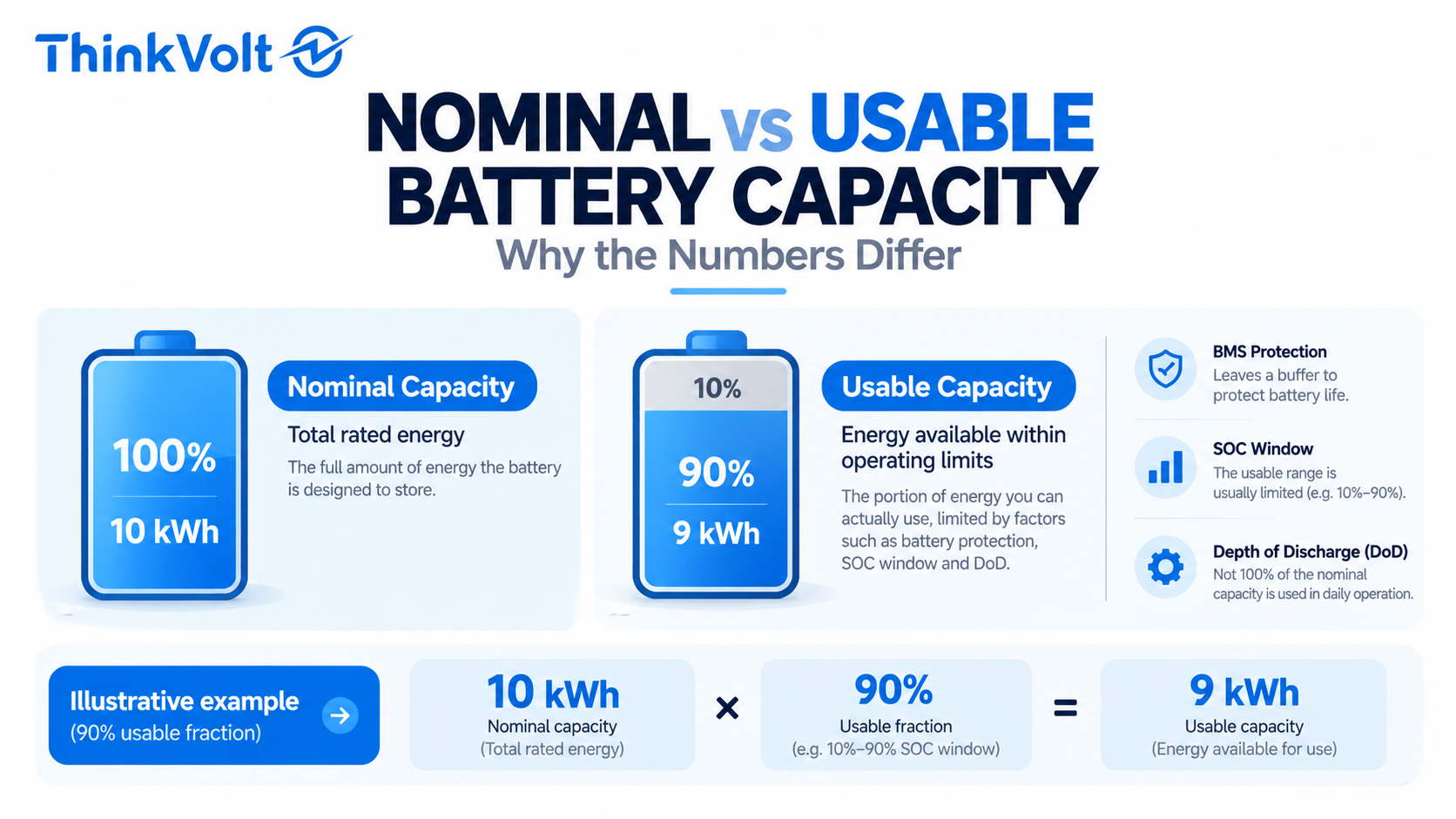
For example, consider a hypothetical battery with 10 kWh of nominal capacity, a planning assumption of 90% usable energy, and 90% conversion efficiency. Its estimated AC energy is 10 × 0.90 × 0.90 = 8.1 kWh. At a continuous average load of 0.5 kW, estimated runtime is 16.2 hours; at 2 kW, it is about 4.1 hours. These are illustrative assumptions, not ThinkVolt performance specifications.
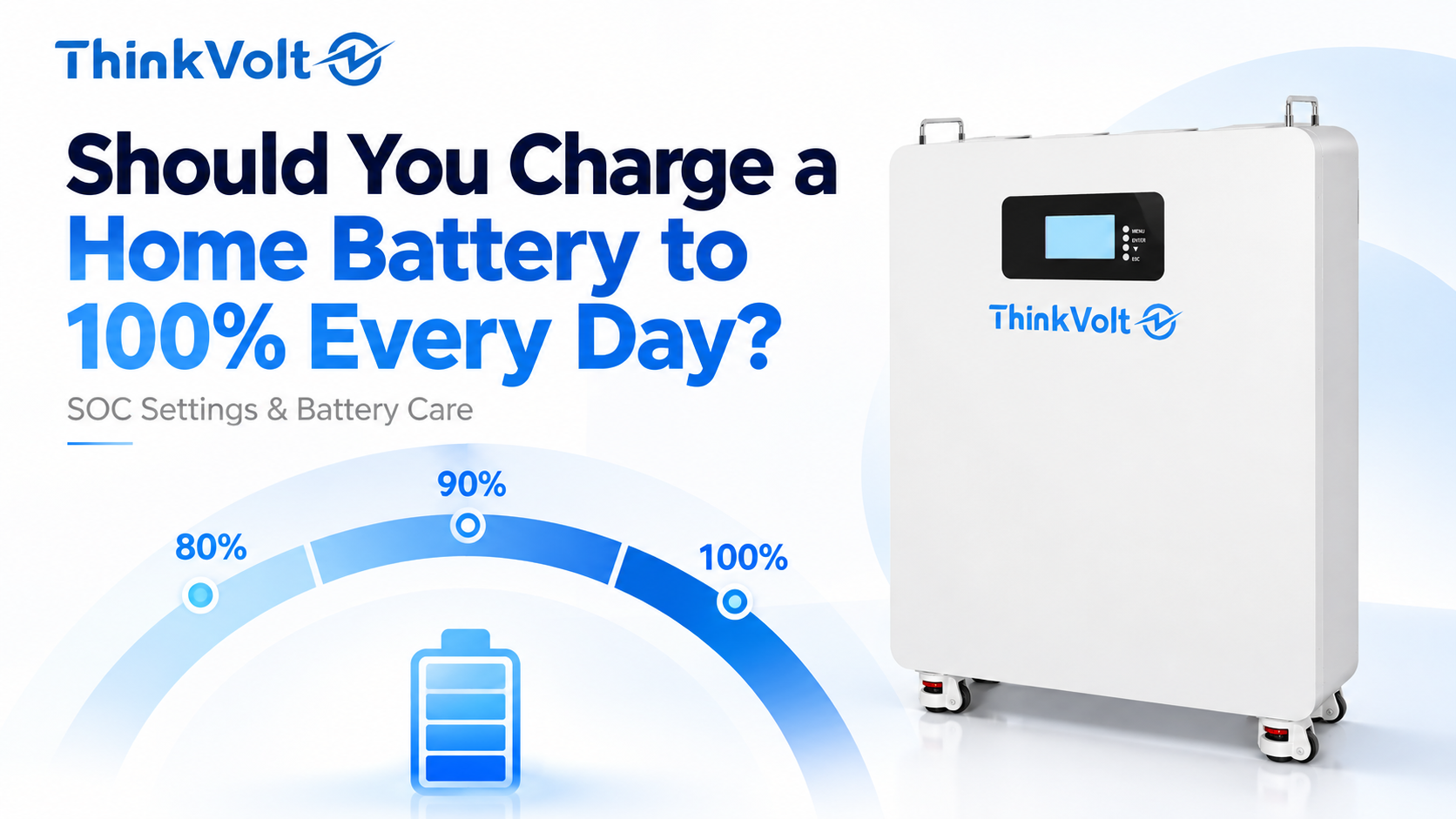
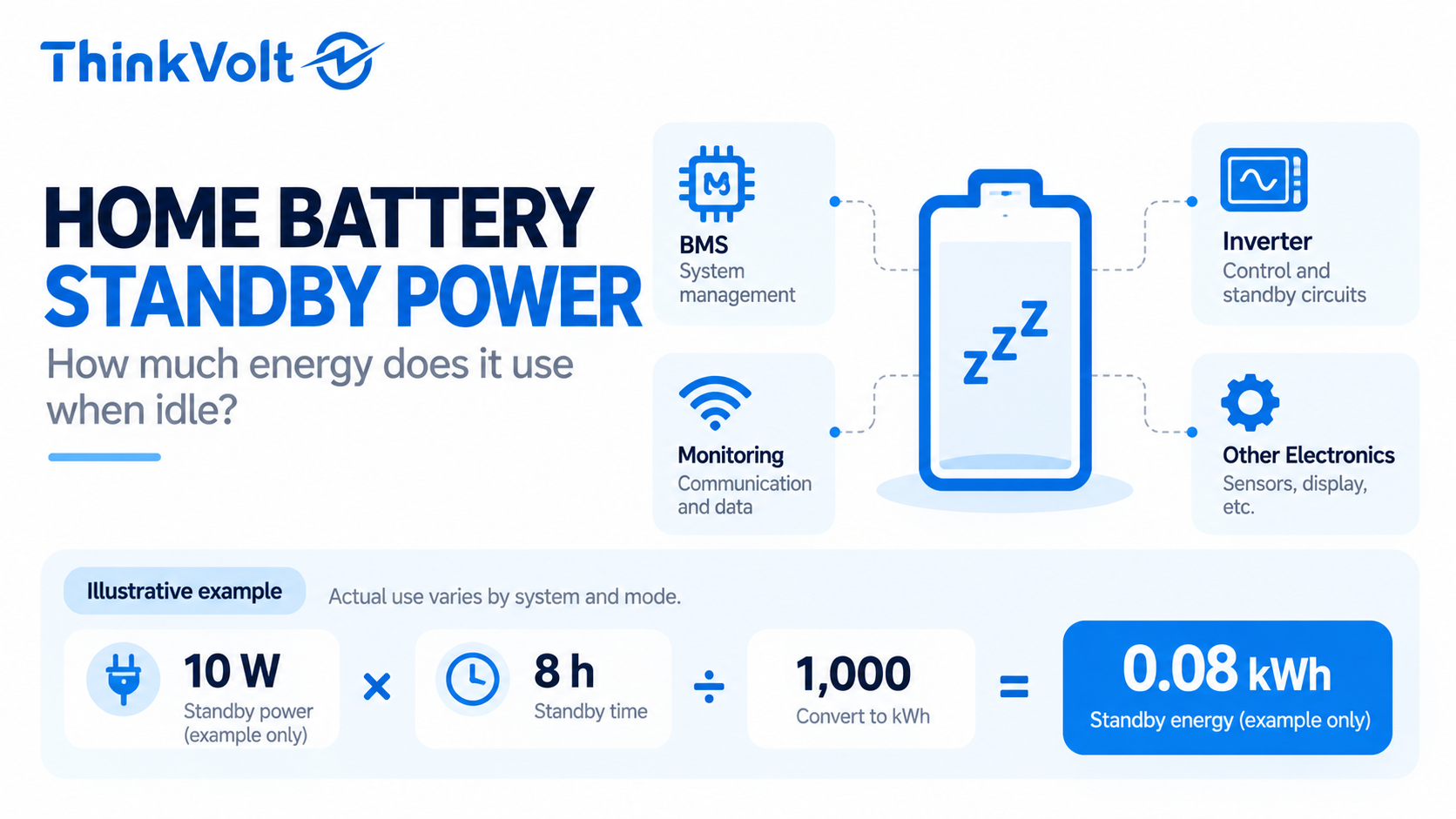
Actual results also depend on state of charge when the outage begins, reserve settings, temperature, aging, standby consumption, and changing appliance use. A refrigerator cycles; a heat pump may draw much more at certain times. Use measured energy consumption rather than simply adding nameplate maximums to estimate average runtime.
A generator operates only while fuel, ventilation, equipment condition, and maintenance permit. A small portable generator may need refueling during the outage; a natural-gas standby unit avoids manual tank refills but still relies on gas-service availability. Large tanks, fuel delivery interruptions, engine service, and sustained operating ratings matter for multi-day planning.
If your area experiences one- to six-hour outages, a correctly sized battery may be attractive. For outages lasting several days with high demand and uncertain solar conditions, a generator or engineered hybrid system often provides greater resilience.
Either technology can support whole-home backup, but only if the system can meet both continuous and starting power requirements and has an adequate energy or fuel budget. A battery advertised as 5.12 kWh is not automatically a 5 kW backup system.
Start with a critical-load list: refrigerator, lighting, internet equipment, security devices, selected outlets, well or sump pump, heating controls, and medically necessary equipment where applicable. Then record the running watts, startup surge, and hours of use. High-demand appliances such as electric resistance heating, large air conditioners, electric ranges, and EV chargers can significantly increase the required system size.
An installer should check battery discharge capability, inverter continuous output, surge handling, phase and voltage requirements, circuit arrangement, and protection settings. Generator sizing likewise requires both running and starting loads, fuel type, altitude or temperature derating where specified, and safe transfer equipment.
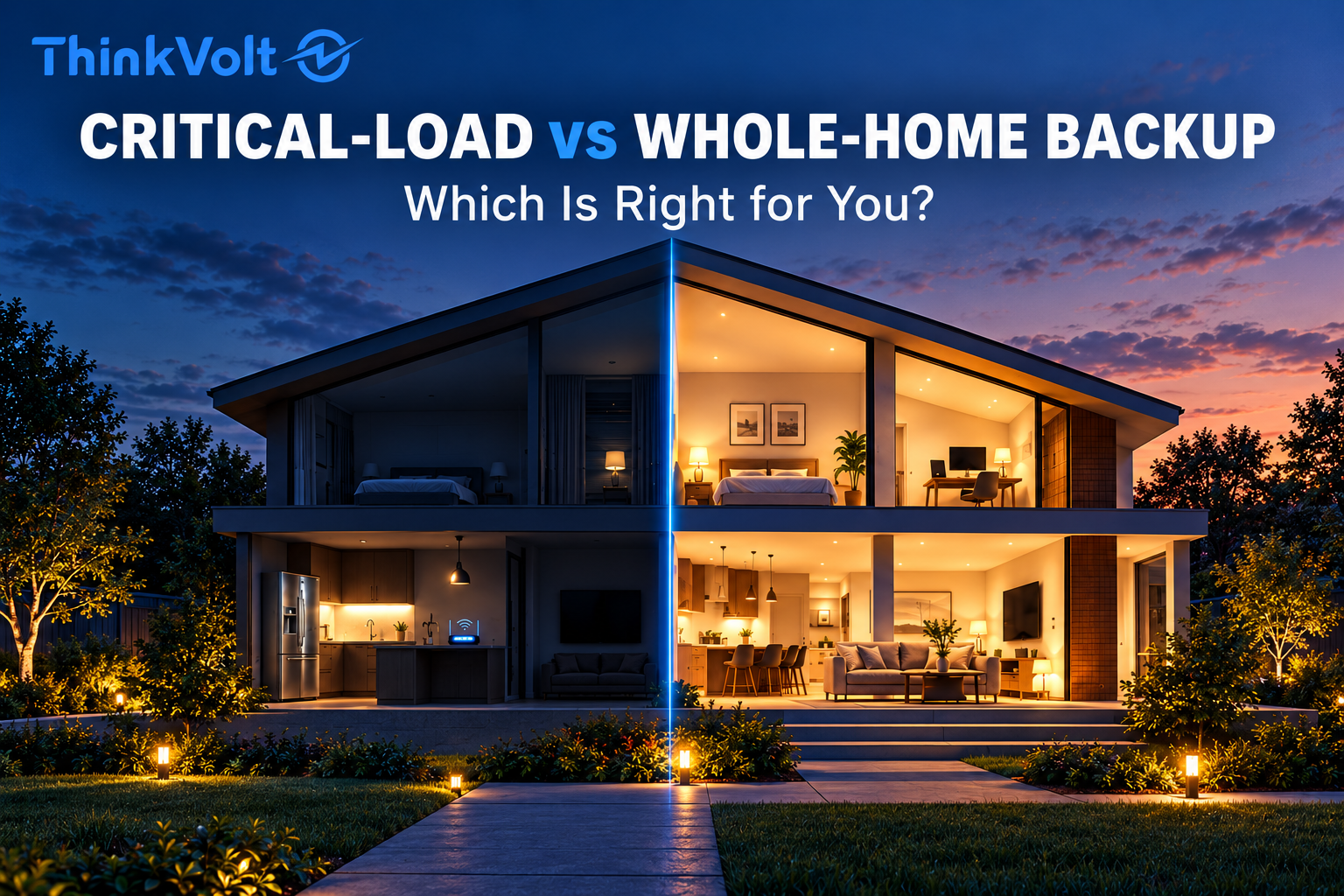
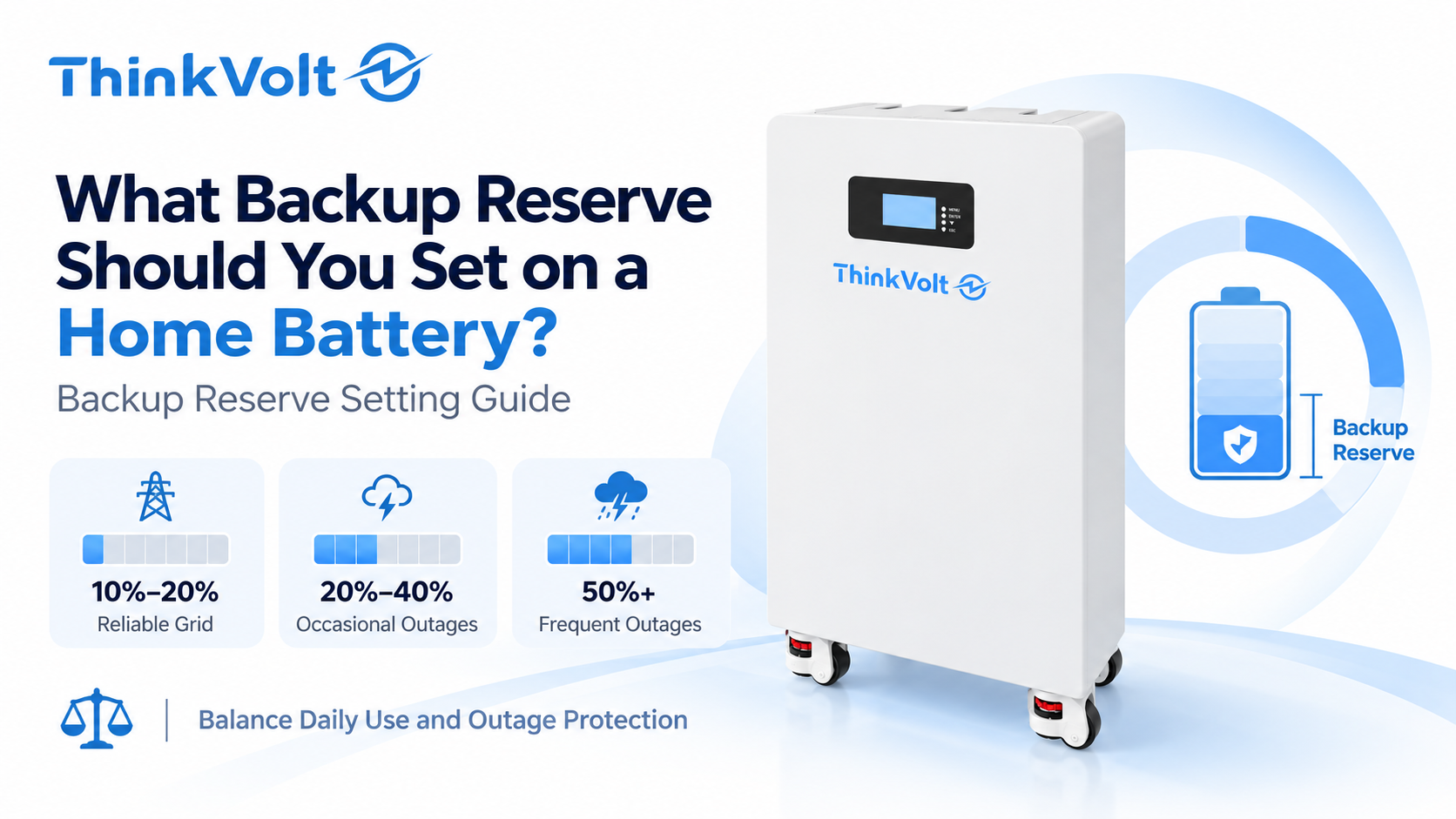
Essential-load backup isolates a smaller set of circuits, helping a limited battery last longer. Whole-home backup is convenient but can require multiple battery modules, a high-output inverter, or a larger standby generator. A load management controller can sometimes reduce peak demand by temporarily shedding noncritical circuits.
Do not connect either power source to household wiring without an approved transfer or isolation arrangement. A qualified installer must prevent unsafe backfeeding of the utility network and verify local electrical-code requirements.
Portable generators usually have the lowest entry price; permanent battery systems often cost more initially but can create additional value through daily energy management. A fair comparison must include installation, expected outage use, fuel, maintenance, replacements, and local electricity tariffs.
Generator pricing spans a large range from portable units to installed standby systems, and battery pricing varies with storage capacity, inverter, switchgear, labor, and local permits. Published price estimates are regional snapshots rather than quotes for a particular home. For example, EnergySage's updated 2026 comparison treats installed solar-plus-storage as a substantially larger upfront investment than a generator while examining potential electricity-bill value over time.
Compare at least three budgets: (1) purchase and installation; (2) operating costs over your chosen planning period; and (3) any bill savings enabled by solar self-consumption or time-of-use shifting. Add fuel storage and delivery, routine generator servicing, system monitoring, possible battery or engine replacement, financing, and available local incentives where verified.
Do not assume a battery will pay for itself solely through outages. Annual backup use may be limited, and tariff-based savings depend on electricity rates, charging losses, solar generation, dispatch settings, and usage habits. Ask suppliers for comparable, itemized installed quotations rather than comparing battery hardware alone with a generator's sticker price.
A home battery avoids on-site combustion exhaust and is generally quieter during operation, but both technologies require suitable installation, protection, and periodic checks. A generator introduces fuel, engine, noise, and carbon monoxide considerations that batteries do not share in the same form.
For portable generators, the US Centers for Disease Control and Prevention advises outdoor operation at least 20 feet from doors, windows, and vents, with appropriate carbon monoxide detectors indoors. Never run a portable generator in a garage, basement, or other enclosed area, even with doors open. Follow the specific manufacturer's outdoor clearance and weather-protection instructions.
Stationary generators require approved placement, exhaust routing, fuel connections, testing, and professional installation. Battery systems require battery-specific enclosure and environmental suitability, electrical protection, correct inverter communication, thermal management, and compliance with applicable local fire and electrical standards. Neither option should be described as risk-free.
In normal operation, batteries have no fuel engine to service, but owners still need to monitor alarms, maintain clearances, check system status, and follow the manufacturer's inspection and replacement schedule. Generator owners should plan for test runs, fuel management, and periodic engine service.
Yes, but only when the solar-plus-storage system is designed and configured to operate safely while disconnected from the grid. Rooftop solar alone generally stops supplying the home during a utility outage, even when sunlight is available.
A backup-capable inverter, grid-isolation mechanism, battery controls, and compatible solar charging configuration are needed. The US Department of Energy explains that ordinary grid-tied solar systems normally shut down when the grid fails; suitably configured solar-plus-storage can operate in an islanded mode and support selected loads.
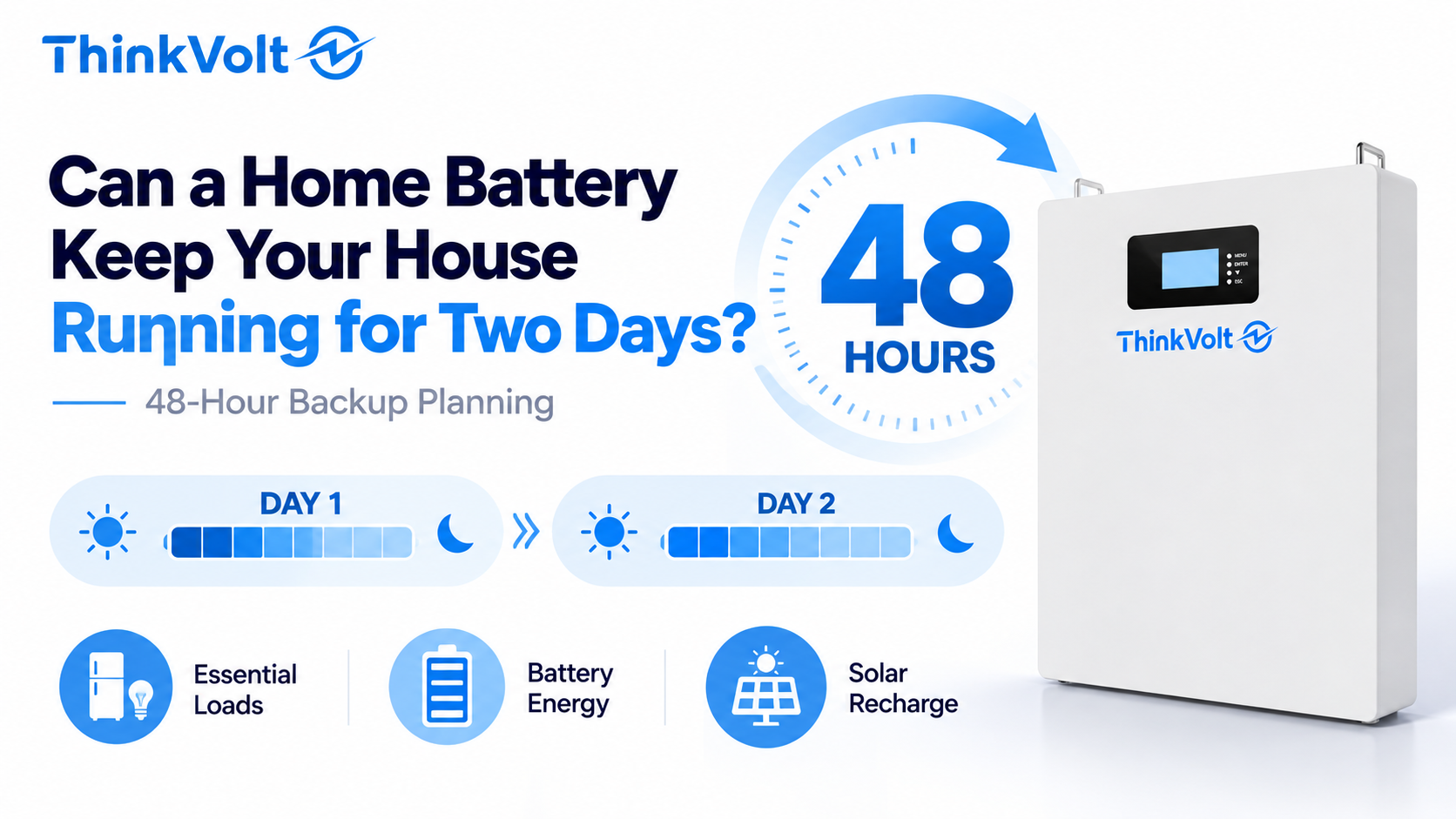
During a prolonged outage, daytime solar production may charge the battery and supply appliances, while the battery carries the load at night. This is not guaranteed daily autonomy: poor weather, panel orientation, seasonal sunlight, load consumption, available charging power, and inverter controls can reduce replenishment.
If you already have rooftop solar, ask the installer whether your exact inverter supports battery backup and islanding, whether it can restart from a depleted battery, and which circuits will remain powered. Confirm battery protocol compatibility rather than assuming devices from different manufacturers communicate automatically.
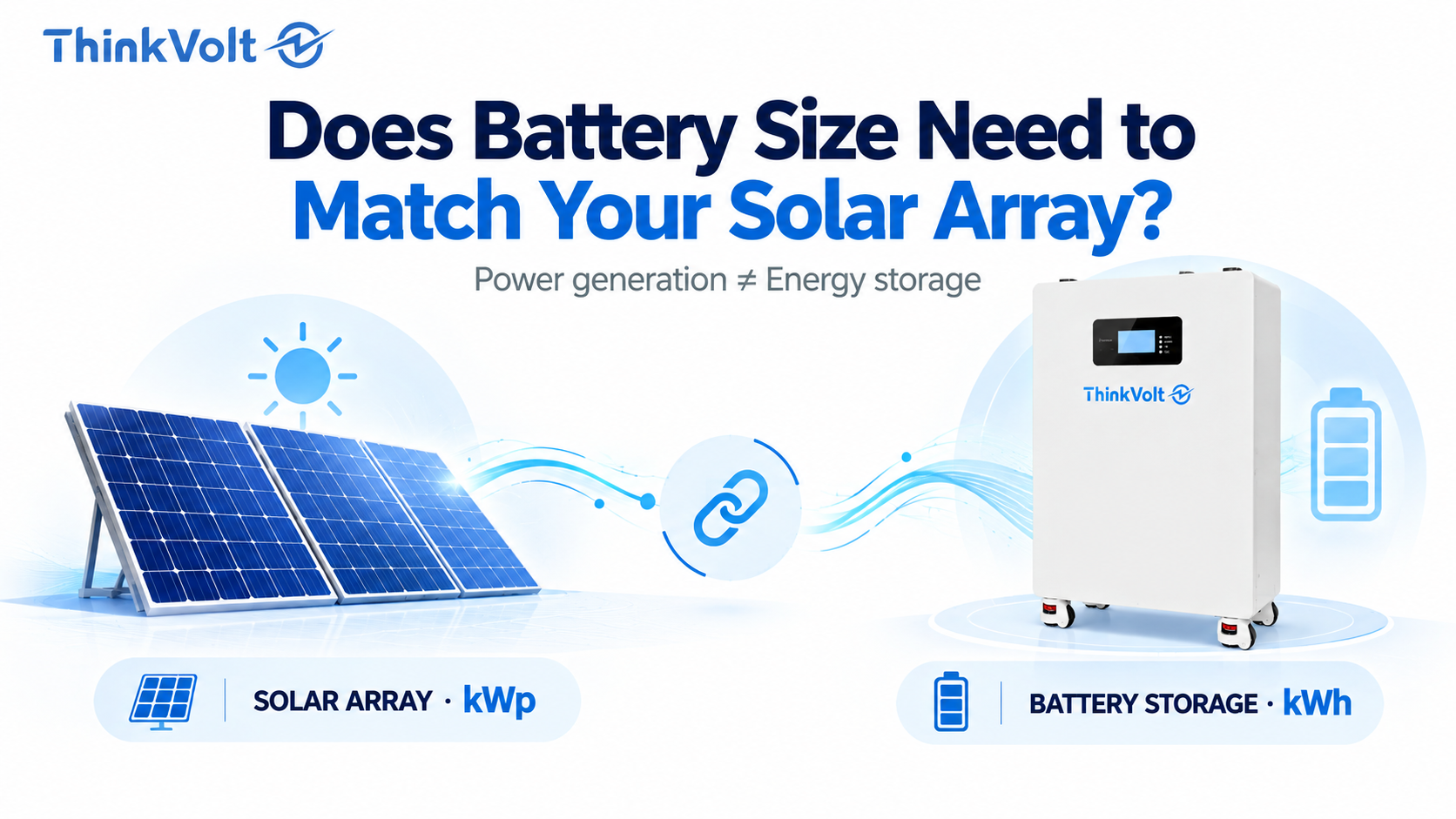
Size energy capacity from the amount of electricity you need over time, then verify inverter power and starting surge separately. This simple two-stage check prevents buying enough kWh but too little kW—or enough inverter power but too few backup hours.
List each backed-up appliance, its realistic average watts, expected hours per day, and whether it runs at the same time as other devices. Multiply watts × hours ÷ 1,000 to estimate kWh. For refrigerators, pumps, and air conditioning, use measured duty-cycle consumption if possible.
Suppose your essential circuits use 6 kWh during a typical 24-hour outage. With illustrative planning assumptions of 90% usable battery energy and 90% AC conversion efficiency, required nominal capacity is 6 ÷ (0.90 × 0.90) = about 7.4 kWh. A higher reserve or poor solar weather increases the requirement. This is an example, not a site-specific design.
If a refrigerator, pump, and other loads can run together, total their realistic simultaneous demand and check motor inrush separately. The battery's BMS, inverter output, wiring, protection, and grid voltage must all support the selected loads. Qualified installers should confirm any medical-device backup requirement with the device provider and recommend redundancy where critical.
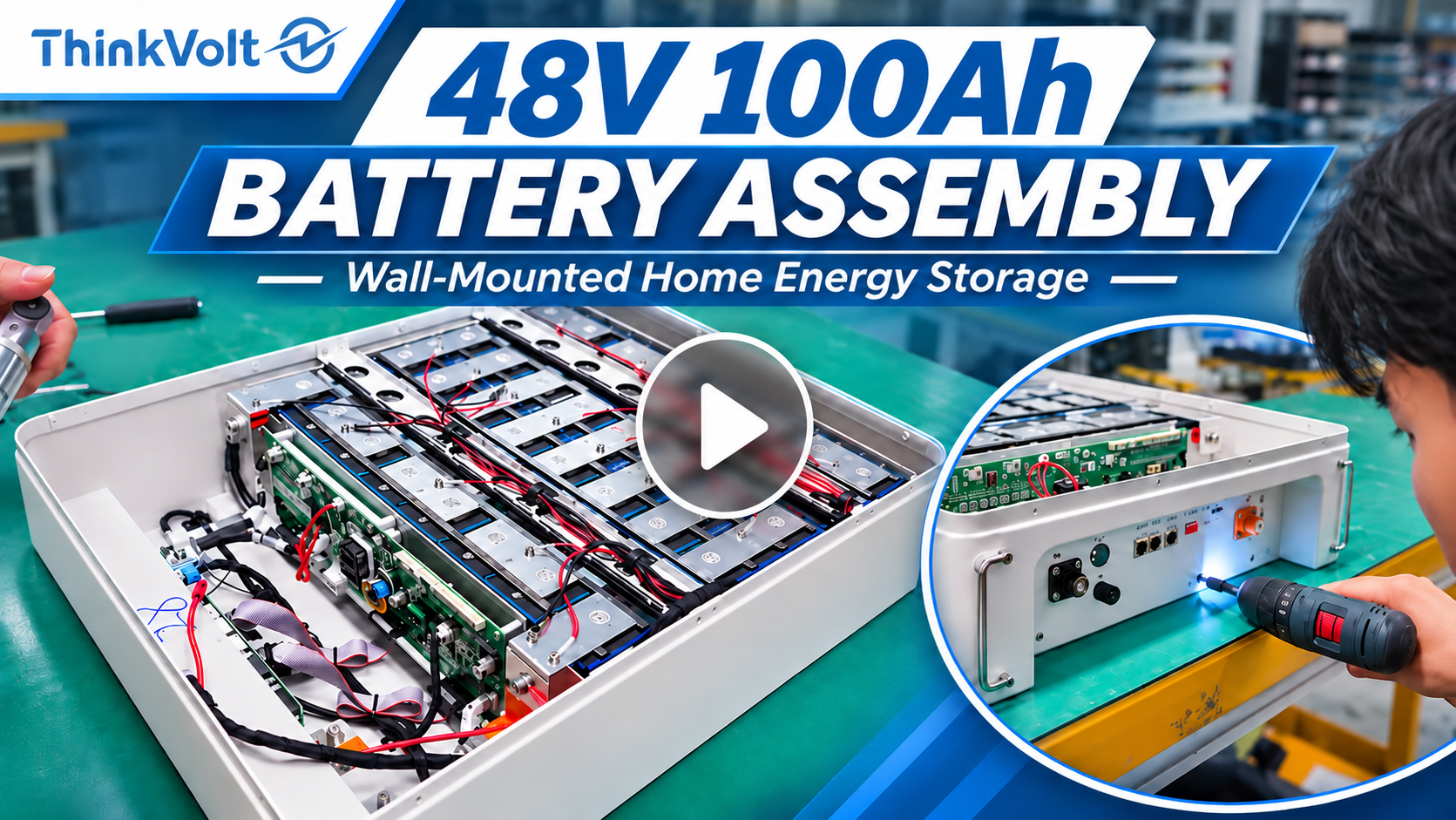
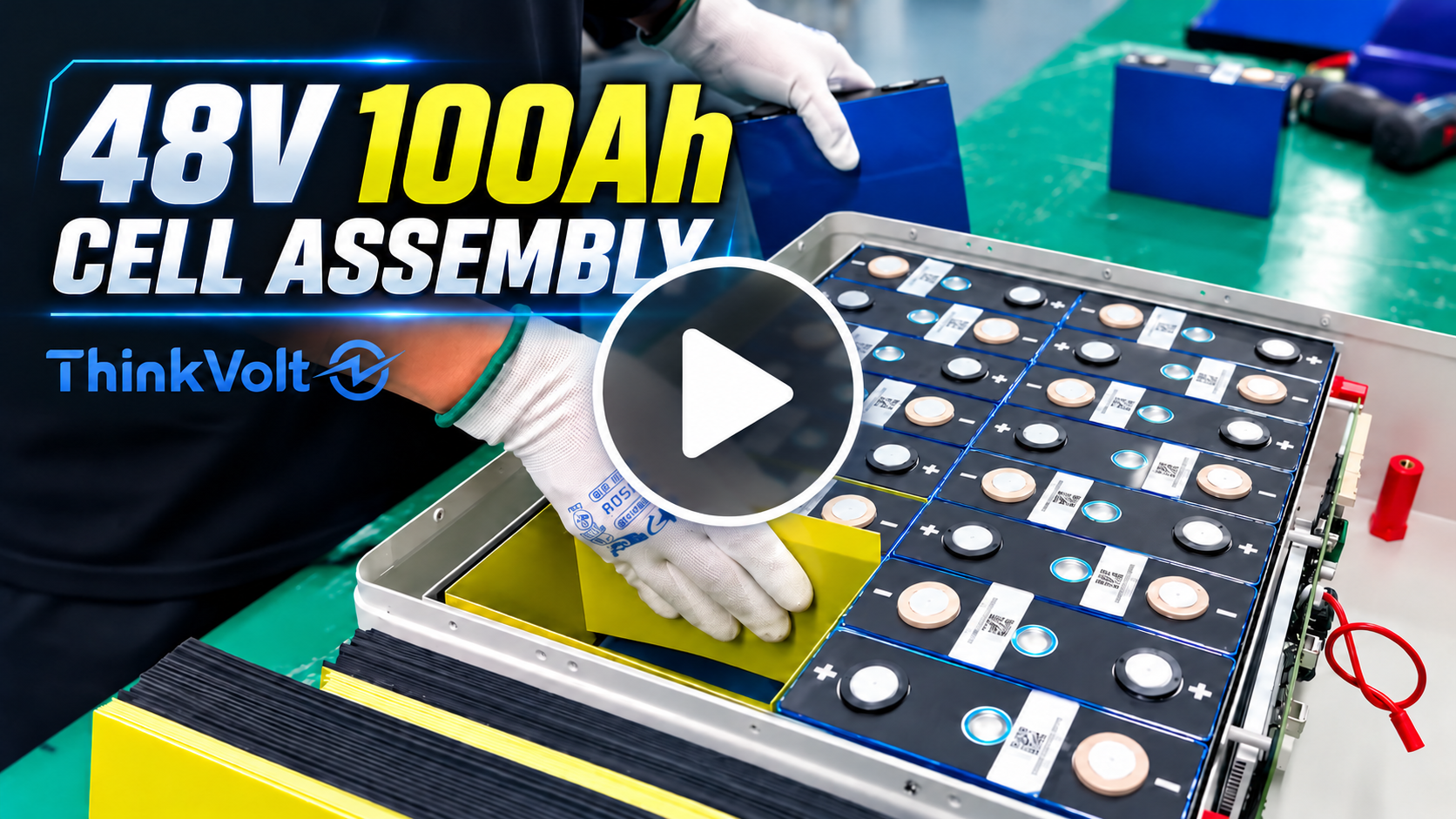
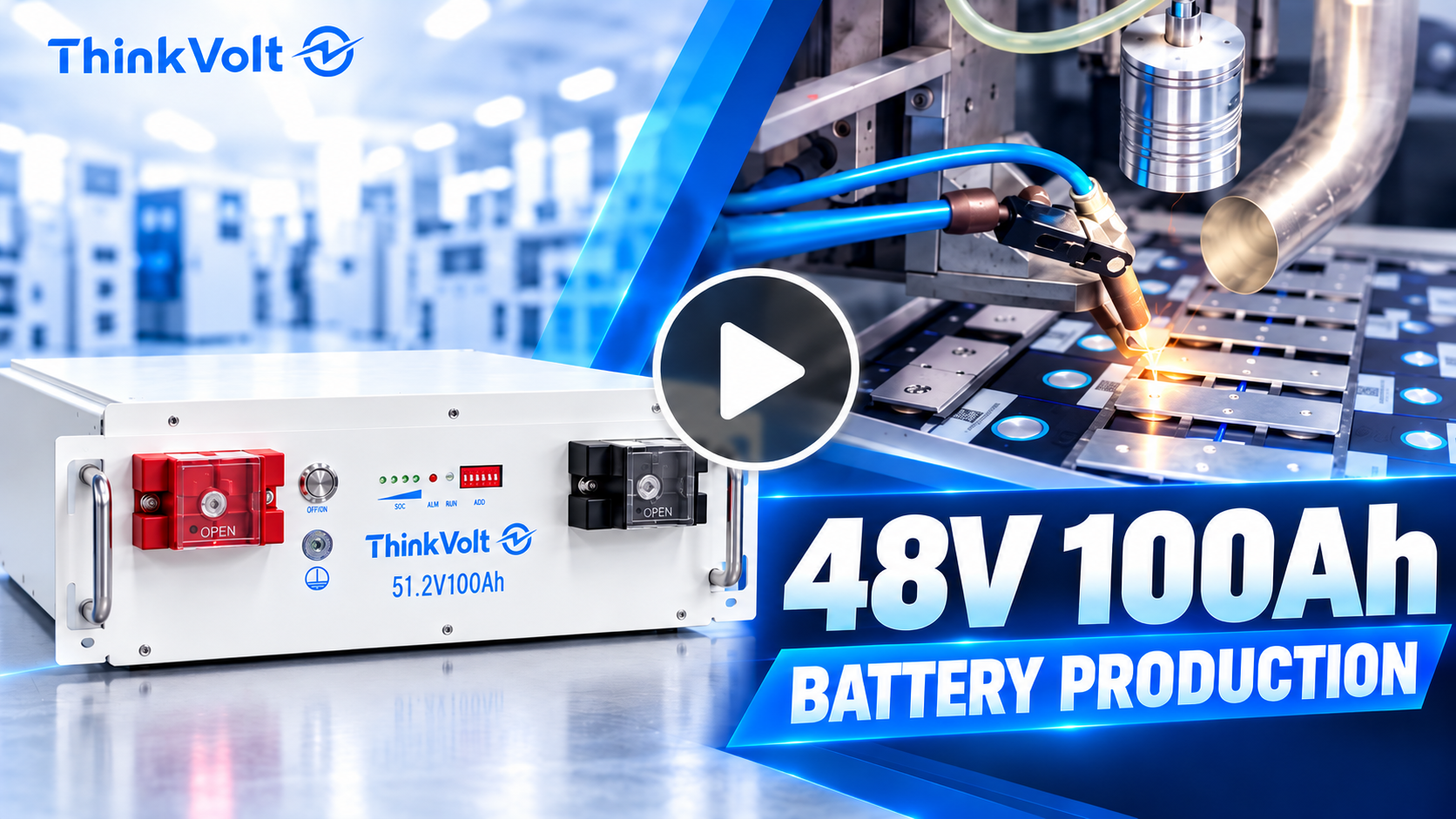
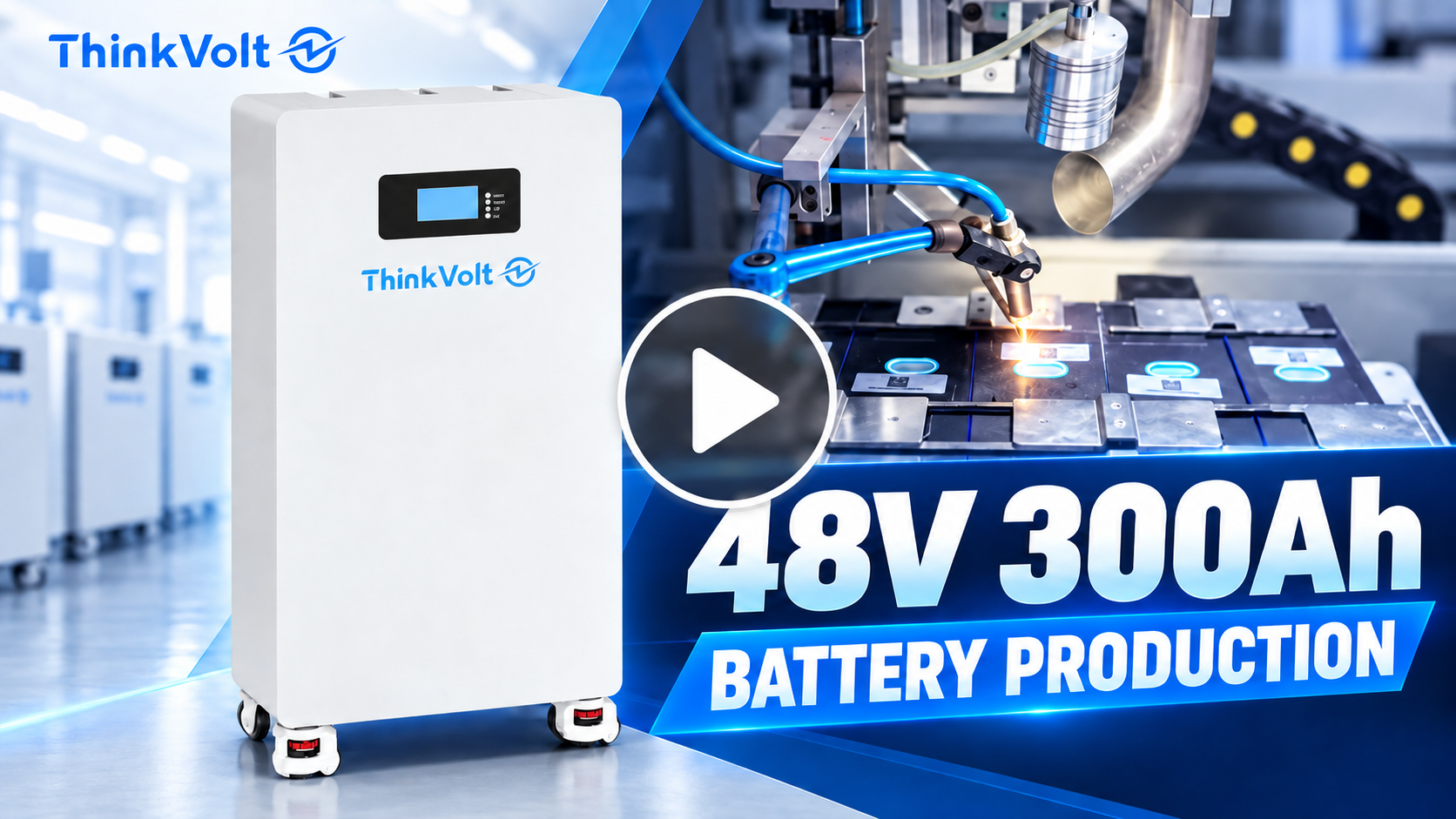
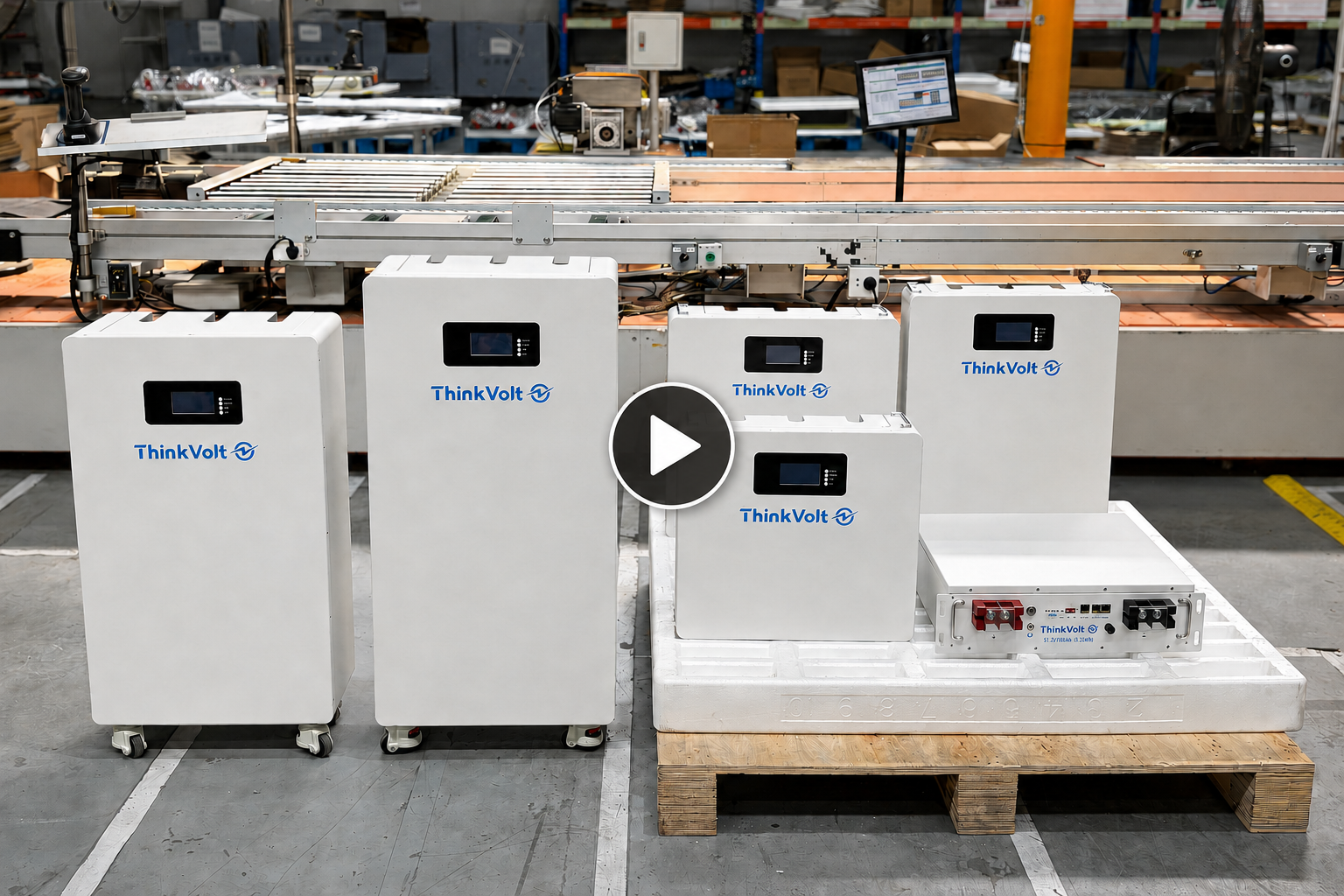
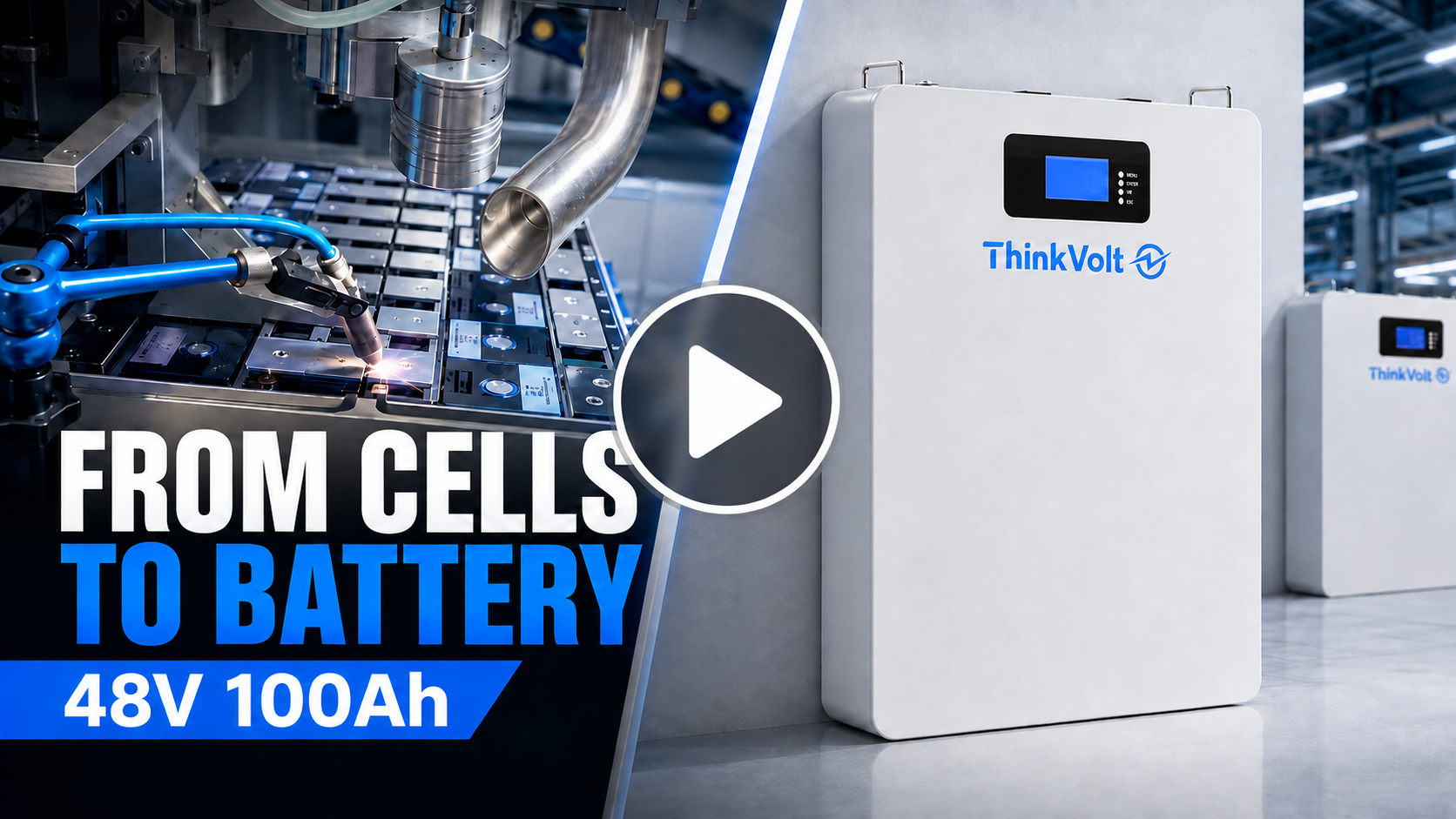
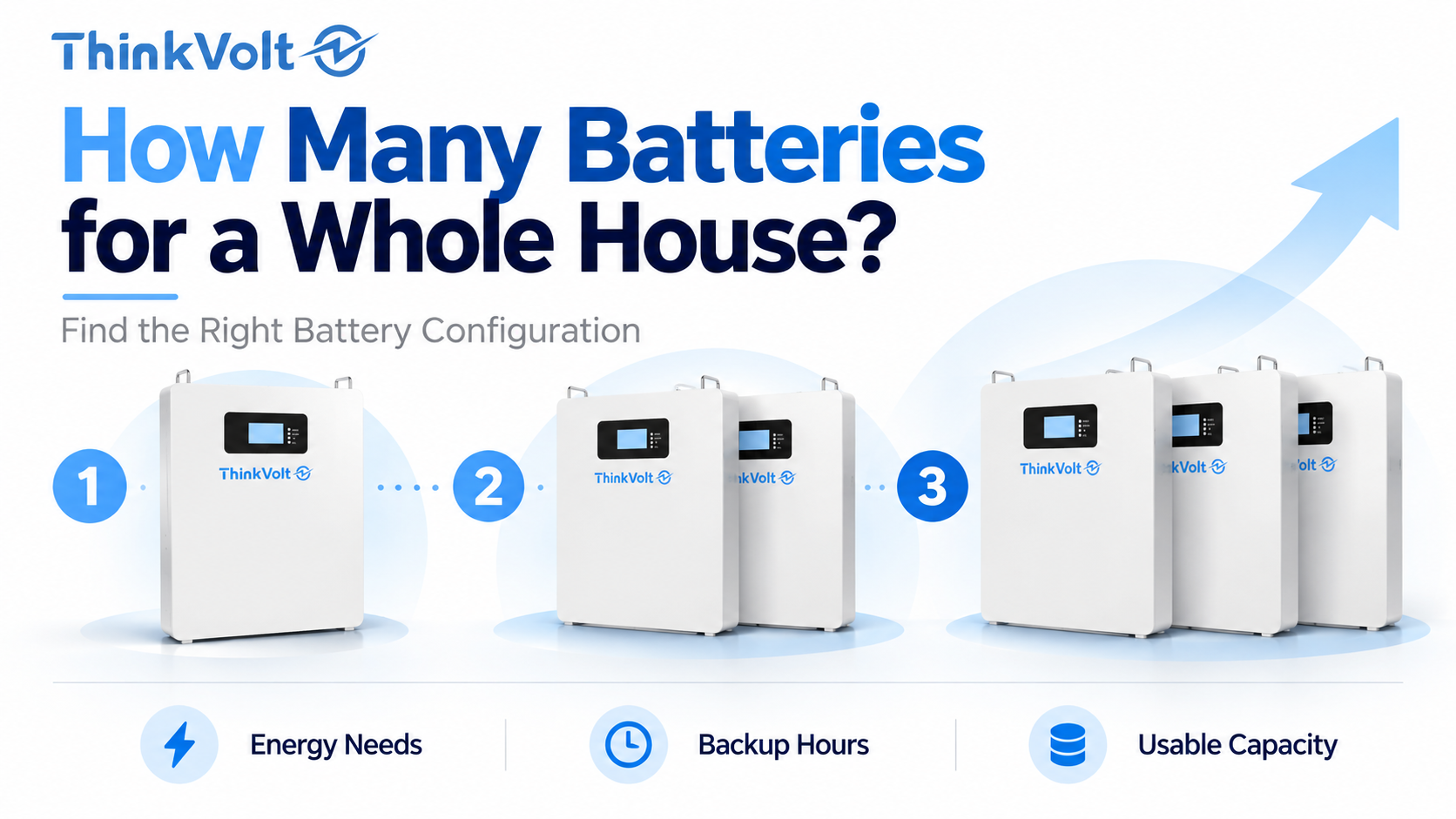
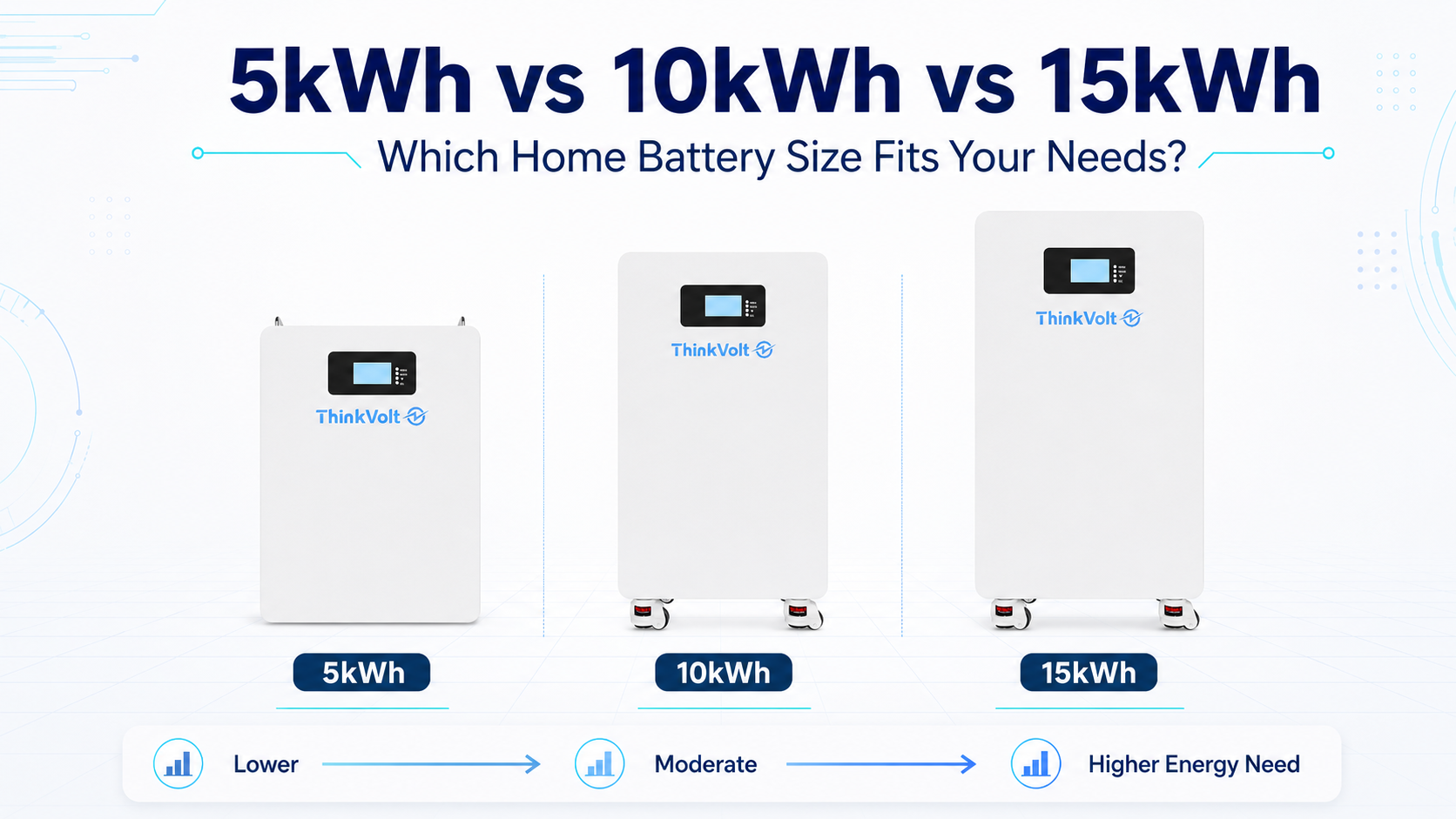
ThinkVolt's 2026 company knowledge base lists the TVES-48100W wall-mounted and TVES-48100R rack-mounted LFP batteries at 51.2 V, 100 Ah, or 5.12 kWh nominal each. That is stored DC energy—not a promised number of AC backup hours, approved parallel capacity, or continuous inverter output. Exact usable SOC, inverter compatibility, permissible system expansion, power ratings, and local approvals need the current model datasheet and engineering confirmation.
For installers, share the inverter brand and full model number, firmware, communication protocol, critical-load profile, and desired backup time before recommending any configuration.
Choose a generator first when extended outages, substantial sustained loads, and reliable fuel access are the main concerns. It is often practical for rural properties, large homes requiring major HVAC loads, or locations where several cloudy days make battery recharging uncertain.
A permanently installed standby generator can be designed to start automatically and power preselected or whole-home circuits, provided its output and transfer equipment are appropriately specified. A portable generator can be a less expensive occasional-backup option, but it requires safe outdoor operation and often more user intervention.
A generator is less attractive where local noise rules, outdoor space, fuel storage, carbon monoxide risk management, or recurring maintenance create meaningful constraints. Fuel access can also become a vulnerability during severe weather. Ask for the generator's rated power at site conditions, expected consumption at relevant loads, and the maintenance schedule rather than selecting on maximum advertised watts alone.
Choose a home battery first when your outages are usually shorter, important loads are modest, you value quiet automatic backup, or you want solar energy management between outages. This often suits residential sites with an existing compatible solar array or a plan to install one.
Batteries can respond quickly when their backup inverter and switching equipment are designed accordingly, and they avoid the refueling process of an engine generator. A battery can also support self-consumption and time-of-use energy shifting where the local tariff and system configuration justify it.
The trade-off is finite energy. Extended air-conditioning, resistance heating, or heavy water-pumping loads may demand a larger battery bank and more inverter capacity than expected. Ask installers to model at least a typical short outage and a more severe multi-day event, including a low-solar scenario. Cost and resilience improve when unnecessary circuits are excluded from backup.
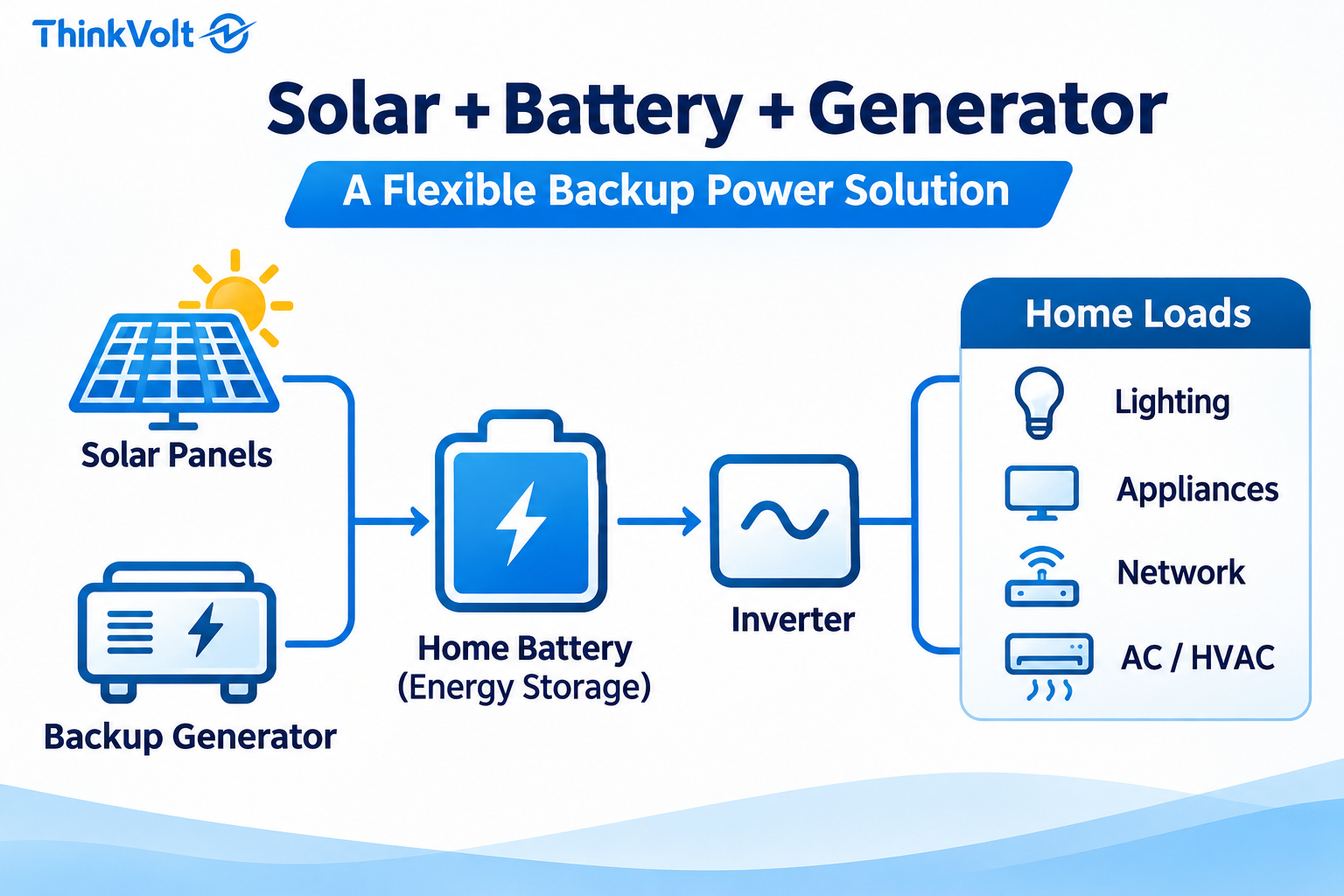
Yes. A properly engineered hybrid system can use a battery for immediate, quiet power and a generator for energy replenishment or sustained demand during a prolonged outage. However, combining the equipment requires explicit inverter, generator, transfer, control, and charging compatibility.
In one possible design, the battery serves critical loads during short interruptions. During a longer outage, a generator starts when energy falls below a planned threshold or when high demand requires additional support. If solar is available, it may offset daytime demand and reduce generator run hours. Whether these operating modes are possible depends on the particular power architecture and controllers.
Do not assume a generator can safely connect to any solar inverter or charge any battery bank. Installers must coordinate anti-islanding, source transfer, neutral/ground arrangements, voltage and frequency control, charge current limits, protective devices, and local approvals. The system's sequence of operation should be verified by the equipment manufacturers and qualified commissioning personnel.
For households facing both frequent short outages and occasional long emergencies, this approach can offer flexibility—but it is often more expensive and complex. Assess whether the extra resilience justifies the added equipment and maintenance.
Usually, a properly sized installed battery is more convenient for short outages because it can deliver quiet backup without fuel handling. Check that your inverter and transfer equipment actually support automatic backup and that the battery has enough usable energy for your essential circuits. A low-priced portable generator may still be the better financial fit if outages are rare and manual setup is acceptable.
It may run selected essential appliances overnight, but it cannot be assumed to power every household load. For example, a 0.5 kW average load requires 4 kWh over eight hours before losses and reserve allowances. The exact result depends on usable capacity, battery state of charge, inverter efficiency, and which appliances operate at the same time.
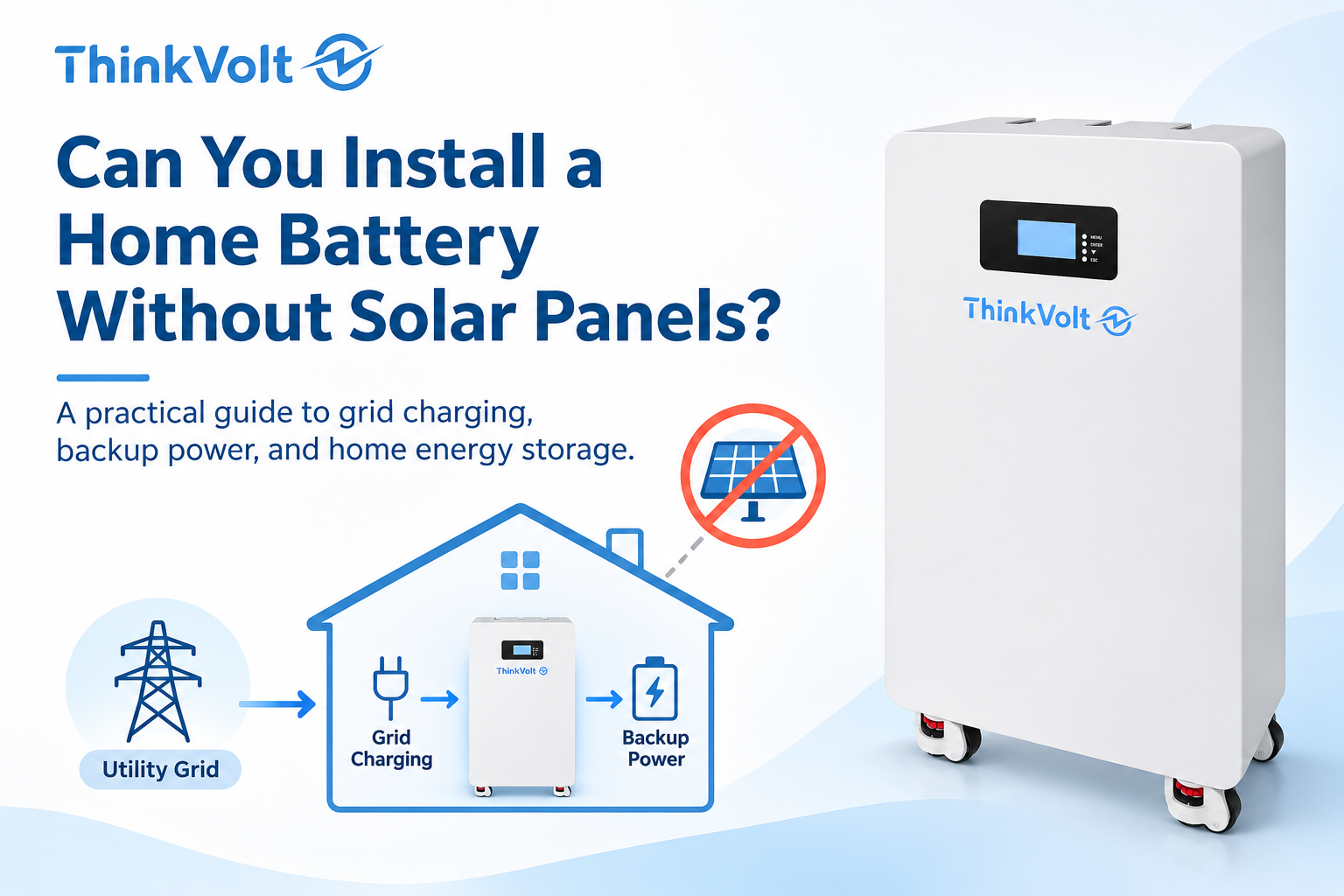
No. Some compatible home batteries can charge from the grid and provide stored energy during an outage. Solar becomes valuable when it can recharge the battery during an extended outage, but only if the installed inverter and controls support safe islanded operation. Ask the installer what happens both when the grid fails and when the battery reaches its lower reserve limit.
Not every battery system does. Transfer time is determined by the inverter, gateway, wiring, and operating configuration, rather than the battery chemistry alone. Some applications need a dedicated uninterruptible power supply for equipment that cannot tolerate even a brief interruption. Verify the published transfer characteristics against the specific appliances you need to protect.
A portable generator typically costs less to purchase than a permanent whole-home battery system, but that comparison excludes differences in installation and function. An installed standby generator has substantially greater site-work and transfer-equipment costs. Compare total installed prices alongside fuel, servicing, expected replacements, and any legitimate year-round battery savings before choosing.
Possibly, but there is no universal answer. The air conditioner's running demand, compressor startup surge, operating hours, inverter output, and battery discharge limits all matter. A single small battery module often cannot sustain a large central system for long; a larger engineered battery setup or generator may be more appropriate. Have an installer check the actual equipment and any load management measures.
Only when the generator, inverter-charger, switchgear, and control logic are designed to work together. Some hybrid systems support controlled charging, while others cannot accept that input safely. Matching voltage alone is insufficient: frequency stability, neutral/ground bonding, charge limits, and protective coordination also matter. Request a manufacturer-approved connection plan before commissioning.
The installer should verify backed-up circuit loads, peak kW and starting surges, target backup hours, applicable grid requirements, and installation conditions. Confirm the exact ThinkVolt model, inverter model and firmware, communication protocol, battery configuration, protection, and current local certification documentation. Final capacity and compatibility decisions require the latest model-specific datasheet and appropriate engineering review.
A home battery is compelling for quiet, load-managed backup and everyday solar integration; a generator remains strong when prolonged outages and high continuous power dominate the decision. For a practical ThinkVolt residential storage proposal, share your location, inverter model, critical-load list, target outage duration, and solar configuration with the ThinkVolt team at sales@cnthinkvolt.com for model-specific assessment.