ThinkVolt at Solar & Storage Expo Pakistan 2026: Connecting with Pakistan’s Energy Storage Market
2026-07-23
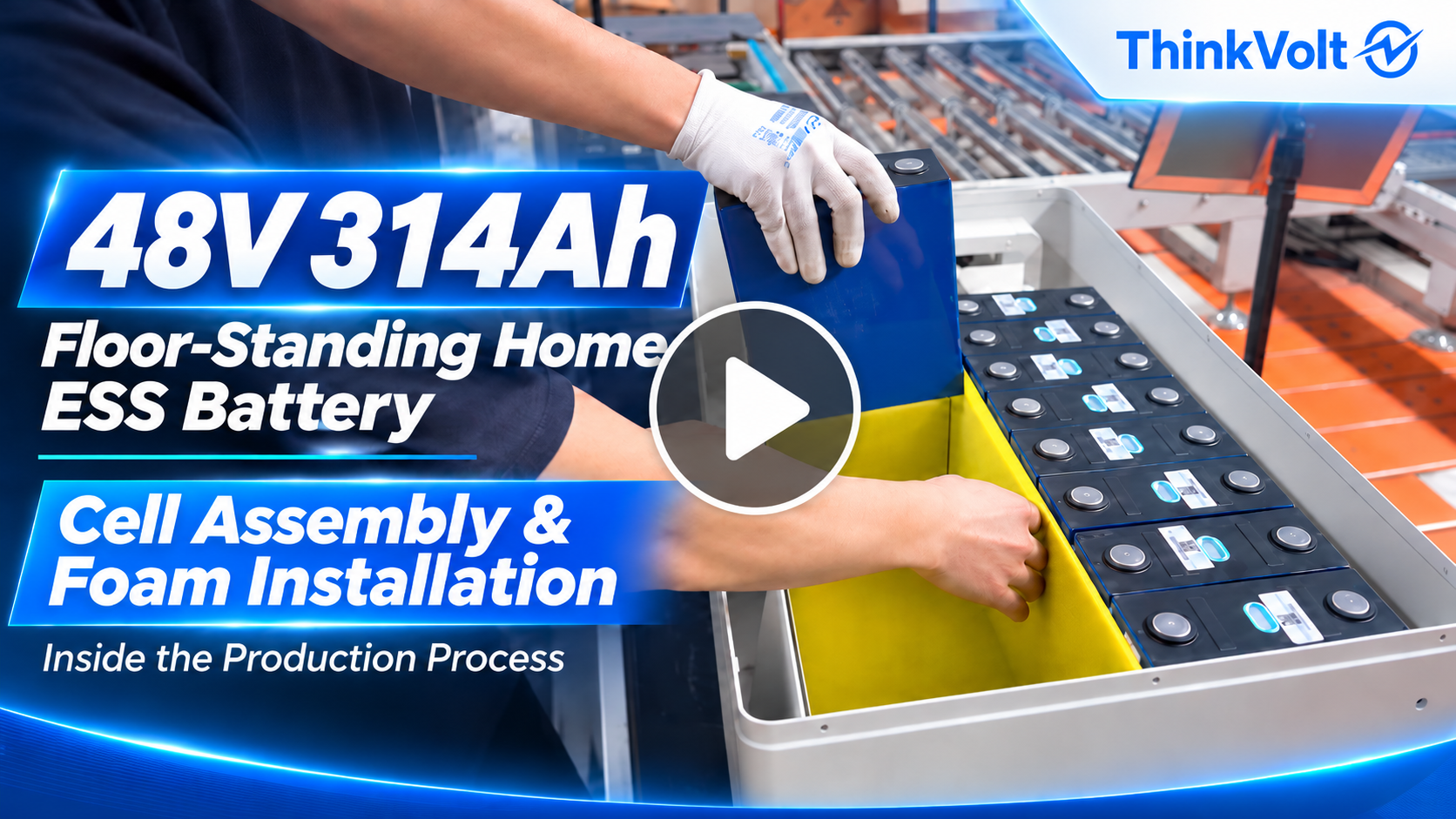
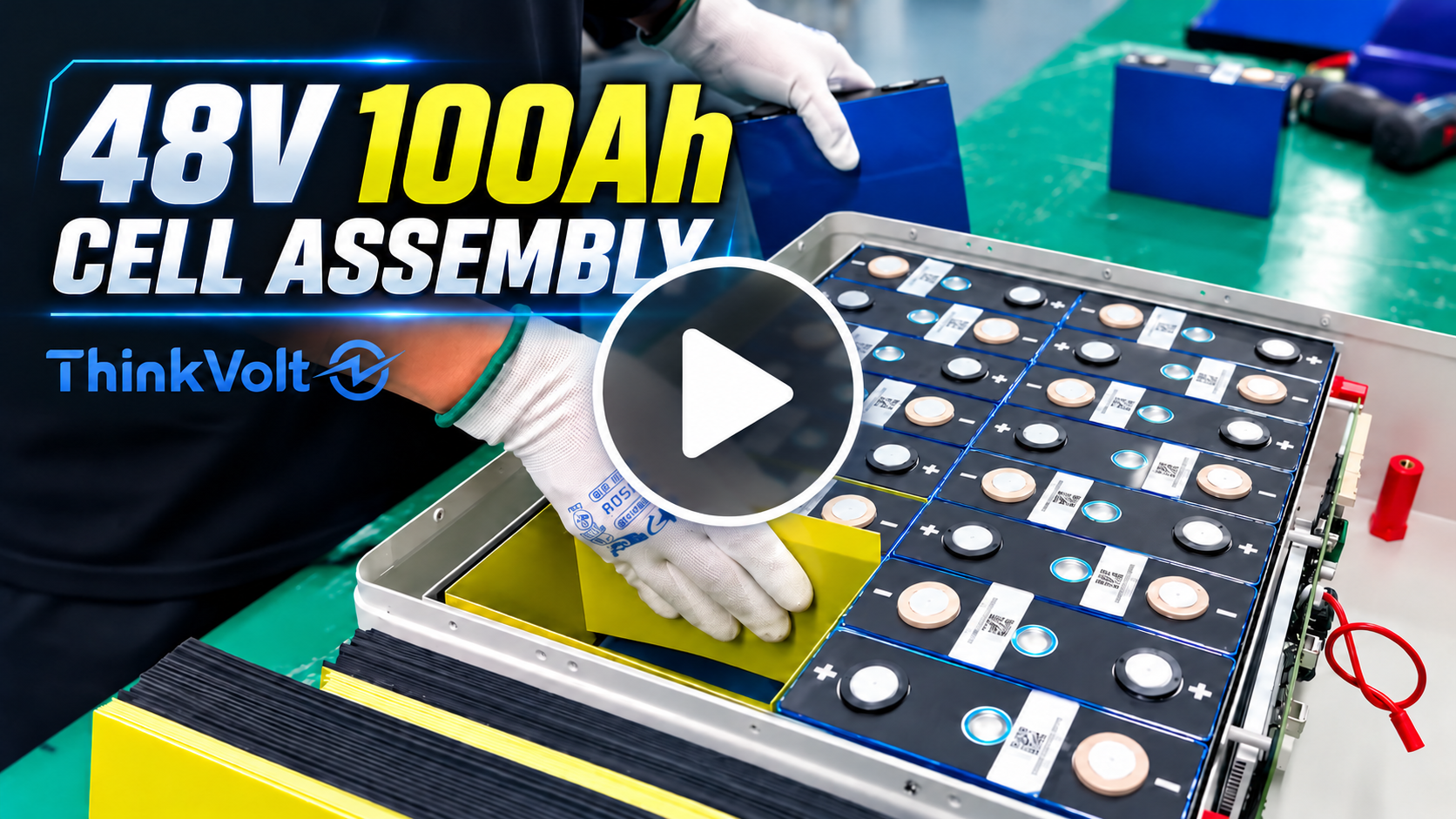
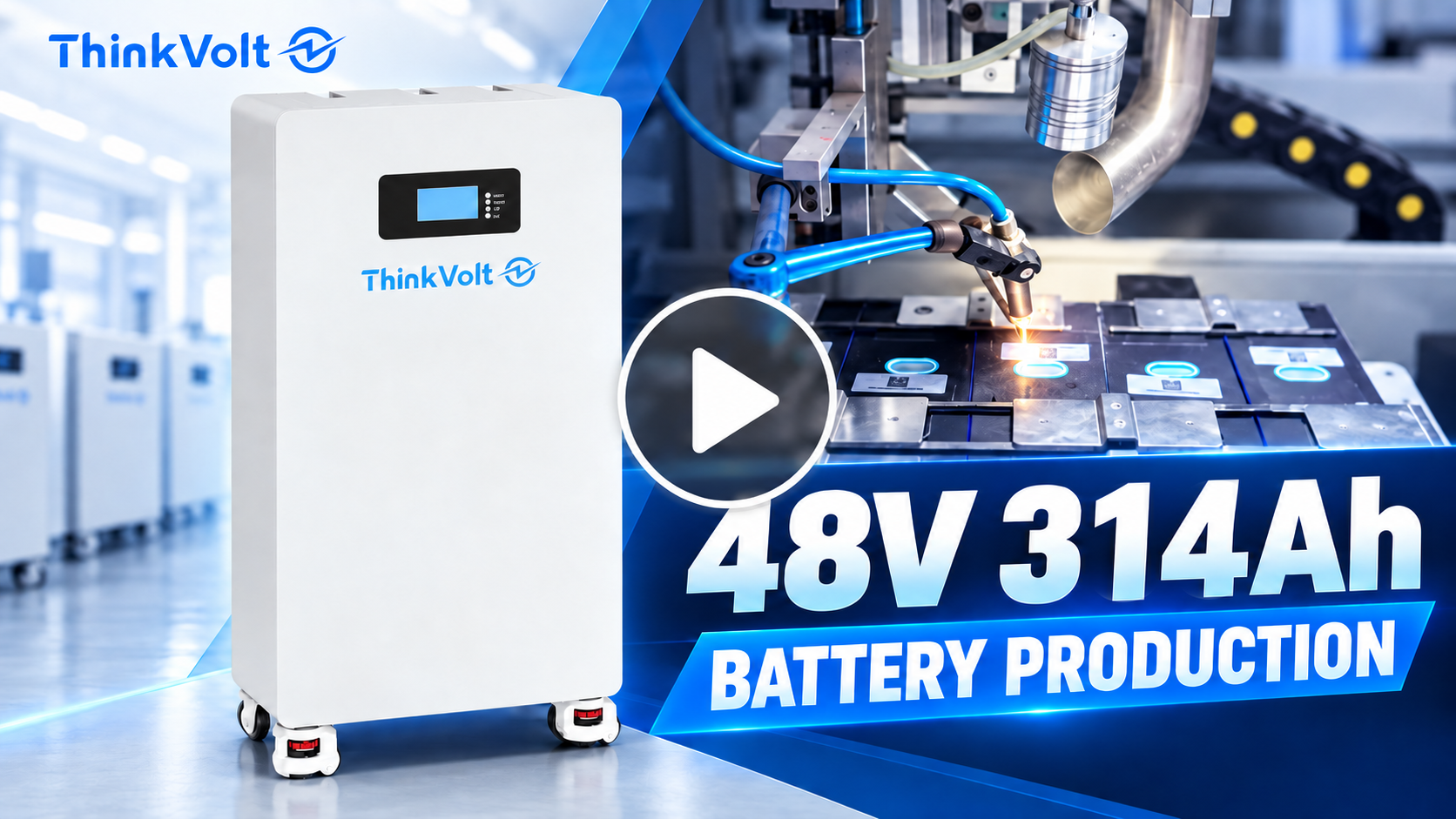
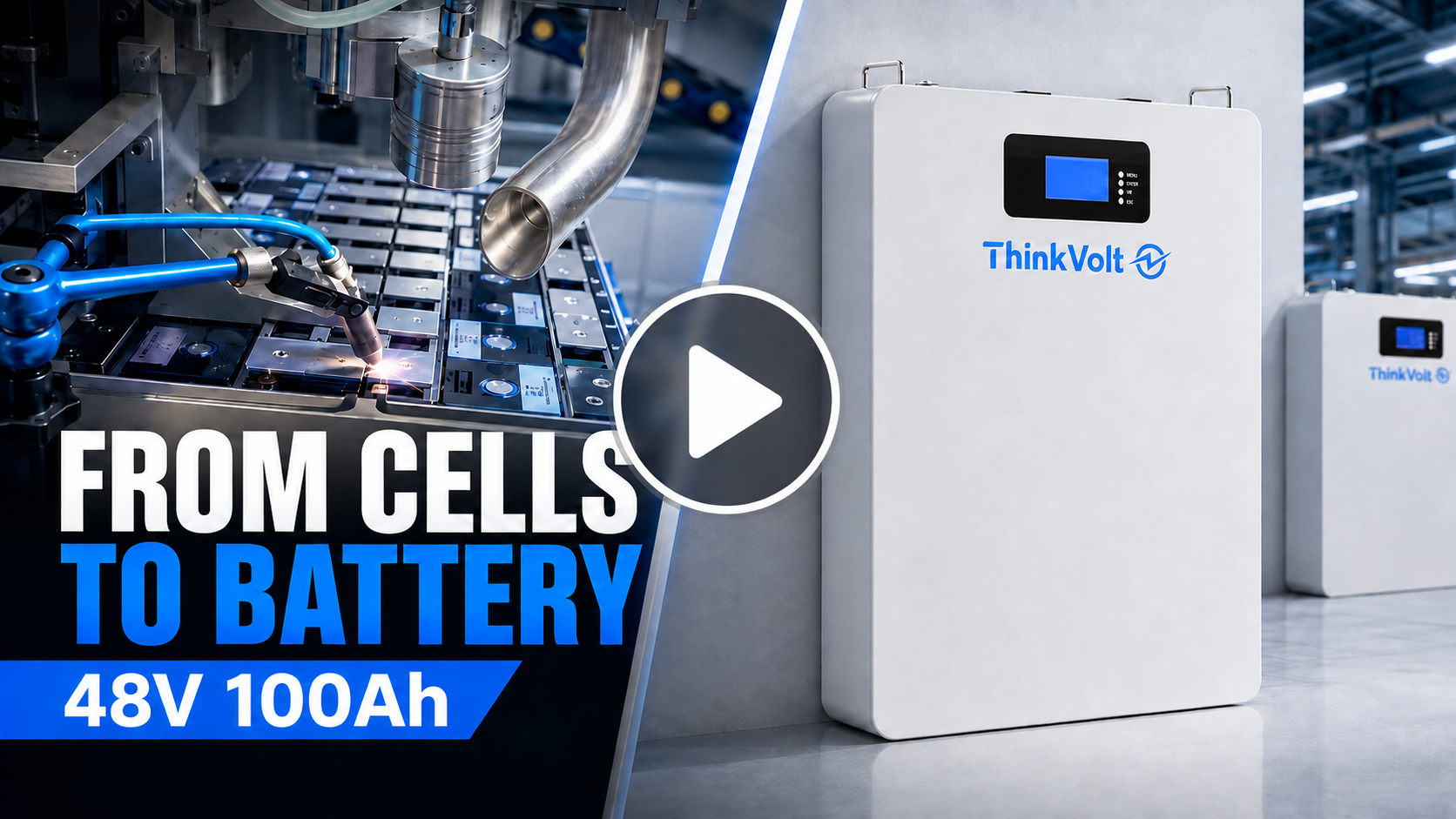
A finished home battery may look simple from the outside, but the way its cells are arranged and supported inside the enclosure is an important part of the manufacturing process. In this video, ThinkVolt takes you inside an early assembly stage of its 48V 314Ah floor-standing home energy storage battery: placing battery cells and fitting foam between the cells and the outer enclosure.
The footage focuses on a practical, hands-on process rather than a finished product demonstration. A technician works with rows of battery cells inside a white metal enclosure, adding and adjusting bright yellow foam pieces as the remaining cells are positioned.
1. Arranging the cells. Cells are guided into the enclosure and aligned with the cells already in place. Careful positioning helps establish a consistent internal layout for later assembly work.
2. Fitting the foam. Yellow foam pieces are placed in the available space alongside the cells and enclosure wall. The inserts help hold the assembly in position and limit unnecessary movement inside the pack.
3. Adjusting the fit. The technician checks and adjusts the position of the cells and foam by hand while continuing the assembly sequence. This close-up view makes the otherwise hidden internal arrangement easier to understand.
For a battery pack, mechanical arrangement matters alongside electrical design. The goal at this stage is not simply to fit cells into a box, but to give each cell a deliberate position within the enclosure.
· Positioning: Foam can fill designed gaps so that cells are less free to shift inside the enclosure.
· Consistency: A repeatable placement method helps workers assemble the same internal layout across units.
· Preparation for later steps: An orderly cell arrangement provides a practical foundation for subsequent pack assembly and inspection.
The exact foam material, dimensions and installation requirements depend on the battery design. A video of this step illustrates the physical assembly method; it does not, by itself, establish impact resistance, thermal performance or long-term durability.
Cell assembly is only one part of building a residential energy storage battery. After the cells are positioned, a complete battery system still depends on appropriate electrical integration, protective components, inspection and testing before it is ready for delivery. Those later activities are not shown in this particular video.
This is why evaluating a battery supplier should go beyond the product specification sheet. Manufacturing methods, process controls and the ability to explain how the system is assembled are also relevant to distributors, installers and project buyers.
1. How are battery cells positioned and secured within the enclosure?
2. How is the fit and placement of supporting materials checked during assembly?
3. What inspections are carried out after the pack has been assembled?
4. What testing and documentation are provided before the finished battery is released?
These questions can help buyers have a more specific conversation about the process behind a 48V 314Ah floor-standing home battery, rather than relying on broad claims about product quality.
This video introduces the cell assembly and foam installation stage of ThinkVolt’s 48V 314Ah floor-standing home energy storage battery. In upcoming videos, we plan to show additional parts of the production process, including inspection, testing and final preparation before delivery.
Looking for a lithium battery supplier for residential energy storage projects? Contact ThinkVolt to discuss your application, product requirements and cooperation opportunities.